Writer’s Desk: Challenge Yourself

(Orson Welles, 1964, by Nicolas Tikhomiroff)

Orson Welles spent most of his career scrapping for money, fighting with producers, and generally trying to balance fifteen spinning plates while doing a magic card trick at the same time. It was an exhausting way to make art.

Still, when indie filmmaker Henry Jaglom was complaining to him one time about not having the time or money to finish a movie the way he wanted, Welles had a tart response:

The enemy of art is the absence of limitations.

This doesn’t mean you should intentionally impoverish yourself to invent challenges. But Welles has a point in that a piece of work can benefit from the creator having something to push against. Set yourself some difficult parameters (it must be this long, I must finish it by this date, if I don’t sell it by this point then I will move on to something else, etc.). The discipline required in overcoming even minor obstacles can give you practice in overcoming the challenges presented by your writing.

Don’t get too comfortable, in other words. Push yourself.

Writer’s Desk: Listen to Everything

(Bikram Bezbaruah)

Part of a writer’s job is capturing the world around them. This includes paying attention to physical things from landscape and weather to clothing and food.

But it also means listening to people. All of them.

  • Daniel Handler (aka Lemony Snicket): “Eavesdrop and write down what people say. You think you’ll remember everything you hear, but you won’t. So write it down.”
  • Josh Sippie: “There is nothing that you overhear someone saying that can then become “unrealistic” dialogue, or an unrealistic way to speak. It’s as real as it gets.”
  • Christopher Isherwood: “I am a camera, my shutter open, quite passive, recording, not thinking.”

Go ahead and eavesdrop. It’s research.

Writer’s Desk: Tell the Truth

Mary Karr’s breakthrough memoir The Liar’s Club was not just a brilliantly written book, pulsing with dark wit and cutting insight, it was also pretty unsparing about herself. Years later, she wrote in The Art of the Memoir about how she started The Liar’s Club on the assumption she’d be telling the story of her father leaving her. But when she really looked at what happened, the opposite was true:

I’d spent decades discussing his abandonment in therapy, and it was true he’d drunk himself off a barstool when I was just twenty-five. But the view that he’d ever left me was tacit hogwash – a convenient lie I’d told myself to salve my own guilt about leaving him…

In an interview with The Writer, Karr talked about the necessity of confronting the truth, even if doing so might not cast you in the best light:

The reader will forgive you anything except lying.

Writer’s Desk: Make Readers Believe

J.R.R. Tolkien (undated)

Every writer is a fantasist. Whether they’re writing a kitchen-sink domestic drama, romance, YA series about talking dragons, or a mystery novel about a blind accountant who solves crimes, the challenge is the same each time: Make readers believe the world you are creating and the people who inhabit it.

J.R.R. Tolkien explained the importance of this in his essay “On Fairy-Stories“:

The story-maker proves a successful ‘sub-creator’. He makes a Secondary World which your mind can enter. Inside it, what he relates is ‘true’: it accords with the laws of that world. You therefore believe it, while you are, as it were, inside. The moment disbelief arises, the spell is broken; the magic, or rather art, has failed…

Leave nothing to chance. Visualize every aspect of your fictional world. Keep the illusion going. Make readers believe.

Writer’s Desk: Avoid Interruptions

It seems so obvious and yet turns out to be so difficult in practice. Finding a good writing space is one thing. Carving out the time on a regular basis is another. Ensuring an uninterrupted run of minutes and hours is always harder than you think. But without those blocks of time, creating something new is next to impossible.

Again, let’s go to David Lynch:

Every interruption just is like a knife stab in the middle of a thought. And you gotta start again. You start again. It’s horrible. These days, there’s interruptions around every corner, almost every second. You have to be somewhat selfish…

And if anybody asks why you are acting so withdrawn, just say that Lynch told you so.

Writer’s Desk: Bridge the Divide

A Rhodes Scholar who left Oxford to join the Marines in 1968, Karl Marlantes served one tour of duty in the Vietnam War before returning home and spending the next few decades trying to understand what happened over there and how to communicate it to anybody else.

In “Why I Write,” Marlantes described being surrounded by protestors once in 1970:

They shouted obscenities and jeered at me. I could only stand there stunned, thinking of my dead and maimed friends, wanting desperately to tell these students that my friends and I were just like them: their age, even younger, with the same feelings, yearnings, and passions…

So he spent the next 30 years writing Matterhorn, a wrenching masterpiece which is just about the only Vietnam War novel that deserves mentioning in the same breath with Tim O’Brien’s The Things They Carried.

Marlantes did this to tell his story. But he also wanted to bridge that gap he felt back in 1970:

Ultimately, the only way we’re ever going to bridge the chasms that divide us is by transcending our limited viewpoints. My realization of this came many years ago reading Eudora Welty’s great novel Delta Wedding. I experienced what it would be like to be a married woman on a Mississippi Delta plantation who was responsible for orchestrating one of the great symbols of community and love. I entered her world and expanded beyond my own skin and became a bigger person…

Put the words down. Build a world. Get the reader out of their own skin, even just for a moment. It’s one of the great rewards of writing.

Writer’s Corner: Learn and Share

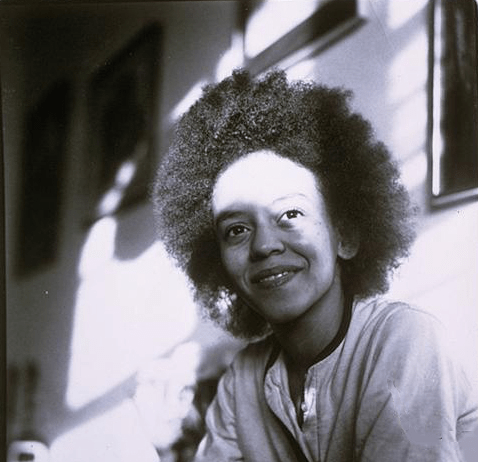
Nikki Giovanni (Elsa Dorfman, c.1980)

The late Nikki Giovanni (1943-2024) was a poet who did a lot of things most people don’t expect poets to do. She started her own publishing company. She recorded an album with a gospel choir. She even interviewed James Baldwin on television.

She also gave good advice to those willing to listen:

I know some writers say you must write every day, but I believe you should read every day. Learn something every day.

Even if it’s only something new to cook or to eat. Even if you just sit in your backyard and watch the birds or the squirrels. Give yourself over to something new.

Embrace the possibility. Why? Because you have to have something to talk about. Something you can connect for yourself and for your readers.

Writing is about sharing. Be sure you are in a giving way…

You never know, that recipe might come in handy for your next story.

Writer’s Desk: Start Cutting

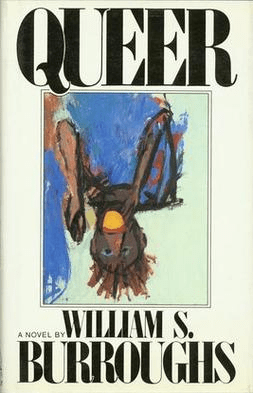
Sometimes when stuck for inspiration, or just as a way of jump-starting things, William S. Burroughs liked to use something he and his friend, painter Brion Gysin, developed called the “cut-up method.” It’s not difficult, per Burroughs:

Take any poet or writer you fancy. Heresay, or poems you have read over many times. The words have lost meaning and life through years of repetition. Now take the poem and type out selected passages. Fill a page with excerpts. Now cut the page. You have a new poem. As many poems as you like…

Is that cheating? If you listen to most media theorists, we have been in the age of collage for a few decades now. Give it try. You never know what might come through.

Writer’s Desk: Do Something, Then Write

In an interview with Guernica, Jamaica Kincaid dismissed the idea that writing is a real profession, no matter how much people try to make it into a career:

The thing about writing in America—and I just recently understood this—is that writers in America have an arc. You enter writing as a career, you expect to be successful, and really it’s the wrong thing. It’s not a profession. A professional writer is a joke. You write because you can’t do anything else, and then you have another job. I’m always telling my students go to law school or become a doctor, do something, and then write. First of all you should have something to write about, and you only have something to write about if you do something. If you just sit there, and you’re a writer, you’re bound to write crap. A lot of American writing is crap. And a lot of American writers are professionals. Writing is not a profession. It’s a calling. It’s almost holy…

Writer’s Desk: Get Your Paradoxes Ready

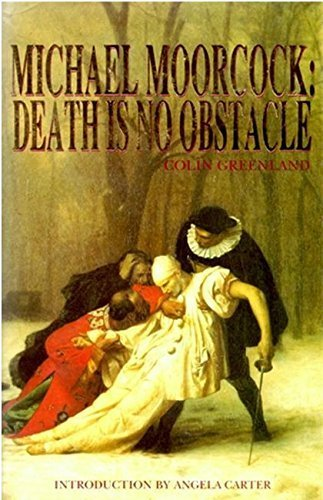
In Angela Carter’s introduction to the writing guide Death is No Obstacle, she mock-accuses genre-spanning fantasist Michael Moorcock of “giving everything away.” This may be taking it too far, because it’s hard to see how many writers even if they follow his advice to a tee could churn out novels in under a week as he famously did.

Most of Moorcock’s lessons to writers for writing with economy and speed was planning ahead. Among those was stockpiling ideas for future use so you don’t get stuck for inspiration along the way.

Here’s one:

You need a list of images that are purely fantastic: deliberate paradoxes, say: the City of Screaming Statues, things like that. You just write a list of them so you’ve got them there when you need them. Again, they have to cohere, have the right resonances, one with the other…

Try listing five or ten of those right now. File them away. Use as needed.

Writer’s Desk: Fill the Blank Space

Twyla Tharp (Ken Duncan, 1981)

In Twyla Tharp’s 2003 book The Creative Habit, she boiled her whole artistic self down to this:

The blank space can be humbling. But I’ve faced it my whole professional life. It’s my job. It’s also my calling. Bottom line: Filling this empty space constitutes my identity.

Get started. It’s time to make something where now there is nothing.

Writer’s Desk: Who / What / Why

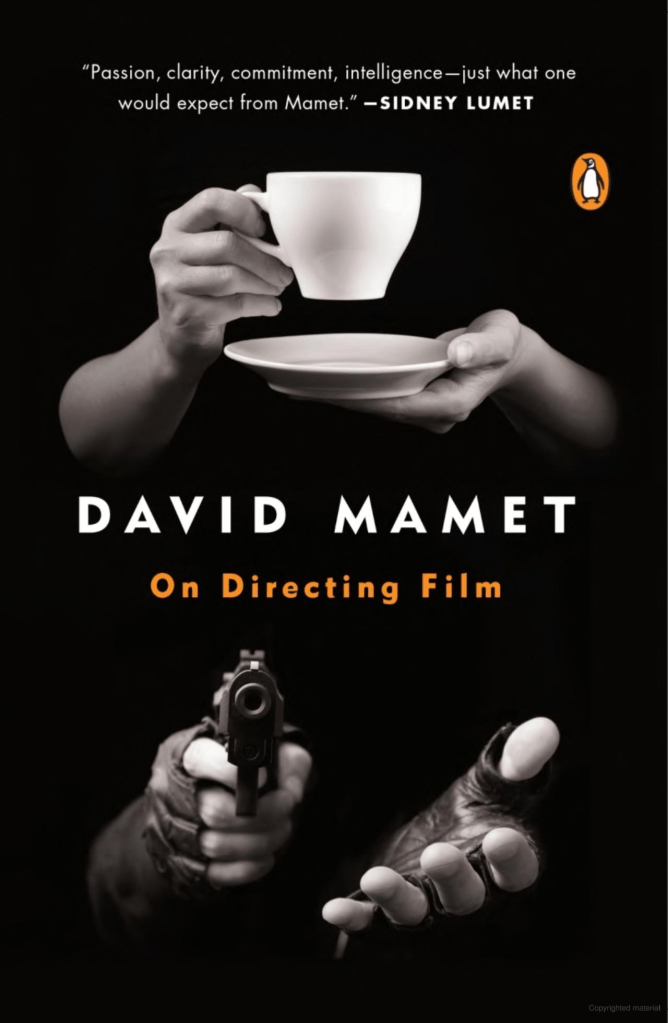
David Mamet has written across just about every genre possible, from plays to screenplays, novels, short stories, and even whacked-out science fiction scenarios (Wilson). Along the way he’s also knocked out a bevy of pieces on the craft, whether acting, directing, or writing.

While show-running The Unit (one of those War on Terror series from the 2000s), Mamet sent a memo to his writing staff that broke down what he saw as foundational to good writing.

In it, Mamet inveighs against exposition-dump scenes (which readers of Michael Crichton are very familiar with), since they are inherently non-dramatic:

Any time any character is saying to another as you know, that is, telling another character what you, the writer, need the audience to know, the scene is a crock of shit…

This is crucial but may be less useful to people not writing dialogue. One nugget Mamet provides that has more universal utility is his three-part breakdown of what each scene requires:

  • Who wants what?
  • What happens if [they don’t get it]?
  • Why now?

Stick to that and readers will keep turning the page.

(h/t ScreenCraft)

Reader’s Corner: Fall Graphic Novels

My latest graphic novel roundup for the Minnesota Star-Tribune ran over the weekend:

Four new graphic novels showcase a range of approaches and subjects, from deadpan horror comedy to a subversive retelling of an American classic, a fantasy adventure about a magical world next to our own and an odds-and-ends collection from an American master that is more than the sum of its parts…

Screening Room: ‘Dahomey’

My review of Mati Diop’s new documentary Dahomey ran at PopMatters:

Looking back at the 19th century, when European powers rampaged across Africa and cut apart kingdoms to plunder resources and kidnap millions for the slave trade, it would be understandable to argue that stolen artifacts were not top of mind for those being colonized. To its credit, Mati Diop’s lovely yet fractious documentary Dahomey does not try to make that argument. What she does attempt is a deeper story about the loss that lingers from colonial conquest and the uncertainty about how to move forward…

Here’s the trailer: