Screening Room: ‘The Woman in Cabin 10’

I reviewed the adaptation of Ruth Ware’s mystery The Woman in Cabin 10 for Slant Magazine:

Simon Stone’s The Woman in Cabin 10 is a locked-room mystery in which Laura (Keira Knightley), an investigative reporter for The Guardian, is invited by mysterious billionaire couple Richard (Guy Pearce) and Anne (Lisa Loven Kongsli) onto their luxury yacht. The cruise to Norway, doubling as self-regarding announcement of a massive philanthropic venture and a last big party for the deathly ill Anne, has barely begun when Laura sees a woman fall overboard. Told everybody on the yacht is accounted for, Laura at first thinks that she’s being gaslit. Later, after an unseen person shoves her into a pool where she almost drowns, Laura starts to believe that she’s the next to be murdered…

Here’s the trailer:

Writer’s Desk: Your Life is Literature

In her classic graphic memoir Fun Home: A Family Tragicomic (the book which, more than any other, introduced the graphic novel into the literary canon), Alison Bechdel uses numerous literary references (Proust, Henry James, Greek mythology) and allusions when describing her upbringing and members of her family.

As Bechdel explains in the book, this was not a tactic for distancing or adding importance to mundane matters. Viewing her life through an artistic framework was just what came naturally:

I employ these allusions to James and Fitzgerald not only as descriptive devices, but because my parents are the most real to me in fictional terms…

Screening Room: ‘Play Dirty’

Mark Wahlberg, LaKeith Stanfield in Play Dirty (Amazon MGM)

I reviewed Play Dirty, which is starting on Amazon Prime tomorrow, for Slant Magazine:

Donald Westlake’s Parker character, who he wrote about in many books under his penname Richard Stark, is a clever yet nasty machine of a criminal with a preternatural drive. That alone makes for a compelling screen character. But his brutishness doesn’t gel with the more comedic style preferred by Shane Black, director and co-writer of Play Dirty, a very loose adaptation of the Parker book series that keeps Westlake’s penchant for grubby violence but grafts it uneasily onto a more noble character whom the author wouldn’t recognize…

Here’s the trailer:

Writer’s Desk: Lie Well

When being interviewed by The Paris Review (as all the greats were, once upon a time), John Cheever was asked about how to be true to reality in fiction. His response:

It seems to me that falsehood is a critical element in fiction. Part of the thrill of being told a story is the chance of being hoodwinked or taken. Nabokov is a master at this. The telling of lies is a sort of sleight of hand that displays our deepest feelings about life…

Make things up. That is fiction. But you can, and should, base your fictions in truth.

Reader’s Corner: ‘Murderland’

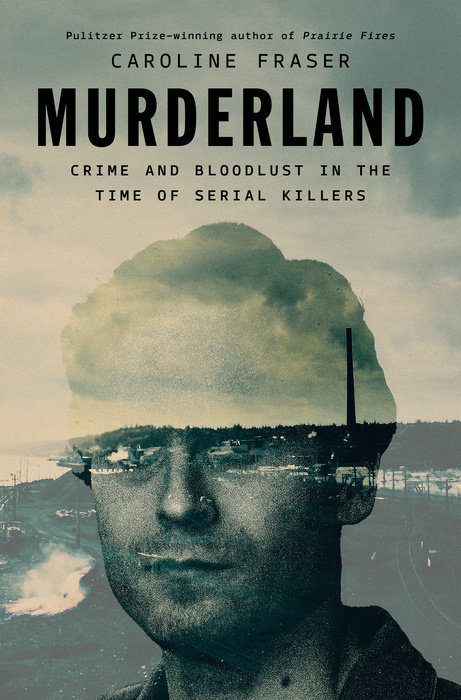
I reviewed Caroline Fraser’s new book Murderland: Crime and Bloodlist in the Time of Serial Killers for the Fall 2025 edition of Rain Taxi Review of Books:

We don’t live in a time when a single book can create a galvanizing moment, but if we did, Caroline Fraser’s Murderland could be a Silent Spring for serial killing. Ostensibly about the surge of lurid slayers who plagued the Pacific Northwest in the 1970s and ’80s, her narrative is also about the landscape that birthed them. In the award-winning Fraser’s hands, the region’s depressive atmospherics of gloomy rain-sodden forests and isolated company towns serve as backdrop to something even larger: the crime which gave rise to the crimes…

Writer’s Desk: Two Pages a Day

S.E. Hinton was just eighteen years old when her first novel, The Outsiders, was published. Though in some ways a dream come true, having that kind of success so young proved daunting.

While in college, Hinton was hit with writer’s block. She thought she needed to produce another masterpiece, she told Writer’s Digest. “And I knew I didn’t have no masterpiece.”

The solution, Hinton said, was relatively simple:

My boyfriend, who is now my husband, was saying ‘I don’t care if you never get published again, but you’ve got to start writing again. Enough of this gloom and doom stuff.’ He said, ‘Write two pages a day. Nobody’s every dropped dead of two pages.’ And he’d come over to take me out, and if I hadn’t done my two pages we wouldn’t go out. So that was a great motivation for writing…

Eventually those two pages turned into her second novel, That Was Then, This is Now:

When I had a stack about the size of a book, I sent it off…

Writer’s Desk: Ignore This Advice

Richard Bausch (editor of multiple Norton anthologies) has spent his time in the trenches of literary academia and seen the number of how-to books on writing proliferate while the number of readers keeps falling.

His advice for those aspiring to life of the pen?

Put the manuals and the how-to books away. Read the writers themselves, whose work and example are all you really need if you want to write …

Which is a superb suggestion. If you cannot learn from the well-crafted sentences of the masters, then How to Write Your Novel in 30 Days (helpful though it may be for working out certain knots in your plot) will not substitute.

Bausch goes on to remind us why we get up each day to do this thing:

This work is not done as a job, ladies and gentlemen, it is done out of love for the art and the artists who brought it forth, and who still bring it forth to us, down the years and across ignorance and chaos and borderlines … Let me paraphrase William Carlos Williams, American poet: literature has no practical function, but every day people die for lack of what is found there…

Screening Room: ‘Orwell: 2+2=5’

The new documentary from Raoul Peck (I Am Not Your Negro) just had its premiere at the Toronto International Film Festival.

I reviewed the film for The Playlist:

Everyone has their own George Orwell and tends to think everyone else gets him wrong. As such, making a sprawling quasi-biographical documentary like “Orwell: 2+2=5” is a brave effort bound to exasperate people across the political spectrum. Even so, Raoul Peck’s repeated usage of the author’s words to buttress his own hazily presented view of current events makes this a less rigorous and engaging work than anything about Orwell should be…

Here’s the trailer:

Writer’s Desk: Procrastinate Well

Finding ways not to write is a skill shared by all in the profession. But what if there was a way to delay your work productively? Miranda July has an idea:

It’s best to procrastinate with other things I don’t want to do. The amount of business emails and household chores I’ve gotten done while not writing! The best part of this is that when you finally do get down to writing, and then eventually stop for the day, you discover that the bills have been magically paid, the floors washed…

Like anything else in life, if you are going to procrastinate, do it well.

Writer’s Desk: Make It Make Sense

Canadian author Miriam Toews (Women Talking, All My Puny Sorrows) lost both her father and her sister Marjorie to suicide. She was not sure the loss was something she could ever write about.

“I had no words,” she told Kristen Martin. But then after a couple of years, Toews had a realization:

No, I’m a writer. This is what I do, take stuff and work it into something that makes sense to me…

Writer’s Desk: Only You Can Do It

The author Geoff Dyer, who writes everything from fiction to criticism and essays on tennis, has a ritual he enacts before starting a new book. He pens a note to himself which reads, “Write a book that no one else could write“:

I think one of the features of nonfiction today is that, to a degree, a book could be written by anyone possessed of a certain level of knowledge. The area of expertise might change, but quite often, there’s nothing particularly distinct about the writing or the thought. With my books, for good or ill, they could only be written by me. And that’s what they have going for them. And I just need to remind myself of that, whenever I set off…

This does not mean never following form or genre. But if you do so, be idiosyncratic about it. Stand out.

Screening Room: ‘Devo’

My review of Chris Smith’s documentary Devo ran at The Playlist:

Weaving in spectacular early footage of Devo’s first shows back in Ohio, Smith shows them happily alienating audiences who didn’t know what to make of these robotic weirdoes in the era of denim, sideburns, mellow harmonies, and noodly guitar solos. One show at an Akron bar called the Crypt, right by the Firestone plant, nearly led to the band getting pummeled. After being inspired a couple of years later by the Ramones’ first album to speed up their music and start playing CBGB in New York, Devo actually did get into it with the Dead Boys. This showed Devo could annoy even punks, whose music they appreciated for its sonic velocity but looked down on as “simple” and “anti-intellectual”…

Devo runs on Netflix next week. Are we not men?

Shameless Self-Promotion: ‘The Writer’s Year 2026’ on Sale Now

According to my publisher, the 2026 edition of The Writer’s Year Page-A-Day calendar will:

BANISH WRITER’S BLOCK: This essential calendar provides a steady guide to help you achieve your goals—or at least be productive and have fun trying—with regular writing prompts and monthly check-ins to help you track your progress.

Who am I to argue? Get your copy here!

Writer’s Desk: Get the Details Right

In the 1920s, before Dashiell Hammett went to Hollywood, he reviewed crime fiction for the Saturday Evening Post. This job caused him much consternation. Having spent some years working as a Pinkerton detective, he had some lived knowledge of the world of criminality (which brought some realism to his novels, especially Red Harvest and The Glass Key).

Hammett laid out several rules for crime writers to follow:

  • “Not nearly so much can be seen by moonlight as you imagine. This is especially true of colors.”
  • “Fingerprints of any value to the police are seldom found on anybody’s skin.”
  • “When you are knocked unconscious you do not feel the blow that does it.”
  • “When a bullet from a Colt’s .45, or any firearm of approximately the same size and power, hits you, even if not in a fatal spot, it usually knocks you over. It is quite upsetting at any reasonable range.”

Listen to Dashiell, especially regarding how it feels to be hit or shot (“quite upsetting”). Update as needed for technological advances.