Screening Room: Best Movies of 2024

My year-end movie review was published at Eyes Wide Open:

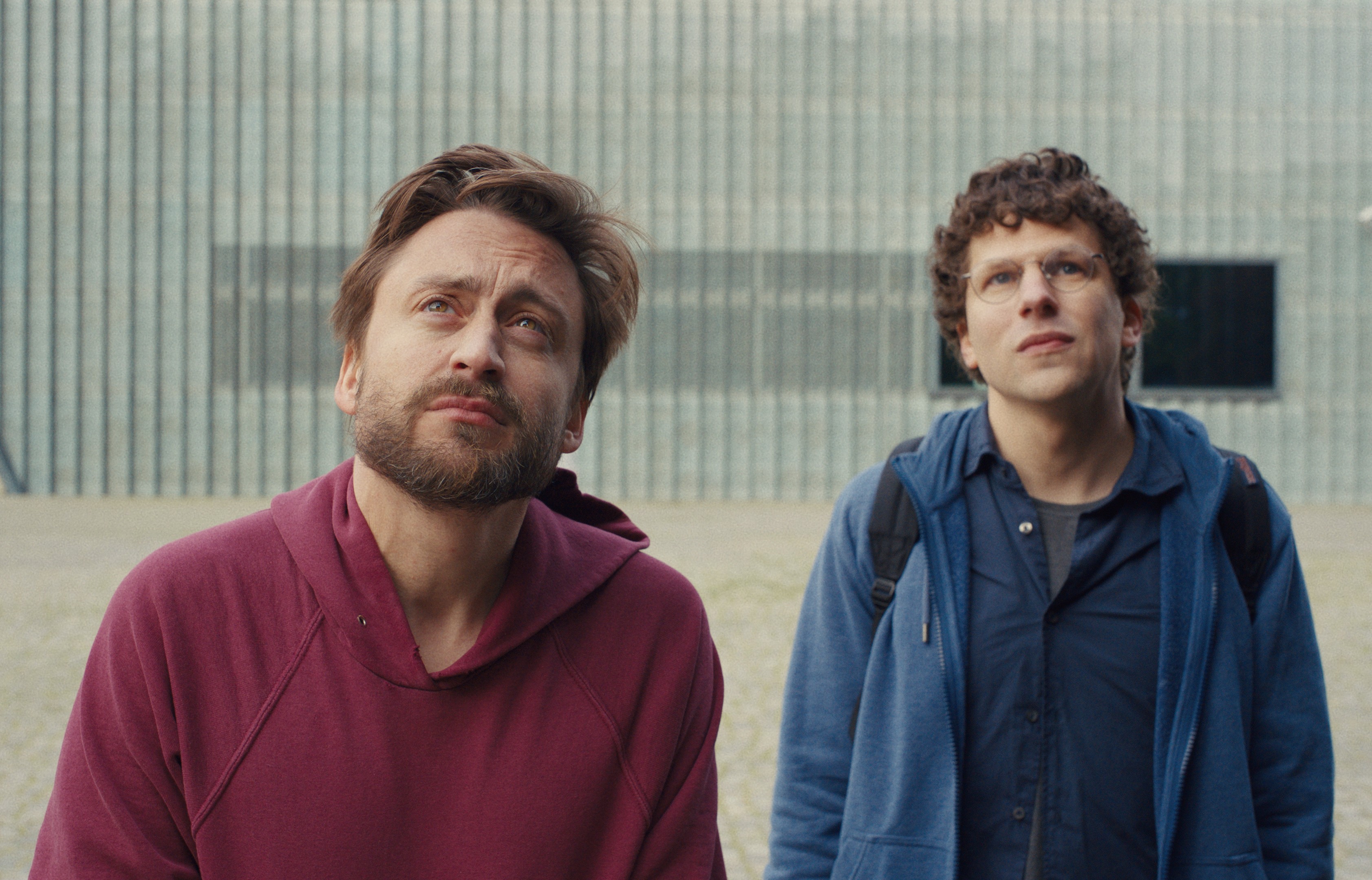
The weirdest aspect to moviegoing in 2024 was just how weird it wasn’t. That doesn’t mean COVID and streaming haven’t reshaped the industry, likely forever. But with a few standouts, things have settled into a familiar pattern. Audiences flocked to cinematic comfort fare that gave a safe return on investment. Everybody knows what they’re getting with Despicable Me 4 or Venom: The Last Dance. Nearly every movie that earned over $100 million this year was a sequel (incredibly, they’re still making Bad Boys and Planet of the Apes movies). The IP mining shows no signs of stopping. The commercial failure of the unusually subversive Joker: Folie à Deux, an acidic burn-the-bridges takedown of fan culture, suggests that derivative and repetitive will be the assumption going forward…

Writer’s Desk: Bridge the Divide

A Rhodes Scholar who left Oxford to join the Marines in 1968, Karl Marlantes served one tour of duty in the Vietnam War before returning home and spending the next few decades trying to understand what happened over there and how to communicate it to anybody else.

In “Why I Write,” Marlantes described being surrounded by protestors once in 1970:

They shouted obscenities and jeered at me. I could only stand there stunned, thinking of my dead and maimed friends, wanting desperately to tell these students that my friends and I were just like them: their age, even younger, with the same feelings, yearnings, and passions…

So he spent the next 30 years writing Matterhorn, a wrenching masterpiece which is just about the only Vietnam War novel that deserves mentioning in the same breath with Tim O’Brien’s The Things They Carried.

Marlantes did this to tell his story. But he also wanted to bridge that gap he felt back in 1970:

Ultimately, the only way we’re ever going to bridge the chasms that divide us is by transcending our limited viewpoints. My realization of this came many years ago reading Eudora Welty’s great novel Delta Wedding. I experienced what it would be like to be a married woman on a Mississippi Delta plantation who was responsible for orchestrating one of the great symbols of community and love. I entered her world and expanded beyond my own skin and became a bigger person…

Put the words down. Build a world. Get the reader out of their own skin, even just for a moment. It’s one of the great rewards of writing.

Writer’s Corner: Learn and Share

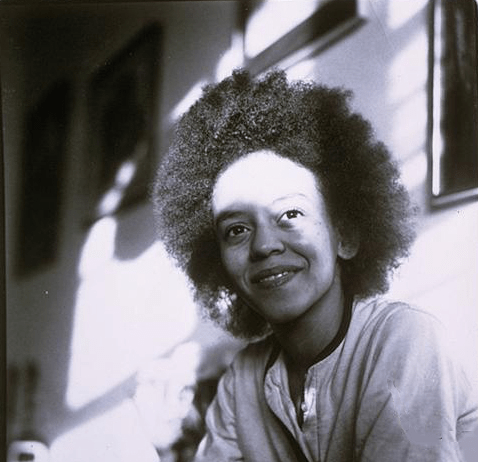
Nikki Giovanni (Elsa Dorfman, c.1980)

The late Nikki Giovanni (1943-2024) was a poet who did a lot of things most people don’t expect poets to do. She started her own publishing company. She recorded an album with a gospel choir. She even interviewed James Baldwin on television.

She also gave good advice to those willing to listen:

I know some writers say you must write every day, but I believe you should read every day. Learn something every day.

Even if it’s only something new to cook or to eat. Even if you just sit in your backyard and watch the birds or the squirrels. Give yourself over to something new.

Embrace the possibility. Why? Because you have to have something to talk about. Something you can connect for yourself and for your readers.

Writing is about sharing. Be sure you are in a giving way…

You never know, that recipe might come in handy for your next story.

Best Books of 2024

The year-end best books of 2024 feature just launched from PopMatters. I contributed the introduction and a few selections of my own:

Industry consolidation or not, publishers of all sizes and tastes kept publishing more fascinating books than anybody could come close to reading in a year. However, the indomitable critics here at PopMatters did our level best throughout 2024 to keep up. As usual, we paid special attention to the exhilarating number of books on music that came our way. Questlove just keeps knocking out books along with 50 quintillion other projects (is that workaholism or just passion?). There were also new volumes on R.E.M., the black roots of country, Jesus and Mary Chain, 2 Tone Records, Beatlemania, and more. Here and there, generalists that we are, we dipped into a broad range of nonfictional reading, from Greil Marcus on creativity to Steve Coll on why the Iraq War happened…

Writer’s Desk: Start Cutting

Sometimes when stuck for inspiration, or just as a way of jump-starting things, William S. Burroughs liked to use something he and his friend, painter Brion Gysin, developed called the “cut-up method.” It’s not difficult, per Burroughs:

Take any poet or writer you fancy. Heresay, or poems you have read over many times. The words have lost meaning and life through years of repetition. Now take the poem and type out selected passages. Fill a page with excerpts. Now cut the page. You have a new poem. As many poems as you like…

Is that cheating? If you listen to most media theorists, we have been in the age of collage for a few decades now. Give it try. You never know what might come through.

Screening Room: Best Movies of 2014 – ‘Guardians of the Galaxy’

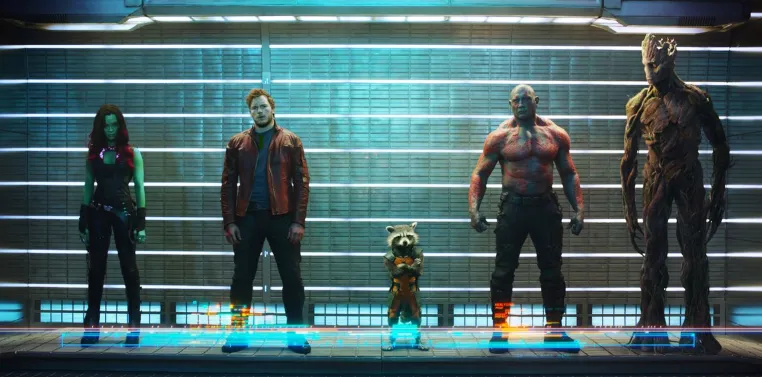
One of the best, most welcome surprises of 2014 was James Gunn’s first Guardians of the Galaxy. I revisited that as part of a 10-year retrospective at Eyes Wide Open:

There’s a lot to appreciate — and maybe even love — about the original Guardians of the Galaxy. The eager-to-please sprawl of Gen-X references, from Mom’s ’70s pop music mixtape to hero Peter Quill (Chris Pratt, surfer-dude sly) romancing the green-skinned assassin babe Gamora (Zoe Saldana) by referencing the “legend” of Footloose. Banter threaded slyly through the action instead of airdropped in by producers demanding test-screening-approved humor beats. A talking raccoon skilled in jail-breaks and bomb-making. A genocidal villain thwarted by a dance-off. The two-hour running time, practically unheard-of brevity for modern blockbusters. David Bowie’s “Moonage Daydream”. Howard the Duck…

Reader’s Corner: PW’s 2024 Graphic Novel Critics Poll

Myself and a number of other (far more estimable) writers were asked to vote on the best graphic novels of the year for Publishers Weekly.

The results are in!

For the second year in a row, the top spot on PW’s annual graphic novel critics poll is shared by two titles. The debut graphic memoir Feeding Ghosts by Tessa Hulls (MCD) and the graphic novel Victory Parade by Leela Corman (Schocken) both received a total of five votes from PW’s panel of 11 critics. These powerful works, while distinctive in style, are remarkably similar in theme, with both delving into the inheritance of trauma across generations, particularly depicted through the fraught dynamics of mothers and daughters…

Screening Room: Best Movies of 2014 – ‘Boyhood’

Boyhood (IFC Films)

Now that it’s been 10 years since the first Eyes Wide Open annual movie guide came out, it seemed a good time to look back on what were the most memorable movies of 2014.

My article on Richard Linklater’s achingly poignant Boyhood was published at Eyes Wide Open:

… wobbly at times but still magical in an everyday way. The film follows a quiet and daydream-prone boy, Mason (Ellar Coltrane, likable if sometimes stiff), growing up in Texas with a snarky older sister Samantha (Lorelei Linklater) and divorced parents (Patricia Arquette, Ethan Hawke). There’s no story, per se, it’s just his life from about age 7 to 18. Linklater’s visual scheme is straightforward and shorn of obvious flair; the often affectless dialogue even more so. But that deceptively simple framework is rich with accrued detail and insight…

More pieces on the best of 2014 to follow.

Here’s the trailer:

Writer’s Desk: Do Something, Then Write

In an interview with Guernica, Jamaica Kincaid dismissed the idea that writing is a real profession, no matter how much people try to make it into a career:

The thing about writing in America—and I just recently understood this—is that writers in America have an arc. You enter writing as a career, you expect to be successful, and really it’s the wrong thing. It’s not a profession. A professional writer is a joke. You write because you can’t do anything else, and then you have another job. I’m always telling my students go to law school or become a doctor, do something, and then write. First of all you should have something to write about, and you only have something to write about if you do something. If you just sit there, and you’re a writer, you’re bound to write crap. A lot of American writing is crap. And a lot of American writers are professionals. Writing is not a profession. It’s a calling. It’s almost holy…

Shameless Self-Promotion: ‘A Minnesota Book(ish) Miscellany’

I worked with the good folks over at Rain Taxi Review of Books to celebrate the unique literary culture of Minnesota with a new chapbook. A Minnesota Book(ish) Miscellany is a collection of trivia, ephemera, and quotes about the state’s rich ecosystem of bookstores, booksellers, and generally passionate book people, such as:

  • Memorable quotations from over a century of sources (Dylan to Dessa and beyond)
  • Curated lists that assemble a prismatic picture of Minnesota’s wide-ranging attention to the book
  • The stories behind the people behind the bookstores, from the biggest chains to the scrappiest indies
  • Key dates in state literary history
  • Picks for a Minnesota Writers Hall of Fame

You can order this nifty little edition from Rain Taxi here and soon also at local bookstores.

Writer’s Desk: Get Your Paradoxes Ready

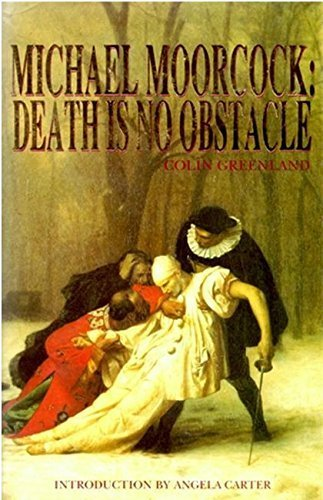
In Angela Carter’s introduction to the writing guide Death is No Obstacle, she mock-accuses genre-spanning fantasist Michael Moorcock of “giving everything away.” This may be taking it too far, because it’s hard to see how many writers even if they follow his advice to a tee could churn out novels in under a week as he famously did.

Most of Moorcock’s lessons to writers for writing with economy and speed was planning ahead. Among those was stockpiling ideas for future use so you don’t get stuck for inspiration along the way.

Here’s one:

You need a list of images that are purely fantastic: deliberate paradoxes, say: the City of Screaming Statues, things like that. You just write a list of them so you’ve got them there when you need them. Again, they have to cohere, have the right resonances, one with the other…

Try listing five or ten of those right now. File them away. Use as needed.

Writer’s Desk: Fill the Blank Space

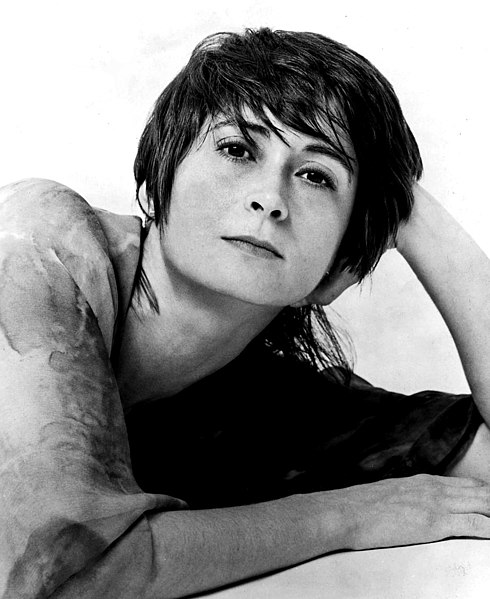
Twyla Tharp (Ken Duncan, 1981)

In Twyla Tharp’s 2003 book The Creative Habit, she boiled her whole artistic self down to this:

The blank space can be humbling. But I’ve faced it my whole professional life. It’s my job. It’s also my calling. Bottom line: Filling this empty space constitutes my identity.

Get started. It’s time to make something where now there is nothing.

Writer’s Desk: Who / What / Why

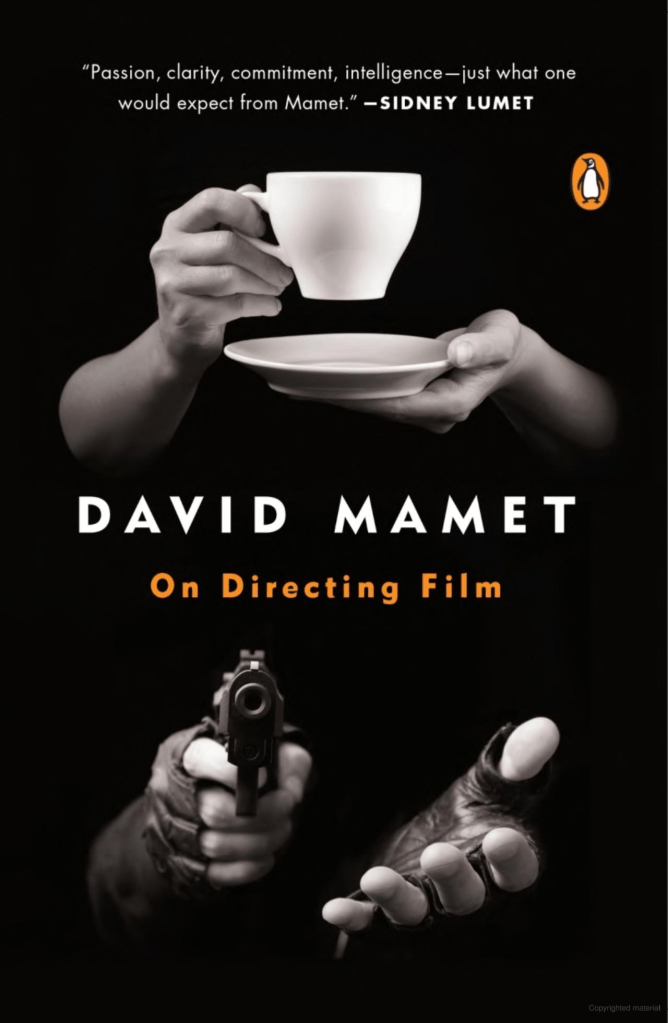
David Mamet has written across just about every genre possible, from plays to screenplays, novels, short stories, and even whacked-out science fiction scenarios (Wilson). Along the way he’s also knocked out a bevy of pieces on the craft, whether acting, directing, or writing.

While show-running The Unit (one of those War on Terror series from the 2000s), Mamet sent a memo to his writing staff that broke down what he saw as foundational to good writing.

In it, Mamet inveighs against exposition-dump scenes (which readers of Michael Crichton are very familiar with), since they are inherently non-dramatic:

Any time any character is saying to another as you know, that is, telling another character what you, the writer, need the audience to know, the scene is a crock of shit…

This is crucial but may be less useful to people not writing dialogue. One nugget Mamet provides that has more universal utility is his three-part breakdown of what each scene requires:

  • Who wants what?
  • What happens if [they don’t get it]?
  • Why now?

Stick to that and readers will keep turning the page.

(h/t ScreenCraft)

Reader’s Corner: Fall Graphic Novels

My latest graphic novel roundup for the Minnesota Star-Tribune ran over the weekend:

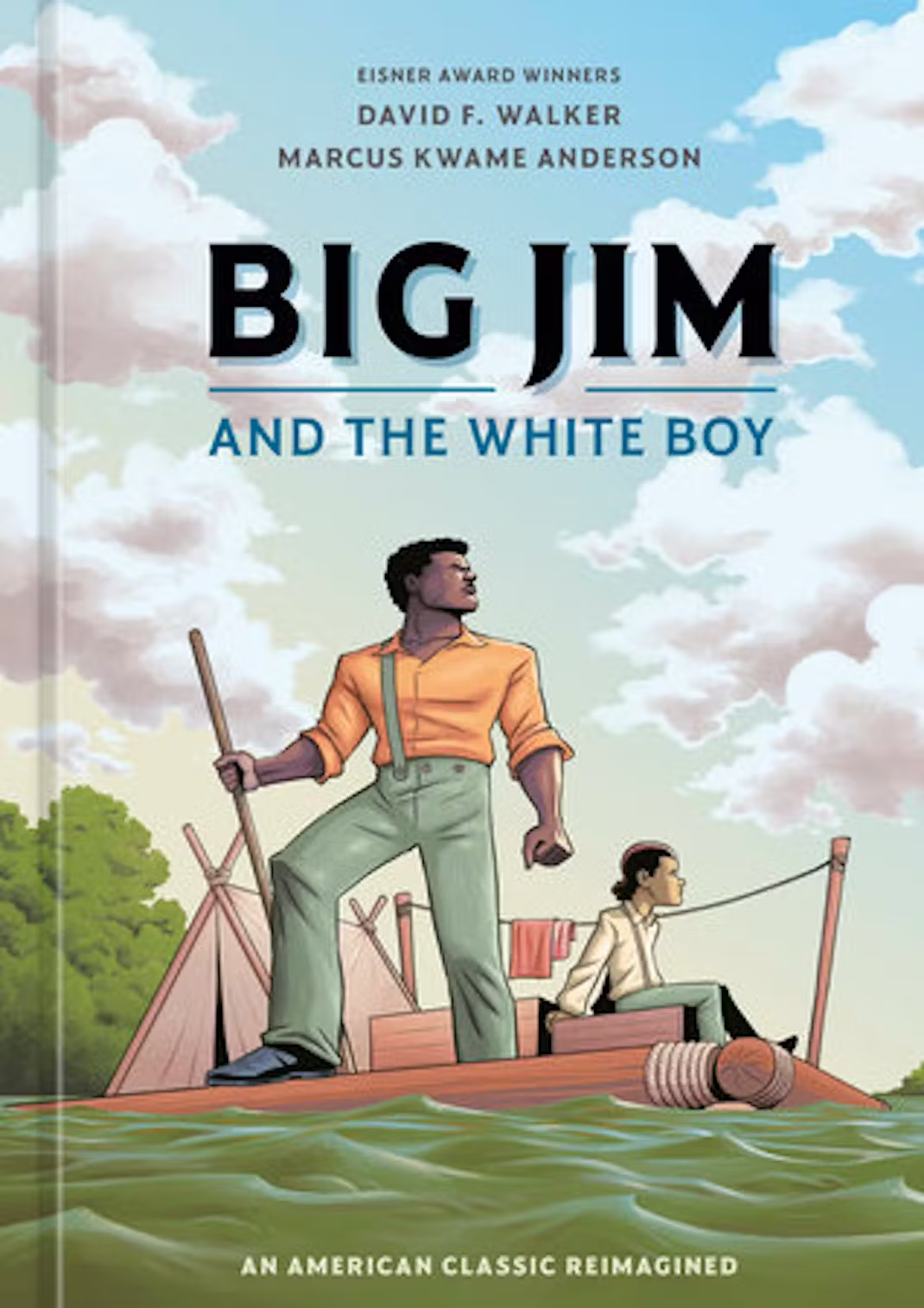
Four new graphic novels showcase a range of approaches and subjects, from deadpan horror comedy to a subversive retelling of an American classic, a fantasy adventure about a magical world next to our own and an odds-and-ends collection from an American master that is more than the sum of its parts…

Writer’s Desk: Shock is Easy

This is Denise Levertov in 1960:

I do not believe that a violent imitation of the horrors of our times is the concern of poetry. Horrors are taken for granted. Disorder is ordinary. People in general take more and more “in their stride” — the hides grow thicker. I long for poems of an inner harmony in utter contrast to the chaos in which they exist. Insofar as poetry has a social function it is to awaken sleepers by other means than shock…

It was a time filled with art that strove very hard to épater les bourgeois. You still see the desire today, and for sometimes good reason. The moment people start thinking they know what art should be doing or saying, it’s a good time to shake things up.

At the same time, as Levertov says, shock is more likely to leave calluses than epiphanies.

(h/t Maria Popova)