For the third year running, I’ve published an annual guide (sort of) to the year that was, cinematically speaking.
The 2014 Eyes Wide Open is collected like the last couple of editions, in that it starts off with pieces covering each of my 25 favorite movies of the year, then laying into the year’s 5 worst films, rounding it all off with some shorter honorable mention pieces, DVD reviews, and other ephemera.
It’s available as a paperback here and an ebook here.
Ralph Fiennes lives it up while he can in ‘The Grand Budapest Hotel’ (Fox Searchlight)
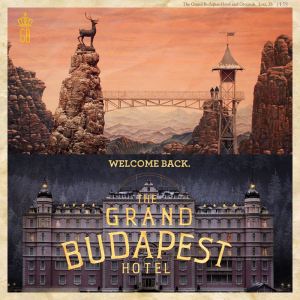
Wes Anderson’s The Grand Budapest Hotel was nominated for nine (count ’em) Academy Awards. There’s no guessing exactly how it will fare up against the competition from Birdman and Boyhood, but it’s easy to say that whatever awards those films don’t get, should be sent Budapest‘s way.
Wes Anderson isn’t our greatest living filmmaker; his style is too narrowly defined for such a grand title. We tend to think of our greatest directors as both having a signature style but also being flexible enough to tackle many styles: Howard Hawks could move from urbane comedies to Westerns and epics, Martin Scorsese from urban grit to musicals and children’s’ fantasias, and so on. By contrast Anderson has one style, and each of his films simply refine it. All those twee little trinkets and fussy outfits could drive you mad, were one to watch too many in a row. But as perfectly Andersonian a spectacle as The Grand Budapest Hotel is, it also expands his reach in surprising ways. Being one of the year’s most unique spectacles, it’s also the first Anderson film made up of tragedy as much as it is comedy…
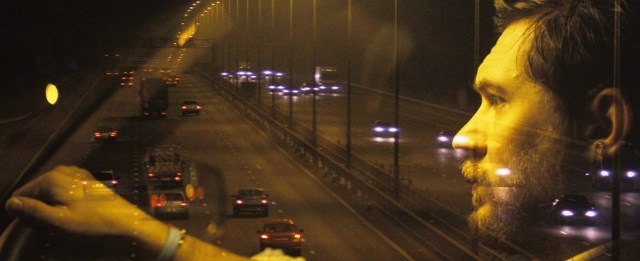
In the summer of 2014, a little film named Locke came and went from a few cinemas in an eyeblink. It’s not hard on the surface to see why: The secretive trailer promises only a one-man show: Tom Hardy in a car for about an hour-and-a-half, grousing and pleading on the phone. Just as audiences failed to find it, the Golden Globes also ignored the film, as most likely the Oscars will too.
Do yourself a favor and check out Locke, which is available on DVD and VOD now. My review is at Short Ends and Leader:
The prospect of spending an hour and a half with an actor in a car while they sweet-talk and argue with people on the phone would normally be straight tedium … But when the actor is Tom Hardy, it’s a different story. In Steven Knight’s spellbinding Locke, Hardy darts through the tense screenplay with such graceful ease that his work feels more like something lived than performed. By the time this downbeat nail-biter is done, it feels justified to finally go ahead and say that Hardy is easily one of the greatest actors of his generation…
Recreating the march in ‘Selma’ (Paramount Pictures)
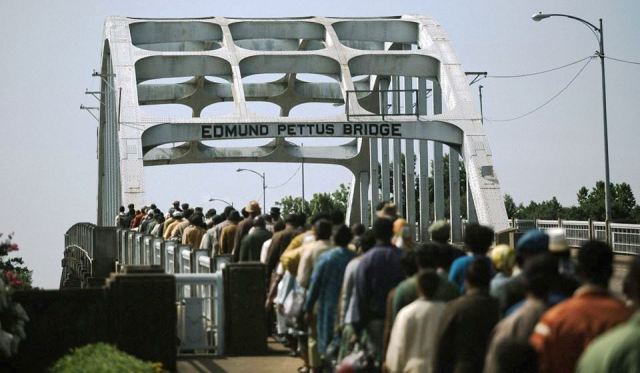
In Tina Fey and Amy Poehler’s monologue at the start of last night’s more anti-climactic than usual Golden Globe Awards, they referenced the film Selma (which, again, tells the story of Martin Luther King Jr.’s leading the dramatic civil rights march through what was essentially enemy territory in Alabama in 1965).
It starts with a mediocre gag and follows up with one of the most pointed lines of any recent awards show:
… in the 1960s, thousands of black people from all over America came together with one common goal: To form Sly and the Family Stone [some laughter] … But the movie Selma is about the American civil rights movement that totally worked and now everything’s fine.
Oscar Isaac and Jessica Chastain plot in ‘A Most Violent Year’ (A24)
Sneaking into theaters after the great Christmas rush is J.C. Chandor’s A Most Violent Year. A low-key drama about warring heating-oil firms set in 1981 New York, when murders and violent crime had the city on the verge of collapse, the film and its characters are as controlled and tightly-wound as its setting is chaotic.
A Most Violent Year is playing now in limited release, with some hopes for Oscar nominations to give it more play around the country. My review is at PopMatters:
J.C. Chandor’s return to land-based storytelling shares some of the predilections of last year’s Robert Redford vehicle All Is Lost. Both that film and A Most Violent Year are deliberately paced, refusing to rush their stories for the purposes of juicing the drama. This is not a bad tendency. It shows Chandor to be an unusually disciplined filmmaker in a landscape increasingly populated by the work of the eager-to-please. But not all subject matter supports the slow-and-steady approach, and that’s the case with A Most Violent Year…
Now that 2014 has drawn to a close, the theaters are full of all the films that opened in November and December that nobody has had any chance to get to. It’s not a bad thing, given the too-crowded flurry of awards-scrapping releases trying to make it in before the end of the year, mixed in with the occasional counter-programming piece of dross. But it’s also a useful time to think about how the year shaped up, film-wise.
My essay, “2014: A Most Mediocre Year,” ran this week at PopMatters:
The Interview was almost certainly not going to be in contention for anything in 2014, whether awards or places in people’s funny bones. As my colleague Rebecca Pahle over at Film Journal International put it, the movie is probably best skipped by people who “have a visceral hatred of jokes about things going into and coming out of butts.” Nevertheless, there was something about the entire hacking contretemps (on a non-geopolitical level, at least) that feels representative of where the film industry is today. Sony acted initially with brazen attitude, signing on to a comedy that never would have been contemplated, let alone released, by a major studio 15 years ago. They then folded so swiftly you could almost feel the breeze. Desperation mixed with an overabundance of caution is not a good combination for any industry. You can see both of those attributes everywhere in this year’s mostly pallid offerings…
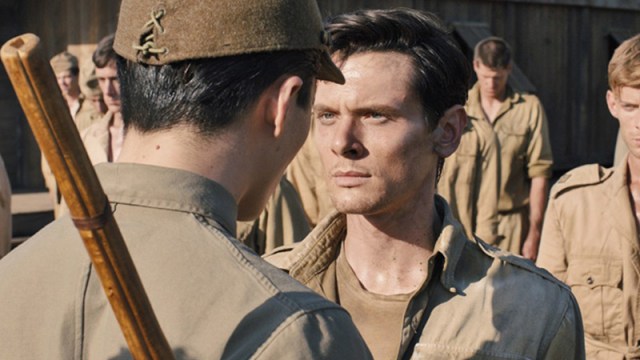
Jack O’Connell faces down a sadistic prison guard in ‘Unbroken’ (Universal Pictures)
Laura Hillenbrand’s Unbroken has been sitting atop the bestseller lists for close to 200 weeks now, which is no surprise, given its incredible true story of Louis Zamperini, who went from a record-breaking performance running in the 1936 Berlin Olympics to being a brutalized Japanese prisoner of war. Angelina Jolie’s (yes, she directed) take on the book is respectful and professionally done, but never quite gets at what made Zamperini such a survivor.
Unbroken opened wide on Christmas Day. My review is at Film Racket:
If one learns anything from a handsomely-told World War II survival fable like Unbroken, it’s that if you are marooned at sea for weeks and then tossed into a brutal prison camp, it’s best to do so with an Olympic runner by your side…
Mark Wahlberg educates the youth in ‘The Gambler’ (Paramount Pictures)
In the newest film from William Monaghan, writer of The Departed, Mark Wahlberg plays a professor who’s burning the candle at both ends, what with all the late-night gambling, fooling around with students, and those loan sharks who keep dropping by.
The Gambler opened wide on Christmas Day as a curious piece of award-film counter-programming. My review is at Film Journal International:
In the world of The Gambler, a hyperactive head-scratcher of an addle-brained disaster, many things are possible. Compulsive gamblers can play hand after hand of blackjack where the cards magically fall their way. Mobsters freely dispense philosophical koans like beads thrown from a Mardi Gras float. Level-headed, beautiful blondes get weak at the knees at the approach of self-centered boors. Mark Wahlberg can play a novelist and professor of literature. The film’s sense of realism is, to put it mildly, elastic. Not that this would necessarily matter were the material at hand more compelling. But this is a pulp confection that never manages to commit to the ludicrousness of its central conceit and ends up shortchanging the entire enterprise…
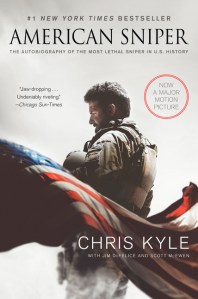
Bradley Cooper (right) as Chris Kyle in ‘American Sniper’ (Warner Bros.)
Before Chris Kyle was murdered at the age of 38, he had amassed a legendary kill record as an army sniper; possibly the most lethal one in American military history. His bestselling memoir, American Sniper, was originally planned as a Steven Spielberg project, but the film was ultimately directed by Clint Eastwood, no stranger to squint-eyed dramas of force and will.
American Sniper hit theaters today. My review is at Film Racket:
Bradley Cooper is rarely the sort to grab one’s attention at center stage; he only truly lights up films like American Hustle or The Hangover series when there’s a co-star for him to bounce his nervy patter and blue eyes off of. But Cooper’s performance as Kyle delivers the proper mix of humility and bottled-up frustration called for in a soldier from whom so much is expected. The film starts off with Kyle on a rooftop in Iraq, covering a column of Marines advancing through a city. He sees a woman hand a grenade to a young boy, who runs with the weapon towards the Marines. No other soldiers have eyes on the pair. His spotter reminds him that if he gets it wrong, “they’ll burn you”…
Emily Blunt and James Corden go ‘Into the Woods’ (Walt Disney)
Stephen Sondheim’s 1987 musical Into the Woods threw a couple Shrek ‘s worth of fairytales into the mix (Rapunzel to Cinderella and Red Riding Hood) and used them for a musically soaring but lyrically cynical story about the dangers of dreams granted. Rob Marshall’s lavish Disney adaptation is quite faithful to the original and comes packed with performances ranging from the unsurprisingly good (Meryl Streep’s Witch) to the revelatory (Chris Pine as the Prince).
Into the Woods opens on Christmas Day. My review is at PopMatters:
This narrative begins with a Baker and his Wife who are cursed with infertility by their witch neighbor. They can only break the curse by gathering up four talismans that helpfully bring all the other characters into play: “The cow as white as milk / The cape as red as blood / The hair as yellow as corn / The slipper as pure as gold”. The prologue includes an undertone as well, when the Baker adds, “I wish we had a child,” the juxtaposition typical of Sondheim’s best work, layered like so many fairy tales. Some 25 years ago, however, such layering was not the sort of thing that Disney’s heroes and gamines sang about. But the play’s reassessing of fairy tale tropes, its reinvigorating them with old Grimm’s blood and thunder, looked forward to the spunky heroines and broad-chested prince-villains who later cropped up in everything from Beauty and the Beast to Frozen…
Christoph Waltz and Amy Adams fight over ‘Big Eyes’ (Weinstein)
Perhaps stung by the negative reception to his big-budget blowout take on the old campy gothic soap opera Dark Shadows, Tim Burton went smaller for his latest film, a more modest and quirky true story about an artist who never quite got her due.
Big Eyes opens on Christmas Day. My review is at PopMatters:
There was a time in the early ‘60s when Walter Keane was making more money than any other living artist in the Western world. He was a master of sales, making himself the subject of fawning interviews and Life magazine spreads, sidling up to celebrities for photo ops whenever he could. Originals and, especially, reproductions of his “big eye” paintings were snatched up an adoring public, who didn’t care one bit about the critics who called his work sentimental garbage. His success led to admiration and dissent: Woody Allen’s Sleeperposits a future where the paintings, like Xavier Cugat’s music, are viewed as masterpieces.
As much as that joke is premised on the paintings’ kitsch, it also has to do with their eventually revealed truth, which is that Walter never painted them…
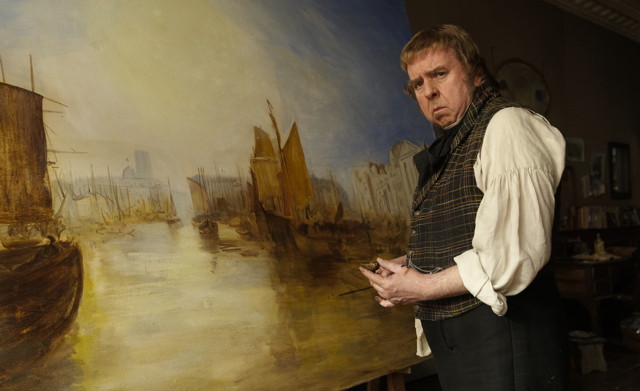
Timothy Spall in ‘Mr. Turner’ (Sony Pictures Classics)
Mike Leigh tends to be the director one goes to for deft character studies (Secrets and Lies, Another Year, and such), not gorgeous period pieces. Nevertheless, Leigh took on the life story of one of Britian’s greatest painters, J.M.W. Turner, with all the costumery and flattering lighting one could ask for.
Mr. Turner opens this week in limited release. My review is at Film Racket:
Anybody looking for a cozy holiday costume drama about a famous painter should steer clear of Mike Leigh’s uncompromising, sometimes brutal film. J.M.W. Turner is best known these days as the man who painted all those landscapes hanging in London’s National Gallery where boats on and buildings along the Thames nearly disappear into a rainbow-hued swirl of sun-dazzled shimmer. These are pre-Impressionistic, even quiet works. But in Mr. Turner, the man who heaved and hurled those paintings into life appears as a great snuffling boar of a man with coarse manners; the farthest thing from a nineteenth-century aesthete one could find…
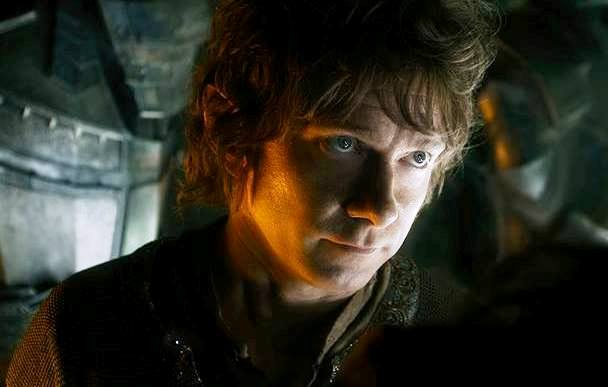
Martin Freeman as Bilbo in ‘The Hobbit: The Battle of the Five Armies’ (Warner Bros.)
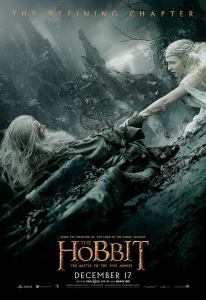
Six films and who knows how many gajillion dollars of revenue later, Peter Jackson’s monumental, exhausting adaptation of J.R.R. Tolkien’s Ring novels comes to an end with the third film in the second Hobbit cycle. Love it or loathe it, this is the end—and it’s going out with a bang.
The Hobbit: The Battle of the Five Armies opens in all known territories next Wednesday. My review is at Film Journal International:
Amidst all the clashing armies, fell spirits, and talk of destinies and dynasties that fill J.R.R. Tolkien’s mythological adventure novels, the author’s eye never drifts far from the plucky little hero who finds unknown strengths in terrifying times. Peter Jackson dutifully sounded the same tune in his films of Tolkien’s The Hobbit and Lord of the Rings. But where Tolkien was a humanist, Jackson is a strategist, ever marshaling his forces for grander victories. There’s no denying the films’ quality as battle-ready spectacle of the first order. But the final installment, The Hobbit: The Battle of the Five Armies, is just about all Jackson and precious little Tolkien. In other words, if you like orc-killin’, and lots of it, this is your film…
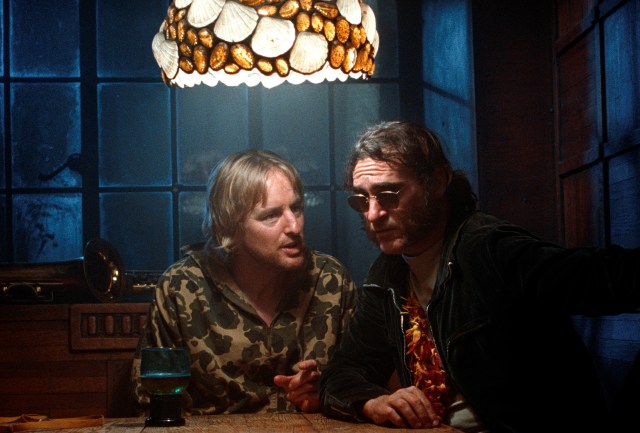
Owen Wilson and Joaquin Phoenix sleuth confusedly in ‘Inherent Vice’ (Warner Bros.)
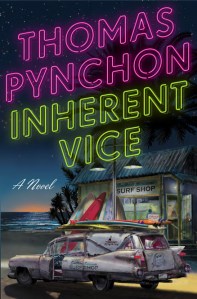
When Thomas Pynchon published Inherent Vice in 2009, it became very clear that the revered author of Gravity’s Rainbow was still interested in his basics (baffling plots, conspiratorial confusion) but was now also cool with knocking out an honest-to-God fun read. Paul Thomas Anderson’s resume of overbusy, overcrowded Southern California anthology meta-fictions (Magnolia, in particular) would seem to make him the perfect man to bring this book to the screen.
Inherent Vice is opening this week in limited release and likely to wide befuddlement; it’ll go wider around the nation in January. My review is at Film Racket:
“Thinking comes later,” mumbles Larry “Doc” Sportello (Joaquin Phoenix) at the start of Paul Thomas Anderson’s foggy, funny film of Thomas Pynchon’s psychedelia-noir Inherent Vice, only he never quite gets around to it. A lot of things get in his way, you see, from the moment that his ex-old lady Shasta Fay Hepworth (Katherine Waterston, an angelic , transfixing moonbeam of a smile but with not much to do here) lays on him a whole rap about needing help with her new old man. In the grand tradition of beautiful women whose true motives are submerged beneath shimmering layers of twinkle, Shasta’s initial request is more complicated and dangerous than it initially seems, particularly after she goes missing. Doc’s journey starts off being about making sure that Shasta (clearly the love of his life, though neither of them may know or want to know it) is okay, it turns into a quasi-historical tour of a Southern California counterculture circa 1970 on the verge of imploding under the weight of its own bafflement and paranoia…
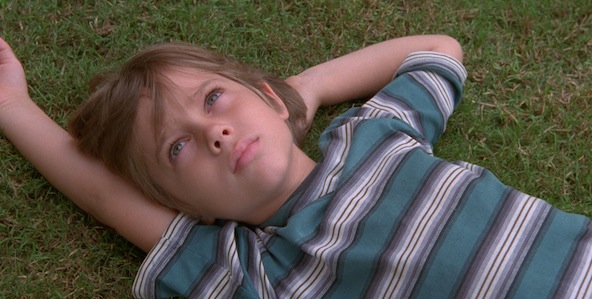
Dreaming of greatness, or just dreaming, in ‘Boyhood’ (IFC Films)
Earlier today, New York Film Critics Online—a group that quite generously includes yours truly in its membership—met to hash out the most notable films, filmmakers, and performers in various categories during 2014.
In short, Richard Linklater’s 12-years-in-the-making Boyhood won for best picture and in two other categories, with Alejandro Inarritu’s meta-fictional satire Birdman tied at three wins. Other films like The Imitation Game and particularly The Grand Budapest Hotel received many votes in particular categories but ultimately couldn’t pull out a win. (Note that last year, NYFCO chose 12 Years a Slave as best film, and it went on to win the Oscar … just saying.)
Here’s the full reckoning of what we as a group liked best from 2014, broken down first by category and then our annual Top 10 list; note that several of them (Unbroken, A Most Violent Year, Selma, and Two Days, One Night)won’t get released until Christmas or later this year:
Best Picture — Boyhood
Best Director — Richard Linklater, Boyhood
Best Actor — Eddie Redmayne, The Theory of Everything
Best Actress — Marion Cotillard, Two Days, One Night
Best Supporting Actor — J.K. Simmons, Whiplash
Best Supporting Actress — Patricia Arquette, Boyhood
Best Screenplay — Birdman
Best Cinematography — Birdman
Best Breakthrough Performance — Jack O’Connell, Starred Up and Unbroken

 For the third year running, I’ve published an annual guide (sort of) to the year that was, cinematically speaking.






 Chris Barsanti
You must be logged in to post a comment.