Writers’ Corner: The ‘Lost’ Monkey and Ambrose Bierce

Why not in a church? The non-ending of 'Lost'.
Why not in a church? The non-ending of ‘Lost’.

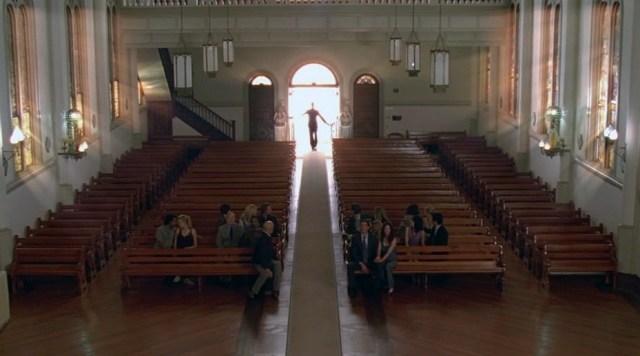
Lost did not end well, to put it mildly. Televised at roughly the same time as the similarly-controversial and anti-dramatic finale of The SopranosLost took all of its seemingly carefully constructed mythology and kicked it out the window in favor of a squishy purgatorial non-conclusion. (As opposed to The Sopranos, which ended rather brilliantly exactly as it had begun: with characters who could not and would not change.)

In the case of Lost, was it bad writing or a failure of will to pull all the pieces together? In this “On Story” interview at the South by Southwest Film Festival, show co-creator Damon Lindelof argues he doesn’t like stories where everything is spelled out. He wants there to be space in the margins for viewers to interpret things. Fair enough. But there’s a difference between spelling everything out as a writer and simply punting.

The best part of the interview comes about eight minutes in, when Lindelof talks about the running joke they had on the show about what would happen if they were canceled prematurely and had to wrap up all the show’s plot tendrils in a matter of weeks. The idea they came up with was brilliant: There was a monkey on the island named Joop; have him do it:

We would just cut to this well-appointed library and this leather chair would spin around and there would be a monkey in a smoking jacket [who would say] “Hello, my name is Joop. I suppose I have some explaining to do.” He would talk for however long we needed to explain things. But Joop actually stood for everything I don’t want to do in storytelling.
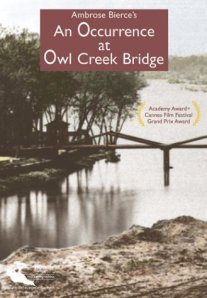
An-Occurrence-at-Owl-Creek-Bridge-imageGiven how things did turn out, though, having a talking monkey in a smoking jacket (preferably with a refined Oxbridge accent) show up for a lengthy exposition dump would have been highly more enjoyable than the turgid mess than resulted. By not choosing a dramatic or even philosophical angle for their story to take, the writers of Lost went for a muddled middle, which will never result in successful storytelling.

Elsewhere in the interview, Lindelof references Ambrose Bierce’s “An Occurrence at Owl Creek Bridge” as an example of how he didn’t want to craft the show. It’s actually hard to come up with a more apt example of everything that Lost ultimately did do.

“Occurrence” was made into an Oscar-winning short film back in 1962, you can watch all of it here and judge for yourself:

On Cinema: ‘Frances Ha’ in IMAX!

THRILL to Greta Gerwig's dancing in 'Frances Ha' in IMAX!
THRILL to Greta Gerwig’s dancing in ‘Frances Ha’ in IMAX!

It’s been nice to see The Onion spicing up their pages with the addition of some bold-faced names lately. Check out, for example, Joyce Carol Oates’ recent advice to aspiring young writers trying to get published (“A good writer should always be curious, constantly looking around for new and more powerful people to sleep with”).

Almost better, though is this satirical piece from director Noah Baumbach (or an Onion staffer doing a nice impersonation of his dry style that’s been used for a few “Shouts & Murmurs” essays in the New Yorker) about his new talky black-and-white micro-budget comedy, Frances Ha; now helpfully providing summer counter-programming for all those who don’t feel like seeing anything with The Rock in it. In short, Baumbach says, you haven’t seen anything until you’ve seen this sucker in 3D:

I just went all out when I was writing it, tailoring every character and scene for maximum impact on a six-story IMAX screen in a 601-person amphitheater…. And the effect, to be honest, is simply stunning. Through the magic of IMAX, every social faux pas, every quiet epiphany, every dinner party, and every awkward conversational exchange practically jumps off the screen. You feel as though you can almost reach out and touch the glass of white wine that a character is drinking. Simply put, no celluloid version of Frances Ha could provide the same visceral impact as witnessing a 30-foot-tall Greta Gerwig towering above the audience as she negotiates her relationship with her best friend or tries to find an apartment, all displayed in vivid black-and-white.

Now, if only it were true; the possibilities are nearly endless.

On the Tube: ‘Louis C.K.: Oh My God’

Louis C.K.: "I like to think I'm a nice person, but I don't know — a lot of it is context"
Louis C.K.: “I like to think I’m a nice person, but I don’t know — a lot of it is context”

So how long has everyone known about Louis C.K.? You try to be a culturally aware person, up on the latest things, familiar with the trending performers, and so on and so forth. But every now and again one or more slips through the cracks and you just … miss it. Then, you’re behind the curve, and the more people go on about him or her, you figure, well, I’ll get around to it eventually. And then you do. And then you realize … what took me so long?

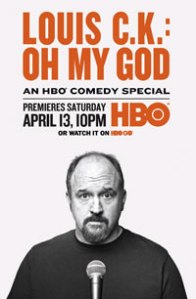
louisck-ohmygod-poster-200Case in point, Louis C.K.’s latest special, Oh My God. If you read my review of it that ran on PopMatters yesterday, you might be forgiven for thinking that this particular writer had been following this guy’s career for years, when in fact it was a very recent development, and long overdue.

Anyways, it’s a great hour of comedy, here’s part of my review:

Whenever Chuck Klosterman gets tired of writing the New York Times’ “Ethicist” column, the editors there should consider throwing out a feeler to Louis C.K. They might have to put up with a few gags about the Holocaust and child murder, but he’s actually a good fit for the position. His media profile is that of the controversial shock-comic who leaps into territory that might daunt Sarah Silverman. But what’s always been most interesting about C.K. is his quaintly earnest examination of morality and life’s purpose, with the occasional joke about cannibalism…

Here’s the promo:


Screening Room: Roger Ebert

ebert1

Roger-Ebert-The-Great-MoviesRoger Ebert passed away yesterday after a difficult and lengthy battle with cancer, one he fought in public with eloquence and bravery. He was a movie lover of the first rank; one of those critics many of us admired without reservation. (The worst some would have said of him was that he liked too many movies; hardly a resounding criticism.)

My essay on this sad passing ran today in Film Racket:

It goes without saying that Roger Ebert, who died yesterday from cancer at the age of 70, was America’s movie critic. It also goes without saying that there will never be another like him, especially not in these media-atomized times. No other critic was better known or (arguably) more listened to; at least as much as any critics are listened to about anything. His trademark thumbs-up/thumbs-down judgement was derided by some as being too simplistic, but really, isn’t that the first question people ask about a movie: Should I see it? Ebert understood that no matter what else he was writing about, whether it was Pasolini or Jaws: The Revenge, he was more than just a critic, he was a journalist for a large-circulation daily newspaper, and so had an obligation to boil it down…

Below, a couple of the better moments from Ebert’s old Sneak Previews show with Gene Siskel, which is where many of us who came up in the 1970s and ’80s first learned to look critically at the movies as a popular art form.

First, here’s Ebert’s take on Kubrick’s Full Metal Jacket, which he terms (correctly, I think) “too little, too late”:

And here’s Ebert’s heartfelt and thoughtful rave about GoodFellas:


Books That Never Were: Quentin Tarantino Classics

Even though we’re arguably living in a time of unprecedented leaps in graphic design, that boundary-breaking often fails to trickle down to the book world. Like any other creative industry, book covers tend to group together by trends—now minimal, then not; and always the unspoken rule that genre fiction covers show people and more literary fiction does not.

In any case, freelance designer Sharm Murugiah had an awesome idea: Why not take the aesthetic of classic Penguin paperback covers from the 1950s and ’60s, with their standardized type treatments and focus on one or two iconic but abstract images, and see what would happen if he designed book covers for Quentin Tarantino films? This is what:

tarantino-covers

They all pretty much make sense, though it takes a minute to get some of the references (anybody remember the significance of Pop Tarts in a toaster for Pulp Fiction?).

(hat-tip to GalleyCat, once again)

Writer’s Room: Neil Gaiman’s ‘Secret Freelancer Knowledge’

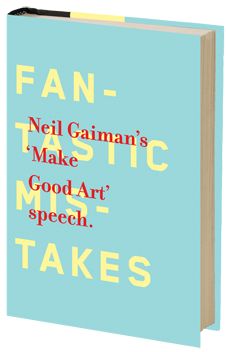
Gaiman_MakeGoodArtOne day we’ll get to a world where all writers make their living by delivering killer commencement speeches and then publishing said talks as nifty little standalone editions that might be considered self-help-y where it not for the name attached. Case in point: Neil Gaiman.

Last May, Gaiman gave the commencement address at Philadelphia’s The University of the Arts. He was everything one could hope for: wistful, self-deprecating, helpful, and occasionally inspirational. He also understood that what all those soon-to-graduate artists wanted is help and advice that would tell them: How Do I Do What It Is That I Want To Do?

A few notes from Gaiman’s speech where he lays out the attractions and trials of the freelance life, along with some “secret freelancer knowledge”:

  • A freelance life, a life in the arts, is sometimes like putting messages in bottles, on a desert island, and hoping that someone will find one of your bottles and open it and read it, and put something in a bottle that will wash its way back to you: appreciation, or a commission, or money, or love. And you have to accept that you may put out a hundred things for every bottle that winds up coming back.
  • And when things get tough, this is what you should do. Make good art. I’m serious. Husband runs off with a politician? Make good art. Leg crushed and then eaten by mutated boa constrictor? Make good art. IRS on your trail? Make good art. Cat exploded? Make good art. Somebody on the Internet thinks what you do is stupid or evil or it’s all been done before? Make good art.
  • People keep working, in a freelance world, and more and more of today’s world is freelance, because their work is good, and because they are easy to get along with, and because they deliver the work on time. And you don’t even need all three. Two out of three is fine. People will tolerate how unpleasant you are if your work is good and you deliver it on time. They’ll forgive the lateness of the work if it’s good, and if they like you. And you don’t have to be as good as the others if you’re on time and it’s always a pleasure to hear from you.

Full transcript here.

The speech is going to be published this May in an edition designed by Chip Kidd.

Screening Room: The Academy Awards Are Decadent and Depraved

oscar

OSCAR-2013-Promo-Poster-01

So, the Oscars happened. It was difficult to decide what was the more depressing element of the evening: The laceratingly dull ceremony of Tolstoyan length or the fact that Life of Pi took home so many awards?

I try to answer these questions (and many, many more!) in “The Academy Awards are Decadent and Depraved,” now available for your reading pleasure at Short Ends & Leader; here’s some of it:

…Seth MacFarlane was not going to save this year’s Academy Awards from itself.  Nobody could. There is something about the event’s bulldozer quality these days that crushes, folds, and spindles any host who puts themselves in the cross-hairs. A production featuring a reanimated Bob Hope, jokes from Woody Allen and the entire Simpsons staff, 5D special effects by James Cameron, and an original score performed live by the ghost of Bernard Herrmann, would still come off as stiff, unfunny, desperate, and cheap.

That being said, MacFarlane—an exemplar of the having-my-cake-and-eating-it-too school—didn’t help…

But at least the evening featured sock puppets performing their version of the Denzel Washington flick Flight. Enjoy!

New in Books: ‘Going Clear’: Lawyers, Guns, Money and Scientology

dianetics1
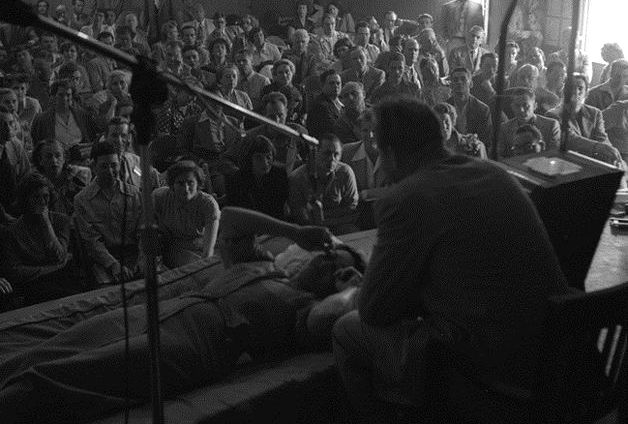
L. Ron Hubbard conducting a Dianetics seminar in Los Angeles, 1950.

goingclear1

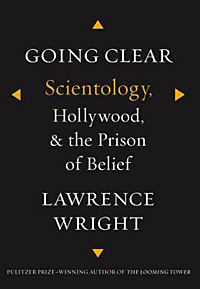
Last month, Lawrence Wright published Going Clear, his sprawling history and examination of the Church of Scientology. It’s a massive and thoughtful piece of work that could end up being the go-to work on Scientology for years to come, in the same way that Jon Krakauer’s Under the Banner of Heaven has been for the Mormon religion.

My essay on Wright’s book, “‘Going Clear’: Lawyers, Guns, Money and Scientology,” was published this week at PopMatters. Here’s an excerpt:

[L. Ron] Hubbard gathered followers to his self-improvement cause through the ‘50s and ‘60s, and money poured in. Then came the Sea Organization, or Sea Org. Starting in the late ‘60s, an increasingly disconnected from reality Hubbard became convinced that the British, American, and Soviet governments wanted to harness Scientology’s psychological insights for their own uses. With three ships under the 57-year-old Hubbard’s command, Sea Org cast off in 1967 with “no destination or purpose other than to wander” the high seas, free from government control.

Hubbard roamed the world like some maddened commodore, exciting rumors that he was an operative for the CIA, drinking heavily, fantasizing about taking over Rhodesia, and searching for a lost underwater city that only he knew about. Crewing the ships were a youthful band of believers who had signed contracts pledging themselves to Sea Org “for the next billion years.” (The last is one of many details Wright seeds the book with that beg to be taken as comedy, but ultimately can’t.)…

In addition to the history of Hubbard and the Church’s founding, Wright also digs into its celebrity aspect, particularly via the experience of Paul Haggis, writer/director of everything from Crash to various episodes of The Facts of Life.

You can read an excerpt from Going Clear about Haggis’s experiences here.

Comics Corner: Hippies Hate Superman!

hippieolsen2

As one of the longest-surviving comics publishers in the business, DC Comics did so (like everyone else who made it) through a combination of quick turnaround, constant reinvention, and relentlessly squeezing every last penny out of their comics. In one of their less-inspired moves, in the 1950s, DC created a spinoff to their tentpole property Superman that came with the highly prosaic title Superman’s Pal Jimmy Olsen.

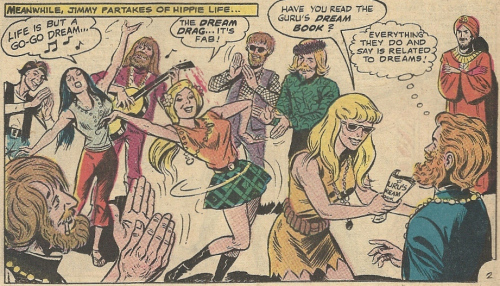
hippieolsen1So far, so bad. However, in one of those granular moments of surreality that comes when publishers chase every cultural trend and damn the logic, that series produced one bona fide classic. We give you: 1969’s fabulous freakout Hippie Olsen’s Hate-In!

Firstly, there’s the issue that Jimmy Olsen looks here more like a bearded dandy from the Edwardian era than hippie (details). Then there’s Jimmy’s tendency throughout the entire series to want to kill Superman. Blog into Mystery notes:

…You don’t have to be Freud or Jung or whoever to see that he has some issues with the most important people in his life. He has no problem with dreaming about punching them, tripping them, or KILLING THEM, without a whole lot — let’s be honest – of provocation for any of those deeds.

This strikes me as a problem.

It seems that Superman has always had this problem. Unlike some superheros—Batman, Spider-man—whose enemies have wanted to do away with them for interfering with their dastardly plans, Superman’s very existence appears to be the driving force behind the hatred, from friend and foe. The very indestructibility that makes him so powerful a force for good and (unfortunately) so uninteresting as a character also engender some very mixed feelings in the all-too-weak people (villains and not) who surround him.

Must make for a lonely life.

Reader’s Corner: Sci-Fi Goes to War

slaugherhouse5The military has ever been one of the structural supports of much American science fiction. Whether they’re heroically battling off alien invaders or corrupting scientific research for their nefarious and war-mongering needs, the boys in green have a long history in the genre.

That’s why it’s particularly interesting whenever you run across a science-fiction writer who actually served in the military and then brought that sensibility to their writing. The responses can vary widely, from the jingoistic Reagan-era militarism of Jerry Pournelle to the ironic action of David Drake to the highly satiric and jaundiced Kurt Vonnegut.

Over at i09, Charlie Jane Anders does a superb job of studying all of the ways these authors brought their experience of war to bear in their fiction, as well as other fantasy and sci-fi authors who were less vocal about their military service (from Tolkien to Clarke).

Now on Sale: ‘Eyes Wide Open 2012’

looper1

It’s only about a week to go before the Oscar Awards broadcast. In and of themselves, they don’t matter, even for serious movie fans. Not a bit. Given the wild richness that can be found in just one year’s worth of American studio and indie (for whatever that distinction is still worth making), identifying one particular film or performer as the “best” is an exercise in futility.

Eyes Wide Open-coverSo why do we care? If nothing else, the Oscars (like the Golden Globes) serve as an excuse to look over a year’s worth of cinema and determine what was most noteworthy about it. Or, more commonly, to argue about what those out-of-touch types in the Academy foolishly considered the best.

To help continue that argument, we offer for your consideration: Eyes Wide Open 2012: The Year’s 25 Greatest Movies (and 5 Worst). It’s a compilation of some 100-odd pages’ worth of material that I wrote over the past year (as well as some new pieces written for this book) about the films of 2012—the good, the bad, the preposterous, and the utterly forgettable.

In addition to the best and worst lists (The Hobbit made one list, and Cloud Atlas made the other; try guessing which), there’s also some essays, DVD reviews, and even some awards lists of my own (because, why should the Oscars have all the fun?). It covers everything from the strange genius of the late Tony Scott to the yawn-inducing mediocrity of The Avengers and the stark political attack contained in Brad Pitt’s Killing Them Softly.

You can get the ebook here and here; there’s also a print-on-demand paperback here.

If this works out, it might become an annual thing. Let me know what you think.

Writer’s Room: Regarding Editors

editorWriters need editors, and vice versa. Of course, from the vituperative correspondence between the two sides, you might never know it. Some writers see editors as meddling parasites, while there are more than a few editors who like writers as long as they shut up and do what they’re told.

Consider this anecdote, courtesy of Scott Stossel:

Michael Kinsley, a longtime editor at magazines like Harper’s, the New Republic and Slate, is reputed to have said that the ideal writer is the one who files his piece and then gets run over by a bus, so the editor can rewrite with impunity.

Department of Satire: ‘The Critic’

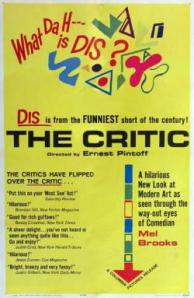
thecritic-posterBack in 1962, the 36-year-old Mel Brooks was watching an avant-garde film when an old man behind him wouldn’t stop with his grumpy and frustrated running commentary. Brooks turned this experience into his own short film, The Critic, in which he ad-libbed over some abstract animation; borscht belt meets the downtown art scene.

The result was a three-and-a-half-minute piece of genius that  won the 1963 Academy Award.

You can watch the whole thing here:

(hat-tip: Open Culture)

At the Movies: Cold Reality in 2012

killingthemsoftly1Although the biggest earner at the box office in 2012 was the tidy teamwork adventure of The Avengers, the year’s films were by and large afflicted with a grimmer worldview. This was as true of blockbusters like The Hunger Games to star vehicles like Killing Them Softly and micro-indies like Compliance.

My end-of-year wrap-up is at PopMatters:

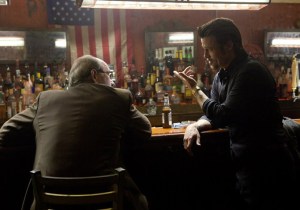
The year’s most brutal indictment of this system comes in Killing Them Softly. Andrew Dominick’s chilly, vaguely over-satisfied crime film is based on George V. Higgins’ profane novel of life and talk (and talk, and talk) amongst the underworld demimonde. Some hack crooks knock off a card game for what they think is easy money. Word gets back to the organization in charge of the game and Jackie (Brad Pitt), a hitman with a soft touch, is dispatched to relieve a few people of their lives….

The film’s steady march towards execution plays out against the sturm and drang of the 2008 US presidential election. A skittery title sequence jumbles up shots of a trash-strewn tunnel with audio of Obama’s soaring rhetoric—a road to nowhere. Asked whether he has room for friendships or loyalties, Jackie can only scoff, “Don’t make me laugh.” He nearly snarls the film’s last line, briefly agitated rather than utterly smoothly professional, as he’s been to this point. Now, he lays it out: “I’m living in America, and in America, you’re on your own.”


New on DVD: ‘Detropia’

Detropia-DVD-FThough it was on the Oscar documentary shortlist, the final selection of best documentary nominees shamefully overlooked the unforgettable Detropia, which finally hits DVD today.

My full review is at Film Journal International:

“We are here at a critical time!” shouts a tent-revival preacher somewhere in the gloom of a rapidly downsizing Detroit. His is one of the many frightened, brave, saddened, still-fighting voices that Heidi Ewing and Rachel Grady include as a chorus of the forgotten in their tragedy-tinted but clear-eyed look at what happens when a city’s reason for being up and leaves…

You can see the trailer here: