Writer’s Desk: Snoopy’s Rules

In the 2002 collection, Snoopy’s Guide to the Writing Life, a stellar line-up of scribes from Ray Bradbury to William F. Buckley, Jr. responded to a Peanuts strip featuring Snoopy writing. 

One of the contributors was Charles M. Schulz’s son Barnaby Conrad, who provided these six rules for writing:

1. Try to pick the most intriguing place in your piece to begin.
2. Try to create attention-grabbing images of a setting if that’s where you want to begin.
3. Raise the reader’s curiosity about what is happening or is going to happen in an action scene.
4. Describe a character so compellingly that we want to learn more about what happens to him or her.
5. Present a situation so vital to our protagonist that we must read on.
6. And most important, no matter what method you choose, start with something happening! (And not with ruminations. A character sitting in a cave or in jail or in a kitchen or in a car ruminating about the meaning of life and how he got to this point does not constitute something happening.)

It was a dark and stormy night…

(h/t: Maria Popova)

Writer's Desk: Start with a Cold Shower

The Atlantic‘s James Parker wrote recently about how most of his writing days used to start:

I’d wake up, smoldering and sighing, reel out of bed and into the kitchen, and put the kettle on. Then I’d think: Well, now what? Time would go granular, like in a Jack Reacher novel, but less exciting. Five minutes at least until the kettle boils. Make a decision. Crack the laptop, read the news. Or stare murkily out the window. Unload the dishwasher? Oh dear. Is this life, this sour weight, this baggage of consciousness? What’s that smell? It’s futility, rising in fumes around me. And all this before 7 a.m…

His new approach to kicking off a day’s writing appears to be more fruitful:

I wake up, smoldering and sighing, reel out of bed and into the kitchen, and put the kettle on. And then I have a cold shower … Then you get out, and you’re different. Things have happened to your neurotransmitters that may be associated, say the scientists, with elevated mood and increased alertnessYou’re wide awake, at any rate.

This usefulness of this approach to the writing lifestyle has not been fully tested as of yet.

Writer’s Desk: Be Ruthless

One of the greater speculative fiction writers of our time, China Mieville — imagine H.P. Lovecraft filtered through Kafka and Neal Stephenson with a generous dose of Marxism — talked to Clarkesworld magazine about his writing practice.

For Mieville, his productivity comes in spurts. But that doesn’t mean he is undisciplined:

I’m ruthless with early drafts, as one has to be … More and more as I get older and as I change as a writer, so what tends to happen is the first draft tends to be quite long and maybe quite flabby, then I’ll trim that down. There can be occasions when it’s very difficult because there are some sections that you really want to keep in, but, at the same time, you know that you probably ought to get rid of that bit. Sometimes, you have to be quite ruthless with yourself.

It’s good advice. After all, if a writer isn’t ruthless with themselves, it’s almost a guarantee that their readers will be.

Writer’s Corner: Go Fast

They always say to keep a notebook around. This is not only good advice, it is essential. Inspiration does not strike that often. When it comes, you need to have something to catch it with.

Take Joseph Heller. He told Rolling Stone that he got the idea for Catch-22 in the middle of the night:

It kind of burst into my mind. I was actually pacing the floor at four in the morning. I couldn’t wait to get into my office at this small advertising agency and scribble the first chapter.

He wasted no time. If he had waited, we might have lost one of the greatest books of the 20th century.

However, when answering whether writing classes are worthwhile, he digresses into how long it takes to write a book.

There was for me. None at all, I’d say, for the student who lacks talent. You can’t teach talent. And you can’t give intelligence. You can’t teach a person to be funny. A novel takes two or three years to write. By the time a student is halfway through his book, he’ll know so much more about writing and about literature, and will have experienced so much more as a person, that there’s a good chance he’ll lose interest in the book before it’s finished.

This is not much talked about but there are plenty of writers who have gotten a good distance into a long-term project and then lost any interest in finishing it. Of course by then, they’ve committed so much time (or, if they’re lucky, were paid an advance) that there is nothing for it but to press on.

So when you know what you want to write, do it. Fast.

That’s what Heller would have said. Of course, in the twenty years between his debut Catch-22 and this 1981 interview, he had only managed to produce a total of three novels. So, as in so much of life, do as the man says, not as he does.

Writer’s Desk: Be Organized

Gustave flaubert.jpg
Gustave Flaubert

We all know the stereotype of the absent-minded artist. Brilliant at illuminating the furthest reaches of the human soul but can’t remember where she put her glasses. It is a stereotype but a true one, nonetheless. Some think that artists have to be absent-minded because they have to keep space in their mind and their soul open for their art.

But at the same time, one must remember your Flaubert:

Be regular and orderly in your life, so that you may be violent and original in your work.

Get your act together in real life. Pour out the chaos onto new pages.

Writer’s Desk: Find a Safe Space

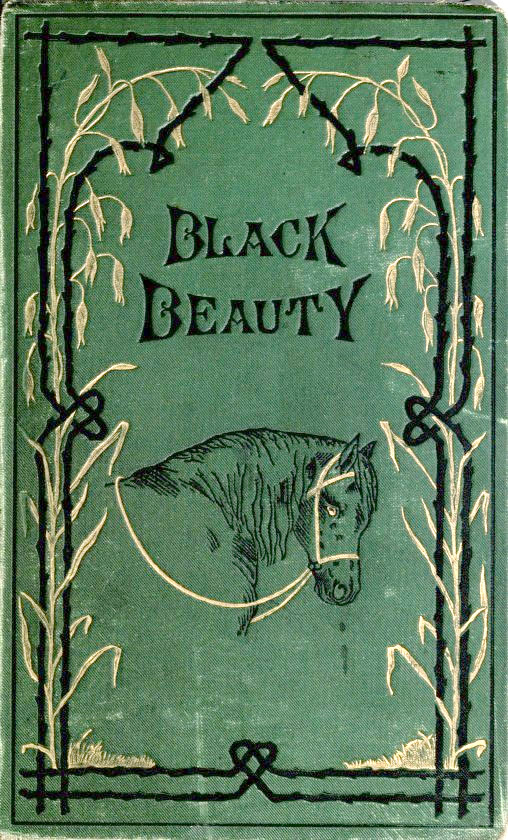
BlackBeautyCoverFirstEd1877.jpegThe life of a writer is usually a precarious one, for those of us who make their living solely on their wits and their pen. The lucky ones do not have to hustle all day and night from one assignment and check to the next, but are actually employed to write as part of their job. Whether or not that writing is what they want to do (and if not, there’s always the weekend and mornings to work on the novel), it’s always a relief to be employed to do what one loves.

The great journalist A. J. Liebling—who found his base of operations at the New Yorker—once compared his fellow ink-stained wretches to a certain famous fictitious horse:

The pattern of a newspaperman’s life is like the plot of Black Beauty. Sometimes he finds a kind master who gives him a dry stall and an occasional bran mash in the form of a Christmas bonus, sometimes he falls into the hands of a mean owner who drives him in spite of spavins and expects him to live on potato peelings…

Sometimes this can mean swallowing one’s pride. But if the stall is nice, frequently mucked out, and comes replete with fresh hay and the occasional apple, that comfort can leave more time for doing what you are meant to do: Write.

Writer’s Desk: Don’t Just Write Your Story, Live Your Story

Index
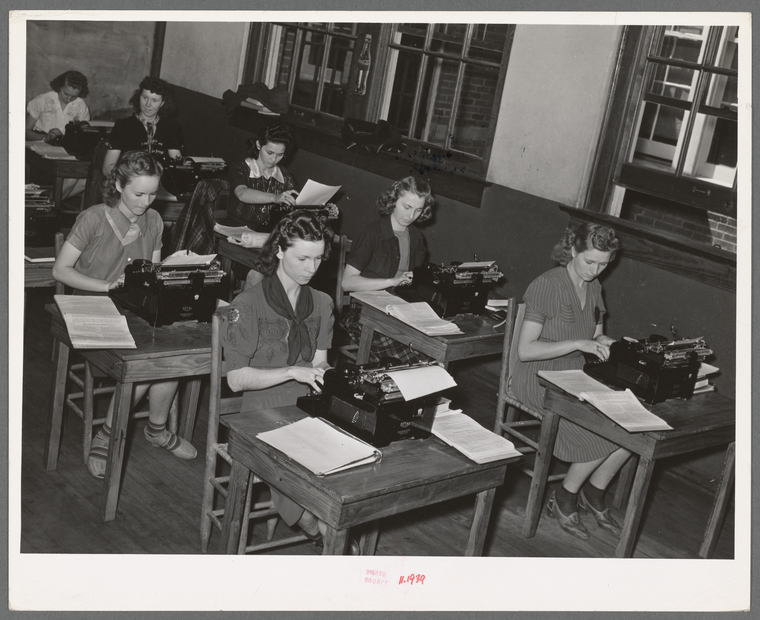
(New York Public Library)

Molly Antopol, author of The UnAmericans, once said that to her writing and reading can be acts of generosity:

One of the main reasons I read—and definitely why I write—is to try to see the world through someone else’s eyes. To try to imagine what life is like for someone who’s different from myself … I’m forced into having empathy for everyone—even someone who I’d normally be upset with, or feel wronged by…

As a result, she views writing as a fully immersive experience:

The moment a character becomes real to me, and their experience becomes real to me, the writing itself almost feels like method acting. When I’m writing a story, which takes me a year or more, I can feel my character living with me—they’re responding to whatever funny, familial, or social situation I’m in, and I think about their responses constantly. This feeling of living alongside a character is one of the most gratifying things about writing, and definitely one of the reasons I do it…

Don’t just imagine your characters. Live them.

Writer’s Desk: Have No Fear

Christopher_Hitchens
Christopher Hitchens (Fri Tanke, 2008)

In the speech that he gave accepting the Christopher Hitchens award, George Packer noted how he and Hitch didn’t always get along and actually disagreed quite violently on the Iraq War. Hitch thought it was a noble cause, while Packer (as covered in his incredible book The Assassin’s Gate) knew from on-the-ground reporting that it was a disaster. Nevertheless, their friendship persisted:

We would say rude things about each other in print, and then we’d exchange tentatively regretful emails without yielding an inch, and then we’d meet for a drink and the whole thing would go unmentioned, and somehow there was more warmth between us than before. Exchanging barbs was a way of bonding with Christopher…

Packer went on to talk about Hitch’s bravery and freedom from fear:

Fear breeds self-censorship, and self-censorship is more insidious than the state-imposed kind, because it’s a surer way of killing the impulse to think, which requires an unfettered mind. A writer can still write while hiding from the thought police. But a writer who carries the thought police around in his head, who always feels compelled to ask: Can I say this? Do I have a right? Is my terminology correct? Will my allies get angry? Will it help my enemies? Could it get me ratioed on Twitter?—that writer’s words will soon become lifeless. A writer who’s afraid to tell people what they don’t want to hear has chosen the wrong trade…

Telling how things appear to you, and in the way that feels most right for you and your voice, is the only way to write.

A scared writer is a terrible writer.

Writer’s Desk: Philip Pullman

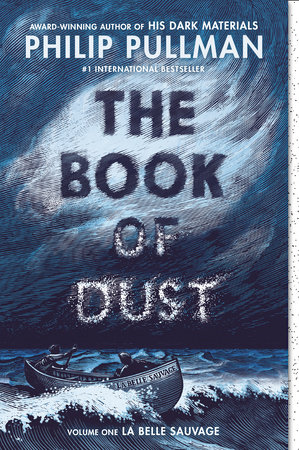
Maybe you are spending January catching up on HBO’s adaptation of Philip Pullman’s His Dark Materials series. Maybe you are actually taking the long cold winter to get some writing done. If the latter, here are some tips from Pullman himself, courtesy of Radio 4:

Ignore the market and write what you want—Write what you want to write, be the next big thing and not another iteration of a phase that will pass…

Stay at the desk—Resist wandering off, checking social media or making yet another cup of tea. You wouldn’t to miss a brilliant idea because you weren’t there to receive it…

Find the way of writing that works for you—Don’t be tied to how you think you should write if it doesn’t produce anything…

Let the protagonist propel events—It’s useful emotional shorthand for getting your readers invested with your lead…

Explore different formats and genres—Ideas might not necessarily fit into what you’re currently working on. If you know something is a good idea, but just isn’t working, don’t necessarily throw it out…

Writer’s Desk: Rebel Against Yourself

While all writers have to get out into the world to study it, feel it, live it, and understand something beyond what lies inside their own cranium in order to make an impact, they should not overlook the value that can come from determining what would shock themselves.

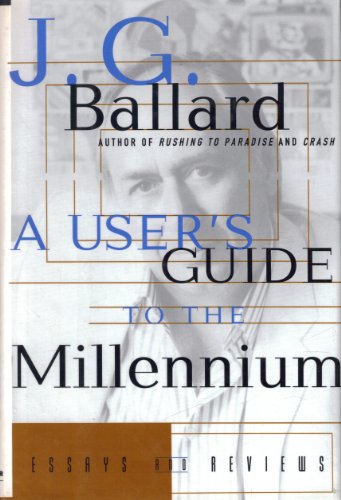
Per the great provocateur J.G. Ballard (Crash), circa 2005:

As for the special problems facing the middle-class artist — it looks as if alienation is going to be imposed on him whether he likes it or nor. Most artists and writers in the past have been middle-class, the surrealists to a man, with backgrounds similar to those of the Baader-Meinhof gang. However, the middle-class world against which they rebelled was vast and self-confident. Who today would bother to rebel against the Guardian or Observer-reading, sushi-nibbling, liberal, tolerant middle-class? I think the main target the young writer/artist should rebel against is himself or herself. Treat oneself as the enemy who needs to be provoked and subverted…

How can one shock the world if one can’t shock oneself?

Writer’s Desk: Listen to Your Characters

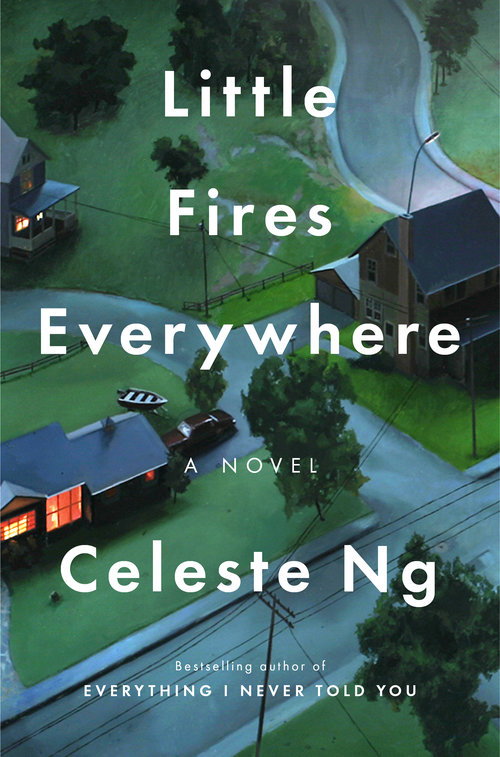
Little Fires Everywhere - Celeste Ng.jpg

There are a lot of writing books that tell you how to craft an exciting plot. They provide exercises, quizzes, little tricks to spur your creativity and come up with new and interesting wrinkles. Helpful tricks, of course. But no matter how thrilling or curiosity-spurring your plot, nobody will care if they do not care about your characters.

How do you get readers to invest in the fictional people you are writing about? Get to know them like you would real people in your life. Novelist Celeste Ng (Little Fires Everywhere) has some advice in The Writer:

I get to know my characters like you’d get to know someone at a cocktail party. You sit down with them and listen – whether they talk about work or their families or sports or politics, whether they seem open-minded or opinionated, whether they’re logical and articulate or rambling – and you get a sense of what’s important to them, who they are as a person. So I sit down and write about a character, or write in the character’s own voice and see what emerges. It’s a lot easier to bring characters to life on the page when you know them well…

Once you know how your character will act when they’re at a party, having a cocktail, watching the game, or who they voted for, you will be able to write anything about them and it will ring true.

Writer’s Desk: Love Words More Than Your Voice

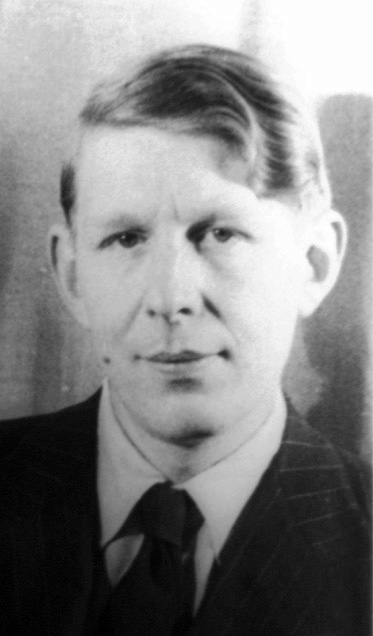
AudenVanVechten1939
W. H. Auden (c. 1939)

According to legend, or at least a book with the lilting title How Does a Poem Mean?, W. H. Auden was once asked what advice he would give to a young poet. Auden responded that if he asked the young poet why they wanted to write and the answer came back that they thought they had something important to say, Auden’s conclusion was that there was no hope.

However, Auden went on to say that if the answer came back as “I like to hang around words and overhear them talking to one another,” then he thought the young poet might have promise after all.

Following Auden’s line of thought, you could say that if you start with a love of words, their flow and shading and endless permutations, you might get to somewhere important. But starting in grandiloquence will get you nowhere.

Writer’s Desk: Keep at It

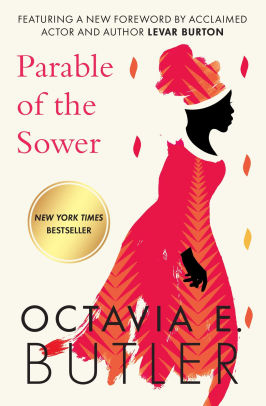
Parable of the Sower

Like many writers of science fiction, Octavia Butler spent many long years working at her craft while remaining mostly unknown and with precious little to show for it. She is revered today for her classics like The Parable of the Sower and Kindred but for much of her career she toiled in relative obscurity, as so many female writers of color do.

Point being, she knew something about sticking with it.

Here’s what she told Locus magazine back in 2000:

I’ve talked to high school kids who are thinking about trying to become a writer and asking ‘What should I major in?’, and I tell them, ‘History. Anthropology. Something where you get to know the human species a little better, as opposed to something where you learn to arrange words.’ I don’t know whether that’s good advice or not, but it feels right to me. You don’t start out writing good stuff. You start out writing crap and thinking it’s good stuff, and then gradually you get better at it. That’s why I say one of the most valuable traits is persistence. It’s just so easy to give up!

Writer’s Desk: Shape Matters

A Lesson Before Dying Book Cover - typographic layout with author name and book title with small image of an African American man standing beneath a wooden structure

In 2010, Ernest J. Gaines—the late author of A Lesson Before Dying and The Autobiography of Miss Jane Pittman—talked about how part of his fiction grew out of listening to the stories of the people he grew up around in Jim Crow-era Louisiana.

But, he emphasized, writing is not just about having good material:

Content is probably only 40 percent of it, no more than 50 percent, as far as I’m concerned … If a book doesn’t have form, then damn, it ain’t no novel. We can go down the block right now and find a guy on the next corner who’ll tell the biggest and truest story you can ever hear. Now, putting that story down on paper so that a million people can read and feel and hear it like you on that street corner, that’s going to take form. That’s writing…

Writer’s Desk: Don’t Fit In, Never Explain

The late, irascibly great Nick Tosches was a son of Newark who skipped college, immersed himself in rock journalism at its raucous Lester Bangs-ian height, then went on to write fiction, music biographies (Dean Martin, Jerry Lee Lewis), and a somewhat indescribable book about Dante, teaching himself Latin and medieval Italian along the way.

Tosches wrote as he damn well pleased, and had some thoughts about it:

We are uncomfortable with works that can not be placed comfortably into a category…

Most best-selling books belong to one genre or another—espionage, crime, horror, suspense, romance, mystery, self-help, ghost-written political memoirs that take the genre of boredom to a ghastlier realm…

Like every other writer worth reading, [George V. Higgins] had no clue as to how he did it…

Structure is artifice, and artifice is for saps…