The first performance of “Messiah,” in Dublin, in 1742, was, according to a contemporary announcement, presented “for the Relief of the Prisoners in the several Gaols.” Proceeds from the première helped the Charitable Musical Society to free a hundred and forty-two people from debtors’ prison…
The newest musical from John Carney (Once) is an ’80s-set romance set in (of course) Dublin. Sing Street is playing now. My review is at PopMatters:
When first glimpsed in John Carney’s newest musical confection, ruddy-cheeked teenager Conor (Ferdia Walsh-Peelo) looks like the kind of kid who’s set to be chewed up and spit out by the music industry, not to mention life itself. The setting for Sing Street is Dublin, circa 1985, where the black-robed authority of the Church still rules all and the ferry to England carries more dreamers and strivers to London each day.
As the meager middle class trappings of Conor’s life are stripped away, he’s left facing a future without much in the way of armor, or security. It’s the kind of situation that pop songs were made to cure…
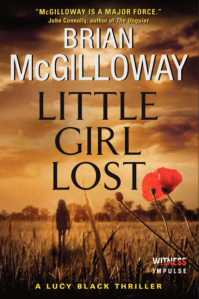
One of the more interesting panel discussions at the Dublin Writers Festival was titled “The State of Crime”. In it, crime novelists Arne Dahl, Sinead Crowley, and Brian McGilloway held forth on everything from the state of Swedish society to whether or not they did any research with the police before writing their first books.
As with many events at the Festival, the talk turned to writing mechanics. Moderator [Declan] Burke suggested that aspiring writers not try to put everything into a first draft. He preferred just banging it all out once, messy or not, and then going back and fixing anything from plot to characterizations on multiple later passes. Dahl suggested writing one short story a year in addition to novels, since the compressed space “sharpens your pen”. He also thought it helpful, and possibly even necessary, for crime writers to read Macbeth once a year…
The annual Dublin Writers Festival, which just concluded this past Sunday, was an enjoyably low-key but nevertheless enthusiastic affair, mixing up writing workshops with talks and Q&As with authors and the occasional performance piece.
I covered a few days of it for PopMatters; here’s part:
This is Dublin, after all, which proudly carries its status as UNESCO City of Literature, and where the odd plaque on an undistinguished townhouse near St. Stephen’s Green reminds you that Bram Stoker lived there, and the Gate Theatre just happens to be staging An Ideal Husband by the Dublin-raised and -educated Oscar Wilde. The event locations were mostly clustered within an easy walk of Temple Bar, making one conveniently never far from a restorative tipple. The offerings ran the gamut from workshop-like conversations with would-be writers to themed readings and music and poetry galas. By the end of even just one day, if you didn’t already have a novel or cycle of poems in the works, you would feel as though you were somehow missing out…
Roddy Doyle’s The Commitments was one of the great music novels of the past few decades. Published in 1989 and serving as the start for Doyle’s unofficial “Barrytown Trilogy” (also comprising The Van and The Snapper), it followed knockabout Dubliner Jimmy Rabbitte’s attempt to put together a great soul/R&B band with nothing but Irishmen. Doyle’s newest novel, The Guts, picks up with Jimmy many years on, still working with music but saddled with middle-aged responsibilities and a new problem: Cancer.
Jimmy’s reflexive fear of sentiment is a powerful force in the book, and it works both for and against what Doyle is trying to achieve. In refusing to turn Jimmy into some sad, caterwauling victim baying at the moon, Doyle keeps the book from being just another sickness story. It’s Jimmy’s story through and through. Within a few dozen pages, he has pushed on past the cancer and is concerned more with the other matters that will not wait; family, the bills, what to do about that old female friend he just ran into who seems keen. Most problematic is work at the small excavatory Irish music site he started (“Finding old bands and finding the people who loved them”) whose fortunes were as bitterly unforgiving as any 21st century creative enterprise…
James Joyce and Sylvia Beach at Shakespeare and Company, 1920
Sylvia Beach was one of those fantastic Lost Generation figures who worked diligently in the spaces between literary figures like Hemingway and Fitzgerald but doesn’t get remembered nearly as often. Likely that’s because booksellers —she ran Paris’ famous Left Band expat hangout Shakespeare and Company—never quite get the same attention that book authors do.
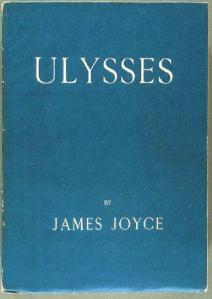
Beach was also a smart businesswoman. Trying to drum up some sales for in James Joyce’s forthcoming Ulysses, she wrote to George Bernard Shaw in 1921, asking whether he as a fellow Irishman, would be interested in pre-ordering a copy. Shaw’s negative response was swift, definite, and for the ages:
To you possibly [Ulysses] may appeal as art … but to me it is all hideously real: I have walked those streets and know those shops and have heard and taken part in those conversations. I escaped from them to England at the age of twenty; and forty years later have learnt from the books of Mr. Joyce that Dublin is still what it was, and young men are still driveling in slack-jawed blackguardism just as they were in 1870. It is however, some consolation to find that at last somebody has felt deeply enough about it to face the horror of writing it all down and using his literary genius to force people to face it….
I must add, as the prospectus implies an invitation to purchase, that I am an elderly Irish gentleman, and if you imagine that any Irishman, much less an elderly one, would pay 150 francs for such a book, you little know my countrymen.


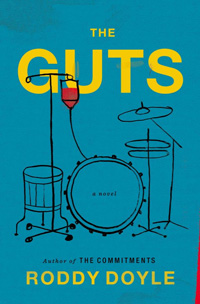 Roddy Doyle’s The Commitments was one of the great music novels of the past few decades. Published in 1989 and serving as the start for Doyle’s unofficial “Barrytown Trilogy” (also comprising The Van and The Snapper), it followed knockabout Dubliner Jimmy Rabbitte’s attempt to put together a great soul/R&B band with nothing but Irishmen. Doyle’s newest novel, The Guts, picks up with Jimmy many years on, still working with music but saddled with middle-aged responsibilities and a new problem: Cancer.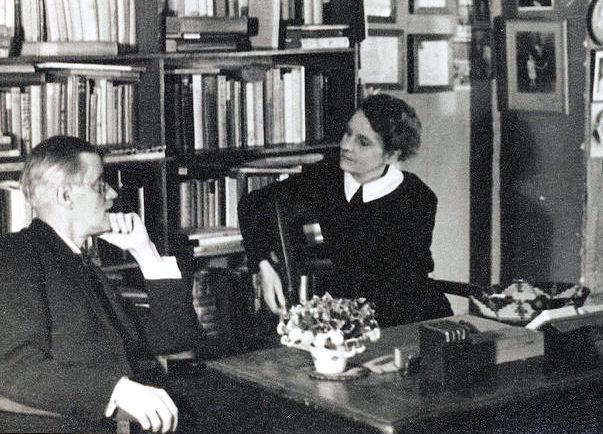
 Chris Barsanti
You must be logged in to post a comment.