Reader’s Corner: ‘The Martians’

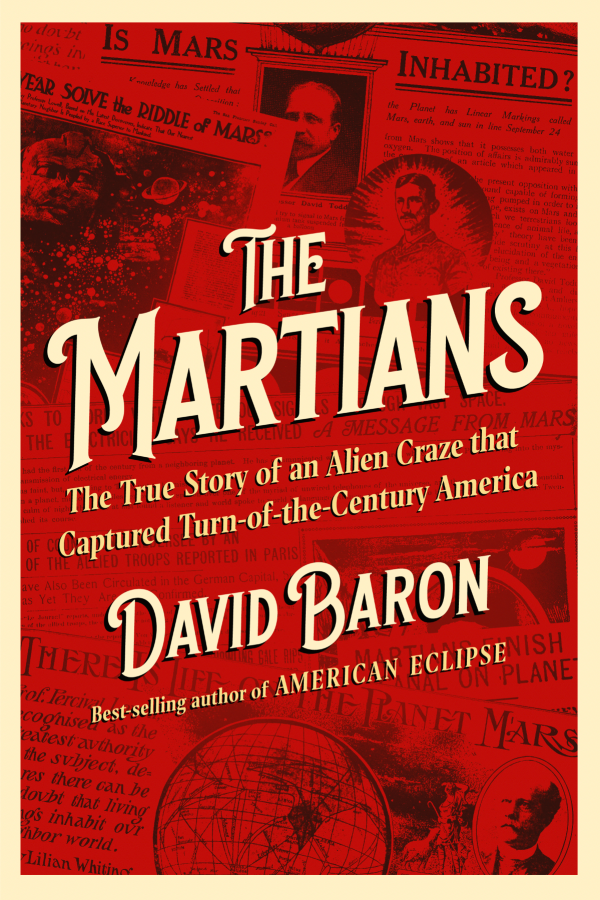
My review of David Baron’s new history book The Martians is at PopMatters:

[In 1907] the country was several years into a bona-fide mania for Martians. The aliens were the basis of hit theater shows, a constant source of wildly illustrated speculations in newspapers, and the subject of fervent speculation. Starting in the early 1890s, discussion on the subject tended not towards whether there were intelligent beings on Mars but what kind of intelligent beings they were…

Shameless Self-Promotion: ‘A Minnesota Book(ish) Miscellany’

I worked with the good folks over at Rain Taxi Review of Books to celebrate the unique literary culture of Minnesota with a new chapbook. A Minnesota Book(ish) Miscellany is a collection of trivia, ephemera, and quotes about the state’s rich ecosystem of bookstores, booksellers, and generally passionate book people, such as:

  • Memorable quotations from over a century of sources (Dylan to Dessa and beyond)
  • Curated lists that assemble a prismatic picture of Minnesota’s wide-ranging attention to the book
  • The stories behind the people behind the bookstores, from the biggest chains to the scrappiest indies
  • Key dates in state literary history
  • Picks for a Minnesota Writers Hall of Fame

You can order this nifty little edition from Rain Taxi here and soon also at local bookstores.

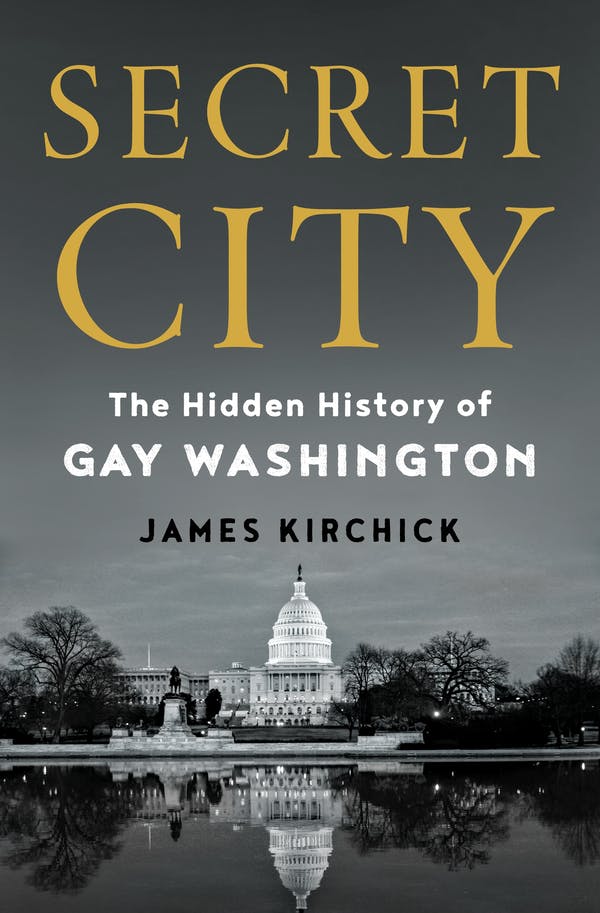
Reader’s Corner: ‘Secret City’

My review of Secret City, one of the summer’s most rewarding history titles, is at PopMatters:

The difference between America’s capital and its other cities, according to James Kirchick’s densely detailed, panoramic, and eye-opening new history Secret City: The Hidden History of Gay Washington, was that life in the federal seat of power during the Cold War came with an extra layer of paranoia. That fear manifested as extreme state-sponsored homophobia. Everywhere else in America, gayness was perceived as a threat to various orders (familial, religious) that lived primarily in people’s minds. But in Washington, being gay—or, more crucially, being discovered as gay—was seen as a threat to the very security of the nation….

You can hear an excerpt from the audiobook here.

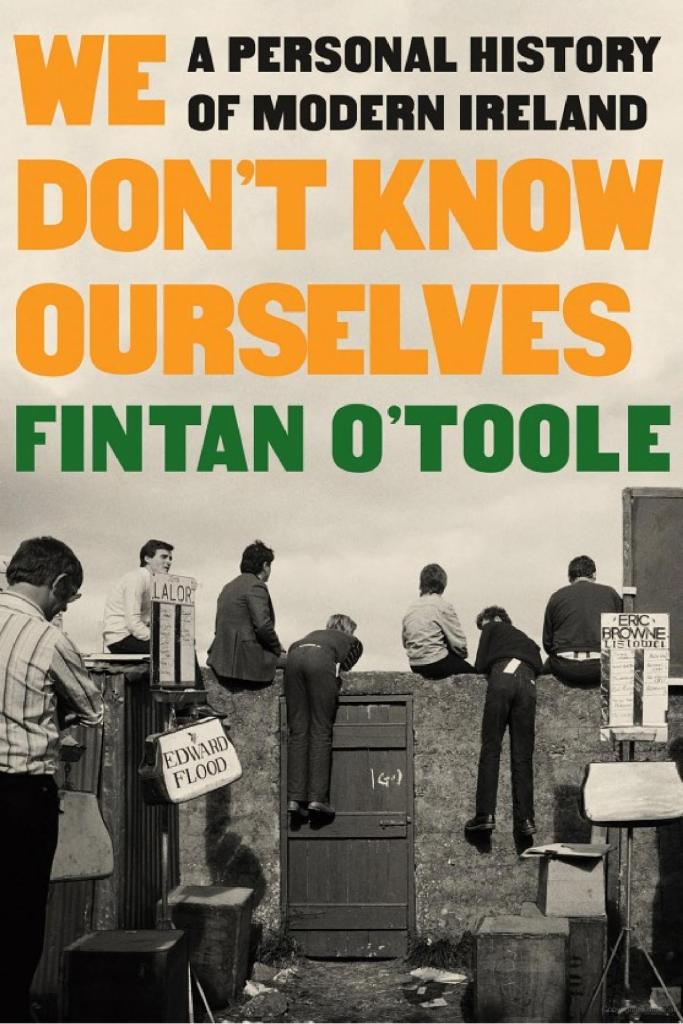
Reader’s Corner: ‘We Don’t Know Ourselves’

Born in Dublin in 1958, journalist Fintan O’Toole grew up in Ireland just as the country was shaking off (or, more often, not) the bonds of pre-modern theocracy that kept them in the past. His “personal history” We Don’t Know Ourselves tells how a country tried to enter the modern world without losing its soul. It’s fantastic.

My review is at PopMatters:

Protectionism—moral, cultural, and economic—kept new ideas and products out. In what O’Toole calls a “bitter paradox”, Ireland was then “an agrarian economy that was actually not much good at producing food.” Education was primarily limited to the well-off, keeping business and farming relatively primitive. In a comical but illustrative moment, Irish bishops refused an American offer through the Marshall Plan to create a National Institute of Agriculture to modernize farming because “it would not have a proper basis in religious doctrine.” Ireland’s stagnation produced despair, waves of emigration that threatened to empty the island completely, and one very good joke that made the rounds: “The wolf was at the door, howling to get out”…

Reader’s Corner: ‘Lost Cities, Ancient Tombs’

Very happy to have received my copy of the just-published Lost Cities, Ancient Tombs: 100 Discoveries That Changed the World. I was truly fortunate to have been asked to help with the editing and writing of this truly beautiful book from National Geographic about some of history’s greatest archaeological finds.

Seriously: Long-vanished civilizations, sunken cities, invading armies, you can’t ask for more.

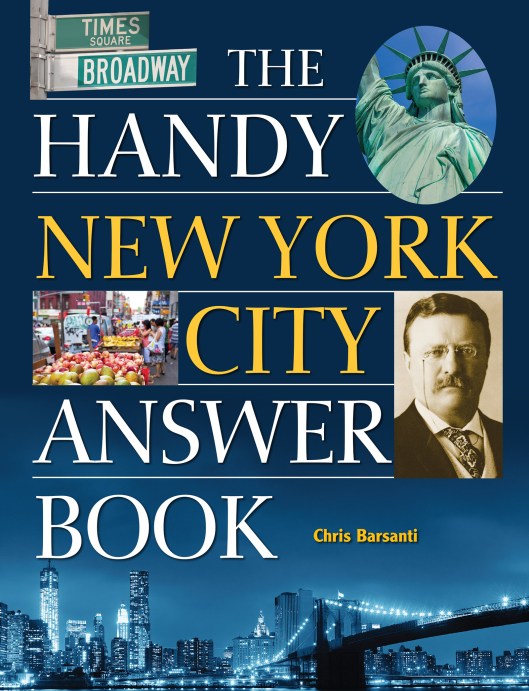
Shameless Self-Promotion: ‘The Handy New York City Answer Book’ is On Sale Now

When you think of cities, there is no other place on Earth that better exemplifies what that word means than New York City. Incubator of pretty much every important cultural genre or trend, nerve center of world capitalism, melting pot of ethnicities and religions, New York City, as they say, has it all.

In my newest book, The Handy New York City Answer Book, on sale now from Visible Ink Press, you’ll get an all-in-one reference that covers everything from the city’s complicated and dramatic history to its geography, sports teams, many peculiarities and personalities, and just about all the trivia that could be packed into 464 pages.

Here’s a few of the things you’ll discover:

  • How did New York invent Christmas?
  • Where was baseball first played?
  • How come police officers tried to scare tourists away from the city in 1975?
  • Did punk begin in New York or London?
  • How did the 1863 Draft Riots start?
  • Did Rudy Giuliani actually save the city?

Reader’s Corner: Why Does Arkansas Hate History?

The word “censorship” gets thrown around a lot these days, not always responsibly. But every so often you see a case that seems to fit the textbook definition.

One of those instances happened this week in Arkansas, which you may also know as Missour-ah’s underachieving and even more miserable neighbor. The state legislature there is considering a bill that would actually make it illegal for schools to teach the books of Howard Zinn, author of A People’s History of the United States.

As Melville House noted:

[The bill] would force Arkansas educators to pretend that Howard Zinn had never written a single book, and furthermore (and this is the really crazy part) would require that they systematically ignore any secondary texts addressing Zinn’s scholarship.

By the logic of the law as written, even materials critical of Zinn’s approach to American history, of which there are many, may be prohibited. Teachers must simply pretend that one of the most influential and most discussed historians of the twentieth century never existed.

Making it illegal to teach from a historian known for his progressive political viewpoint? Sounds like censorship, plain and simple.

Reader’s Corner: ‘City on a Grid’

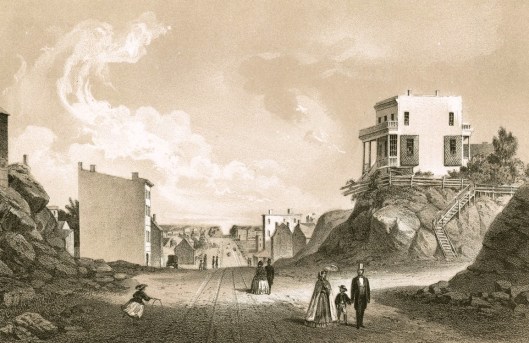
Before the grid: How 2nd Avenue and 42nd Street looked in 1861. (New York Public Library)

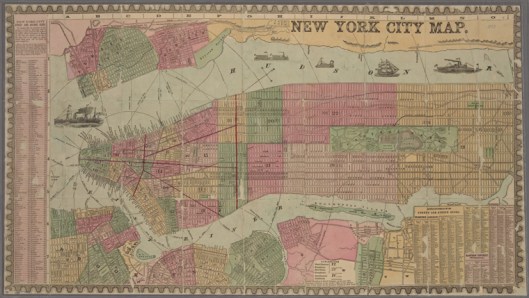
Not long after the Revolutionary War, New York was still just a few hundred buildings clustered at the lower end of Manhattan. But the city’s leaders knew that eventually they’d be spreading north and needed to figure out how that would look. So they put together something called the Commissioners’ Plan. It showed an imaginary city spreading north in evenly measured blocks that acted almost as a rebuke to downtown’s (still existing today) hodge-podge of randomly angled thoroughfares and alleys. The grid seemed like a good idea, but had its problems. Among them, almost no green space (Central Park would have to be carved out decades later) and the fact that it stopped at 155th Street (the belief was that it would take “centuries” for people to start building that far north).

Gerard Koeppel’s fascinating urban history City on a Grid is on sale now. My review is at PopMatters:

Order has never been something that most people associate with New York. Among the estranged and jealous family of American cities, the old Dutch trading post that redefined the very idea of what a metropolis could be has always suffered from a reputation for chaos. And not the fun, Lord of Misrule brand of chaos witnessed in places like New Orleans, but a genuine lack of order. There is no other American city so associated with breakdowns in the body politic or general operating principles as New York…

There’s a great, extensive online exhibition about the grid from the Museum of the City of New York here.

Quote of the Day: Veterans’ Edition

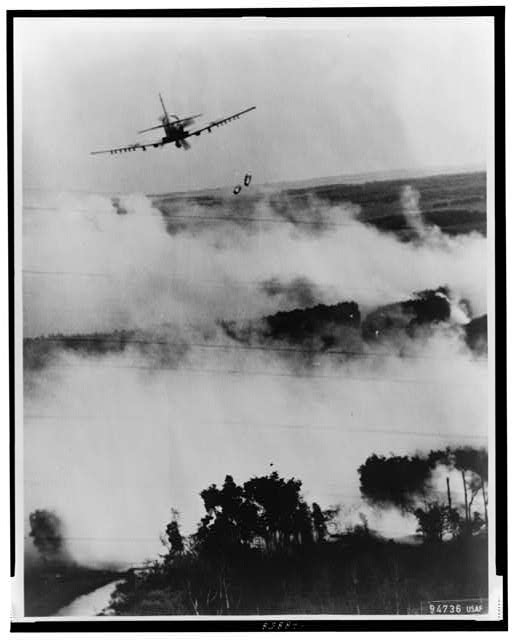
vietnam1To generalize about war is like generalizing about peace. Almost everything is true. Almost nothing is true. Though it’s odd, you’re never more alive than when you’re almost dead. You recognize what’s valuable. Freshly, as if for the first time, you love what’s best in yourself and in the world, all that might be lost. At the hour of dusk you sit at your foxhole and look out on a wide river turning pinkish red, and at the mountains beyond, and although in the morning you must cross the river and go into the mountains and do terrible things and maybe die, even so, you find yourself studying the fine colors on the river, you feel wonder and awe at the setting of the sun, and you are filled with a hard, aching love for how the world could be and always should be, but now is not.

– Tim O’Brien, The Things They Carried


Quote of the Day: Churchill on Government

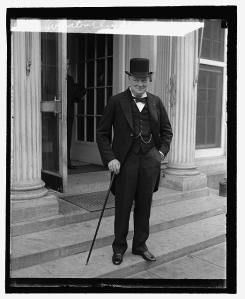
churchill1In 1906, Winston Churchill was a mere Undersecretary of State for the Colonies. By that point, the 32-year-old had already been taken prisoner as a journalist during the Boer War and published four of the books that would later win him the Nobel Prize in Literature.

That year, the future Prime Minister gave a speech in Glasgow where he laid out a philosophy of what liberal government means.

We want to draw a line below which we will not allow persons to live and labor, yet above which they may compete with all the strength of their manhood. We want to have free competition upwards; we decline to allow free competition downwards. We do not want to tear down the structure of science and civilization but to spread a net on the abyss.

It’s an eloquently stated argument, given the current debates over what exactly government is for.