Screening Room: ‘The Velvet Underground’

Somewhere in the great cultural ferment of 1960s New York, a band came together that changed the face of rock and roll. Nobody really noticed but other musicians. But to paraphrase the old saying, every one of those musicians who loved the Velvet Underground went off and formed their own band.

My review of Todd Haynes’ The Velvet Underground, playing now on Apple TV+, ran at PopMatters:

To recreate the crashing symphony of experimentation that birthed the Velvet Underground, Haynes turns his documentary into something that looks like it could have been projected on a bedsheet tacked to the wall of a rat-trap art gallery below New York City’s 14th Street. It’s an immersive bricolage of frame-within-frame visuals and overlapping dialogue and audio clips occasionally studded with reminders that you are watching a documentary about a rock ‘n’ roll band when something like “Venus in Furs” comes blasting out of the speakers with a banshee howl…

Here’s the trailer:
Weekend Reading: November 6, 2015

Library of congress1

Reader’s Corner: Algren’s Rules

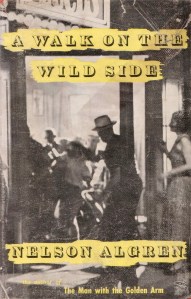
walkonthewildsideThere was always plenty to be learned in the Chicago novels of the great Nelson Algren—particularly in a negative sense, as in what not to do. One of Algren’s more memorable passages comes from 1956’s A Walk on the Wild Side:

But blow wise to this, buddy, blow wise to this: Never play cards with a man called Doc. Never eat at a place called Mom’s. Never sleep with a woman whose troubles are worse than your own. Never let nobody talk you into shaking another man’s jolt. And never you cop another man’s plea. I’ve tried ‘em all and I know. They don’t work.

Life is hard by the yard, son. But you don’t have to do it by the yard. By the inch it’s a cinch. And money can’t buy everything. For example: poverty…

A Walk on the Wild Side isn’t Algren’s most memorable work—that honor probably goes to his scabrously funny novella/essay Chicago: City on the Make or the story cycle The Neon Wilderness—but it does contain dark, sharp wisdom.

Soundbooth: Lou Reed, circa 1966

velvetunderground1The ultimate success of the late Lou Reed (1942–2013) as a musician and writer was, like with most great artists, never a sure thing. Although he went from obscurity to rock legend in a few short years, he started out pushing an idiosyncratic style of literary talk-singing and mixing old doo-wop harmonies with discordant sheets of noise that was never guaranteed to win him entry to the Rock and Roll Hall of Fame. Nevertheless, he put his whole life into it: “My God is rock ‘n’ roll,” he supposedly said.

For an example of how the music of Reed’s early years was received, check out this notice from the New York Times in 1966. The story was a society piece about a dinner for the New York Society for Clinical Psychiatry. The evenings entertainment? Something called “The Chic Mystique of Andy Warhol.” On the program was the Velvet Underground:

The high decibel sound, aptly described by Dr. Campbell as “a short-lived torture of cacophony,” was a combination of rock ‘n’ roll and Egyptian belly-dance music.

Most guests voted with their feet and streamed out early. Reed and the Velvet Underground were inducted into the Rock and Roll Hall of Fame in 1996, Egyptian belly-dance music (did they play “Venus in Furs,” perhaps?) be damned.

Here’s Reed performing one of his best post-Velvet songs, “Halloween Parade”: