
Danny Boyle’s Industrial-New Wave mashup of an Olympics opening ceremony aside — which, for all the pomp still included strong references to labor struggles and protest that would be unthinkably left-wing were it being held in this country — a yearning for the supposedly simpler and more dignified England prior to World War I still holds a powerful sway. Never mind the brutal working conditions or harsh class divisions, there is a curious nostalgia among Americans (likely the Brits as well) for a time when, for better or worse, everybody knew their place, whether they wanted to or not. Call it the Downton Abbey effect.
Consider this from Judith Flanders’ caustic review of Paul Thomas Murphy’s new book Shooting Victoria:
British television has a lot to answer for. From “Upstairs, Downstairs” to “Downton Abbey,” it has perpetrated an image of “historical” Britain as a country filled with a loved, even revered, upper class that gracefully patronizes the lower orders, who in turn are thrilled to roll over and have their tummies tickled by their social superiors. Absent is any sense of political, much less social unrest—there are no bread riots, no Luddites, no machine wreckers. Thus many PBS viewers might be surprised by the violence that accompanied the 19th century’s extreme political instability. And they might be positively shocked to learn that no fewer than seven of Queen Victoria’s subjects made attempts on her life.
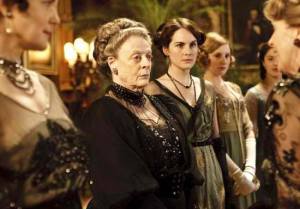 As viewers of Downton Abbey know well, the villains are just about never the well-mannered (if occasionally clueless or bratty) owners of the great house itself. Chaos and distemper always appears in the form of the servant who’s getting above themselves or the nouveau riche interloper who thinks he can simply buy his way into the upper class. This fictional world is not one where the downstairs crew might ever be shown to have a true grievance against a mostly nonworking aristocracy that’s been feeding off their labor for centuries.
But then if BBC America started pitching a series about suffragists and the Jarrow Marchers, it might provide fewer opportunities for petticoat eye candy. So serious, those protesting types.



 Chris Barsanti
You must be logged in to post a comment.