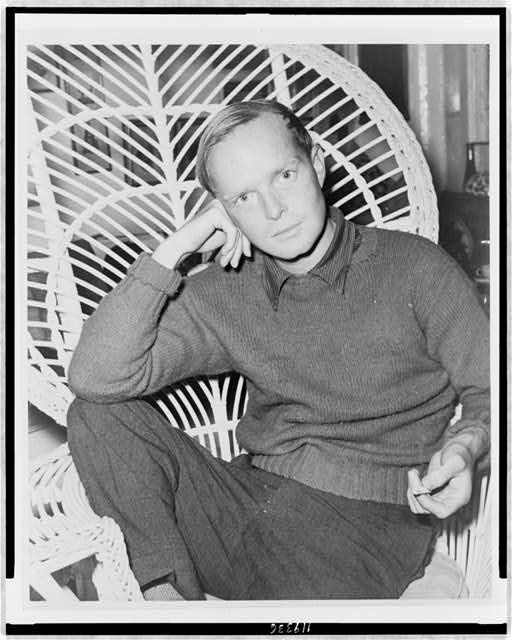
If you have ever read Truman Capote (and if you have not, dear reader, why?), you know that he has produced some of the most perfectly calibrated sentences in the English language. Whether he sounded them out in his head, simply knew the music of words better than the rest of us, or learned everything he knew from Harper Lee, who is to say. The story might clunk here and there, but the words on the page always sang.
Capote knew that rhythm mattered, almost more than anything else. In 1957, he talked about style and control to The Paris Review:
Call it precious and go to hell, but I believe a story can be wrecked by a faulty rhythm in a sentence—especially if it occurs toward the end—or a mistake in paragraphing, even punctuation. Henry James is the maestro of the semicolon. Hemingway is a first-rate paragrapher. From the point of view of ear, Virginia Woolf never wrote a bad sentence. I don’t mean to imply that I successfully practice what I preach. I try, that’s all…
Everything about Wells Fargo shows that Bernie was right about big-bank culture (racial discrimination, wide-scale fraud, money laundering, just to begin with) and it’s time to start sending some folks to jail.
One more note on the late, great Philip Seymour Hoffman. Back in 2004, he was interviewed by The Believer and the talk sprawled over beyond life and acting into things literary.
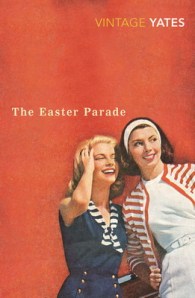
Hoffman has played a few great figures from both sides of the literary page (Willy Loman, Truman Capote), but that’s not what gave him the credentials for this interview, it’s that he was clearly a passionate reader. Not a lot people out there these days who will stand up and shout for the dark glories of somebody like Richard Yates:
If you do any great art you’re somehow exposing a part of you. Like Richard Yates, Jesus Christ, that book, you almost don’t want to meet him. I kept feeling for the characters as if they existed.
But perhaps most beautifully, he identifies one of the great solaces of reading, that it’s an act in and of itself with no need to be justified. Some won’t care for his comparing it to smoking, but the linkage is clear:
When you read, you think, and when you smoke, you think. It’s a pleasurable thing, and not a duty.
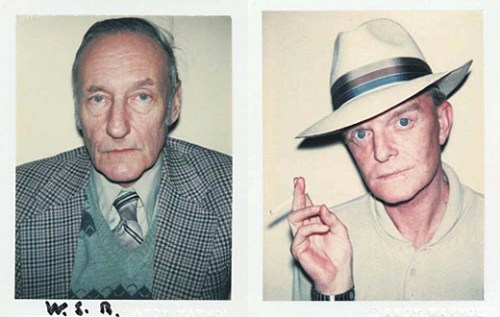
Poloroids of William S. Burroughs and Truman Capote, taken by Andy Warhol.
The last few years have seen a continuing Truman Capote renaissance, with two competing movies on how he wrote In Cold Blood, and new Modern Library editions of Breakfast at Tiffany’s, Complete Stories, and Other Voices, Other Rooms.
Next to all the celebration, though, there is also a reexamination of Capote both as crime writer (many of In Cold Blood‘s assertions having now been brought into question or completely debunked) and as a fictionalist.
Michael Bourne has a perceptive take on Capote’s sad legacy at The Millions. His viewpoint on the the early promise and sparkle of Capote’s (calling him “American literature’s beautiful child”) that later fizzled out in self-parody (much as the man himself seemed to), has the man’s legacy dead to rights.
More curiously damning is this letter that Capote received in 1970 from William S. Burroughs (included in the letters collection Rub Out the Words and dug up by the good people at Letters of Note). The two men may have shared a few things—being openly gay writers in a much more homophobic time and possessed of a certain aristocratic disdain—but it’s clear that Old Bull Lee had little but contempt for Capote, then still being showered in praise for In Cold Blood, while the murderous surrealist from St. Louis toiled away on the margins:
…I have in line of duty read all your published work. The early work was in some respects promising—I refer particularly to the short stories. You were granted an area for psychic development. It seemed for a while as if you would make good use of this grant. You choose instead to sell out a talent that is not yours to sell. You have written a dull unreadable book which could have been written by any staff writer on the New Yorker—(an undercover reactionary periodical dedicated to the interests of vested American wealth)…
You have betrayed and sold out the talent that was granted you by this department. That talent is now officially withdrawn. Enjoy your dirty money. You will never have anything else. You will never write another sentence above the level of In Cold Blood. As a writer you are finished. Over and out. Are you tracking me? Know who I am? You know me, Truman. You have known me for a long time. This is my last visit.
It was prophetic. Capote never finished another book after In Cold Blood. He dabbled with Answered Prayers for almost two decades but never finished it.
Note also this line from Burroughs, which evinces a surprising attitude of creative romanticism from the old buzzard: “You choose instead to sell out a talent that is not yours to sell.” This is a warning that should be given to every young writer about their gift: Use it well and wisely when you have the chance, because the world doesn’t look kindly on those who squander such things.


 Chris Barsanti
You must be logged in to post a comment.