A freelancer like those of yore, I write and edit for cold hard cash from the highest bidder in the land -- or just the occasional kind word. You can find links to my scrivenings at https://chrisbarsanti.net/.
In “How ‘Bigger’ Was Born,” Richard Wright laid out how Native Son and its iconic protagonist were constructed. Towards the end, he describes not just the process but the joy of writing:
I don’t know if Native Son is a good book or a bad book. And I don’t know if the book I’m working on now will be a good book or a bad book. And I really don’t care. The mere writing of it will be more fun and deeper satisfaction than any praise or blame from anybody…
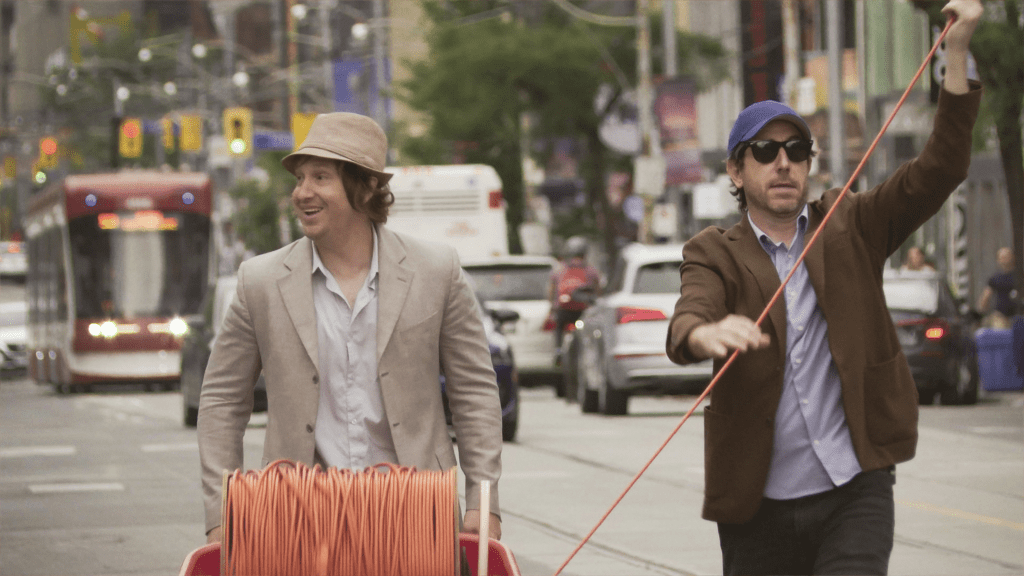
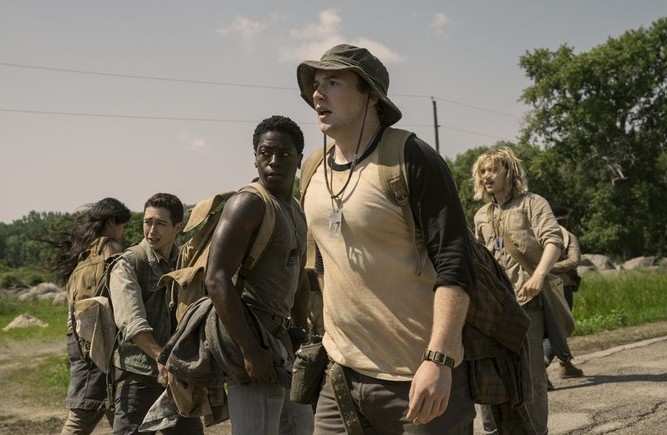
I reviewed the new Matt Johnson film Nirvanna the Band the Show the Movie for PopMatters:
For those who enjoy or get past Johnson’s clowning, Nirvanna is a deftly intricate mockumentary about friendship, celebrity, and the trap of nostalgia shot like a sci-fi nerd’s YouTube paean to Back to the Future, all wrapped inside a love letter to Toronto. Johnson and co-writer Jay McCarroll play slightly tweaked versions of themselves, much like Rob Brydon and Steve Coogan self-spoofed themselves in The Trip series…
As surely as “Dumpuary January” follows the fall awards season, a new year brings a slew of new films to anticipate. If the industry is in trouble, nobody has told these directors…
In “The Art of Fiction,” Henry James gave the example of an English novelist who was asked how she was able to depict the lives of French Protestant youth so vividly and true to life. Her response was that it all boiled down to once looking into a room:
Once, in Paris, as she ascended a staircase, [she] passed an open door where, in the household of a pasteur, some of the young Protestants were seated at table round a finished meal. The glimpse made a picture; it lasted only a moment, but that moment was experience. She had got her impression, and she evolved her type. She knew what youth was, and what Protestantism; she also had the advantage of having seen what it was to be French; so that she converted these ideas into a concrete image and produced a reality…
James uses this example to argue that experience is crucial to writing but that experience can be just about anything. Even a glance. In short:
Try to be one of the people on whom nothing is lost!
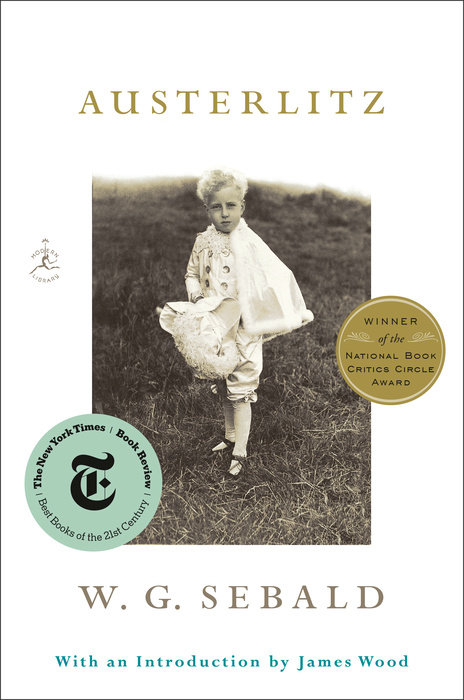
In Walt Hunter’s inspiring new essay “Stop Meeting Students Where They Are,” he describes the value of pushing his students in an American literature class to write without the safety net of what they know. He references a line from W. G. Sebald’s Austerlitz:
Once a fluent and successful writer, Austerlitz suddenly falls into a crisis of faith about the sentence, which becomes “at best a makeshift expedient, a kind of unhealthy growth issuing from our ignorance, something which we use, in the same way as many sea plants and animals use their tentacles, to grope blindly through the darkness enveloping us.”
Running with that concept of “writing into the darkness,” Hunter challenges his students to knock out a quick essay about their difficulties reading, providing them with prompts:
One was: “Write about a moment in an Emily Dickinson poem that you don’t understand.” Another was: “Write about your morning routine, but in the style of Faulkner.” I didn’t want to create 32 new Faulkners. I wanted the students to experience the moment when their own style broke through the imitation, when the attempt to write like Faulkner failed and revealed, as a kind of photonegative, their own emergent voices. John Keats called this state of being “negative capability,” a condition in which the writer leans to live in a perpetual state of uncertainty. If it was really true that the students couldn’t read, then it was up to me to put the books in their way and make them deal with them…
Try this approach yourself. Think of something that makes no sense to you, that you have failed to understand. Describe that feeling. Write through it.
I reviewed the first episode of Mark Cousins’ new series, The Story of Documentary Film from the Sundance Film Festival for The Playlist:
Excited as we might be about ‘Dune: Messiah’ or ‘Wuthering Heights,’ the cinematic event of 2026 is more likely to be seen on a small screen and is about five times as long as ‘Avatar: Fire and Ash.’ The greatest chronicler of modern film and what it means to the world, Mark Cousins, has followed up his landmark series ‘The Story of Film’ with a new sixteen-parter, ‘The Story of Documentary Film,’ the first episode of which premiered at the Sundance Film Festival. If this initial taste is any indication, the next fifteen hours will be something glorious…
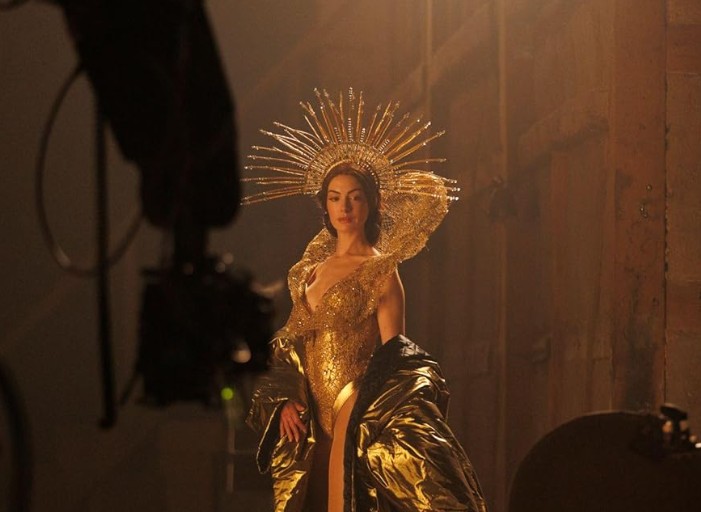
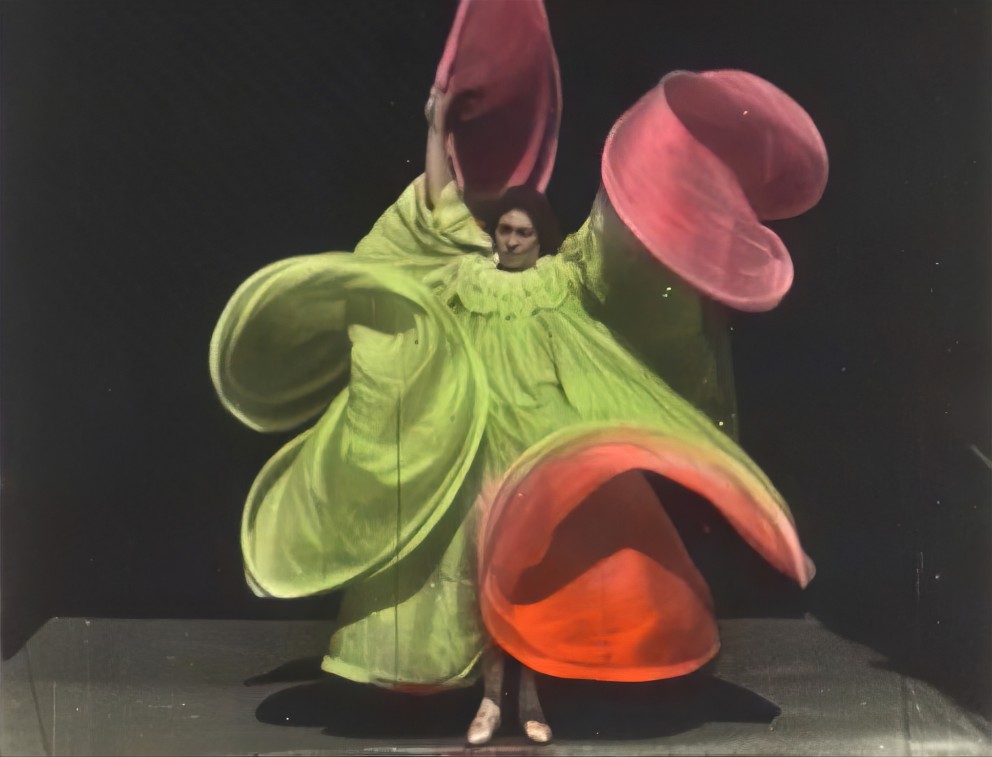
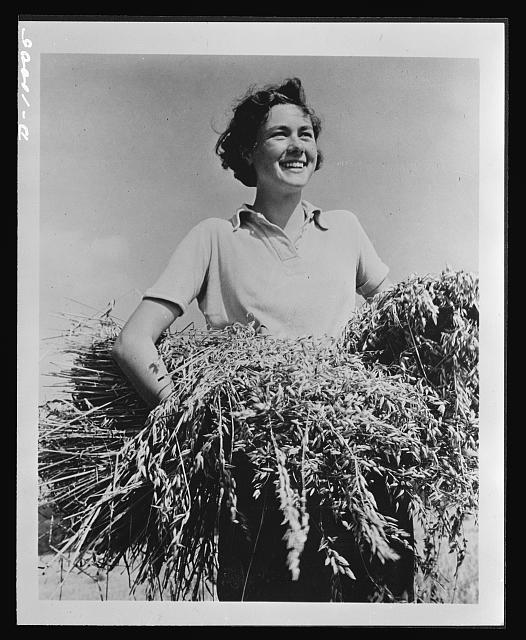
What’s going on in this picture? You could use an image search to figure it out. That’s one way to solve the question. Or you could write a story about it, trying one of the following approaches:
Three-page dialogue scene.
300-word monologue from the perspective of the woman in the picture.
Short narrative description of who she is, where she is going, and what befalls her in five years.
What you write can but does not have to resolve, feature an inciting incident, or contain any great shock or surprise.
Nobody likes New Year’s resolutions, least of all writers. Setting out a list of things you need to do in the next twelve months can just feel like a list of things you will forget to do. We should never forget the unique joy that comes with not doing, per the great Douglas Adams:
I love deadlines. I like the whooshing sound they make as they fly by.
Nevertheless, January is not a bad time for new thinking. The holidays are past. Work is back. The nights are long. There are too many new streaming shows to commit to. Maybe you’re dissatisfied with what you wrote last year. It’s worth thinking about trying something different.
To wit:
Poem. It can be (and, let’s be honest, almost certainly will be) a bad poem. But if you are not used to it, the form and the choices it forces you to make are excellent training. This can be like stretching for writers.
Autobiographical essay. Write five pages about something that happened in your childhood that you never told anybody about. It doesn’t need to be anything earth-shattering or more consequential than a memory of a favorite toy. Write it so that some aspect of your life can make sense to another person.
Joke. Standup comics riff on stage but they also painstakingly craft jokes beforehand. Write three jokes. Tell them to people. See what lands and what doesn’t. Revise.
Try none or all of these. The point is to do something that is unfamiliar. I spent the last many months in multiple nonfiction book projects. Once done with those, I will be trying to give fiction another shot. Most likely, it will never see the light of day. But then most of what we make never does.
One of those leading lights of the bookish world, Dave Eggers can always be counted on say the true thing and to identify what matters about this art, business, and life of word making that some of us have committed ourselves to.
Eggers was interviewed by The Harvard Advocate back in 2000, before McSweeney’s really hit its stride and he was still considered an enfant terrible, one of those tongue-in-cheek Gen Xers who wouldn’t know sincerity if it was an ad that came on during The Real World. But in a voluminous reply, Eggers put his cursor on what really makes it all worthwhile:
What matters is that you do good work. What matters is that you produce things that are true and will stand. What matters is that the Flaming Lips’s new album is ravishing and I’ve listened to it a thousand times already, sometimes for days on end, and it enriches me and makes me want to save people. What matters is that it will stand forever, long after any narrow-hearted curmudgeons have forgotten their appearance on goddamn 90210. What matters is not the perception, nor the fashion, not who’s up and who’s down, but what someone has done and if they meant it. What matters is that you want to see and make and do, on as grand a scale as you want, regardless of what the tiny voices of tiny people say…
Make the best book, poem, screed, fan fiction that you can. And if somebody offers you a spot on a teen soap opera, by all means, take it.
Worried about not having enough to do in the long cold weeks after New Year’s? You needn’t worry. Here are some best-of lists I wrote or contributed to about the best films and books that came over the transom in 2025:
In the preface to his pointedly titled Unreliable Memoirs, critic Clive James laid out his approach to writing about oneself:
Most first novels are disguised autobiographies. This autobiography is a disguised novel. . . . So really the whole affair is a figment got up to sound like truth. All you can be sure of is one thing: careful as I have been to spare other people’s feelings, I have been even more careful not to spare my own. Up, that is, of course, to a point…
You want to be honest with the reader. That’s where the good stuff is. But at the same time, remember to hold things back. That’s where the artistry is. It’s a memoir, not therapy.
Even though the late, great playwright and script doctor Tom Stoppard was known for dense, gorgeously ornate works that tangled with politics, philosophy, physics, and eternity, he did not go in for self-examination or navel-gazing.
A writer ought to be the best possible source about their work, but the writing instinct doesn’t come out of self-examination. That part of yourself in your work is expressed willy-nilly, without your cooperation, motivation or collusion. You can’t help being what you write and writing what you are…
Per one of the characters in Muriel Spark’s A Far Cry from Kensington, concentration correlates to having a cat around:
Alone with the cat in the room where you work, I explained, the cat will invariably get up on your desk and settle placidly under the desk-lamp. The light from a lamp, I explained, gives a cat great satisfaction. The cat will settle down and be serene, with a serenity that passes all understanding. And the tranquility of the cat will gradually come to affect you, sitting there at your desk, so that all the excitable qualities that impede your concentration compose themselves and give your mind back the self-command it has lost. You need not watch the cat all the time. Its presence alone is enough. The effect of a cat on your concentration is remarkable, very mysterious…
I don’t have ideas. I have people. They meet. Things happen. They are changed. Find out why these people are in your head. Eventually they’ll say: ‘Write me’





 Chris Barsanti
You must be logged in to post a comment.