Writer’s Desk: Challenge Yourself

(Orson Welles, 1964, by Nicolas Tikhomiroff)

Orson Welles spent most of his career scrapping for money, fighting with producers, and generally trying to balance fifteen spinning plates while doing a magic card trick at the same time. It was an exhausting way to make art.

Still, when indie filmmaker Henry Jaglom was complaining to him one time about not having the time or money to finish a movie the way he wanted, Welles had a tart response:

The enemy of art is the absence of limitations.

This doesn’t mean you should intentionally impoverish yourself to invent challenges. But Welles has a point in that a piece of work can benefit from the creator having something to push against. Set yourself some difficult parameters (it must be this long, I must finish it by this date, if I don’t sell it by this point then I will move on to something else, etc.). The discipline required in overcoming even minor obstacles can give you practice in overcoming the challenges presented by your writing.

Don’t get too comfortable, in other words. Push yourself.
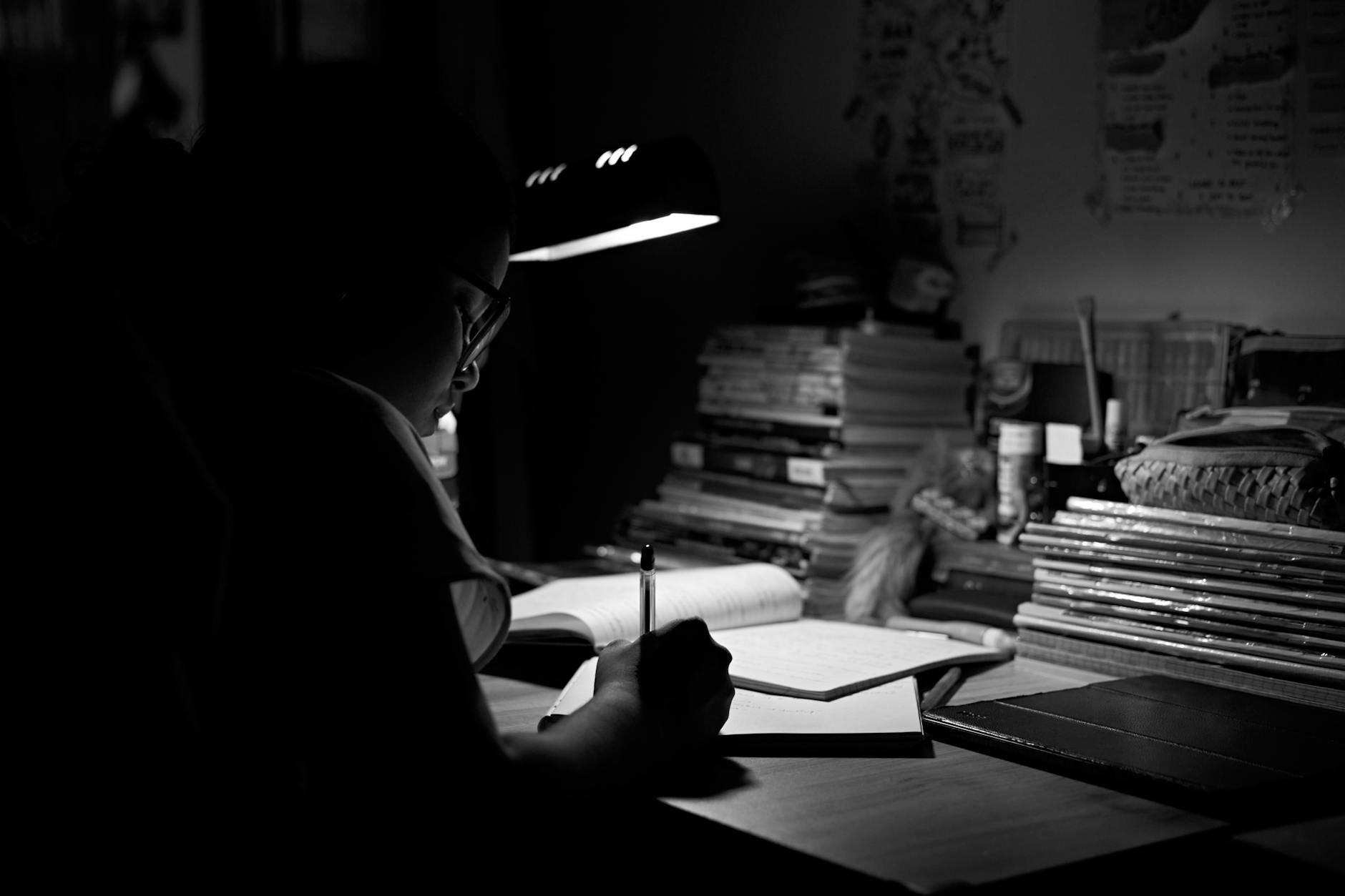
Writer’s Desk: Listen to Everything

(Bikram Bezbaruah)

Part of a writer’s job is capturing the world around them. This includes paying attention to physical things from landscape and weather to clothing and food.

But it also means listening to people. All of them.

  • Daniel Handler (aka Lemony Snicket): “Eavesdrop and write down what people say. You think you’ll remember everything you hear, but you won’t. So write it down.”
  • Josh Sippie: “There is nothing that you overhear someone saying that can then become “unrealistic” dialogue, or an unrealistic way to speak. It’s as real as it gets.”
  • Christopher Isherwood: “I am a camera, my shutter open, quite passive, recording, not thinking.”

Go ahead and eavesdrop. It’s research.

Writer’s Desk: Tell the Truth

Mary Karr’s breakthrough memoir The Liar’s Club was not just a brilliantly written book, pulsing with dark wit and cutting insight, it was also pretty unsparing about herself. Years later, she wrote in The Art of the Memoir about how she started The Liar’s Club on the assumption she’d be telling the story of her father leaving her. But when she really looked at what happened, the opposite was true:

I’d spent decades discussing his abandonment in therapy, and it was true he’d drunk himself off a barstool when I was just twenty-five. But the view that he’d ever left me was tacit hogwash – a convenient lie I’d told myself to salve my own guilt about leaving him…

In an interview with The Writer, Karr talked about the necessity of confronting the truth, even if doing so might not cast you in the best light:

The reader will forgive you anything except lying.

Screening Room: ‘A Complete Unknown’

I wrote about James Mangold’s Dylan biopic A Complete Unknown as a folk anti-Western for PopMatters:

Bob Dylan (Timothée Chalamet) arrives in New York at the start of A Complete Unknown in the back of a station wagon rather than on a horse. He might as well be a gunslinger showing up in a frontier town that needs his help. With just his bindle, guitar, and a cunning up-for-anything look, Dylan scans the Greenwich Village coffeehouse folk scene not like some rube from the sticks but rather a cool operator who knows virgin territory when he sees it…

Here’s the trailer:

Reader’s Corner: ‘A Century of Tomorrows’

I reviewed Glenn Adamson’s lively book on futurism, A Century of Tomorrows, for PopMatters:

It seems clear that many who argue that authors like H.G. Wells and Jules Verne should be read because of their supposed power of premonition don’t care for science fiction yet feel the urge to find a rationale. The joys of 20,000 Leagues Under the Sea come from Captain Nemo’s achingly tragic quest for justice, not Verne’s prediction of electric submarines. Wells understood a lot about how the world’s mechanistic turn would overthrow many societal assumptions. However, his utopian enthusiasms also carried him away; see his 1936 sci-fi film Things to Come for both characteristics…

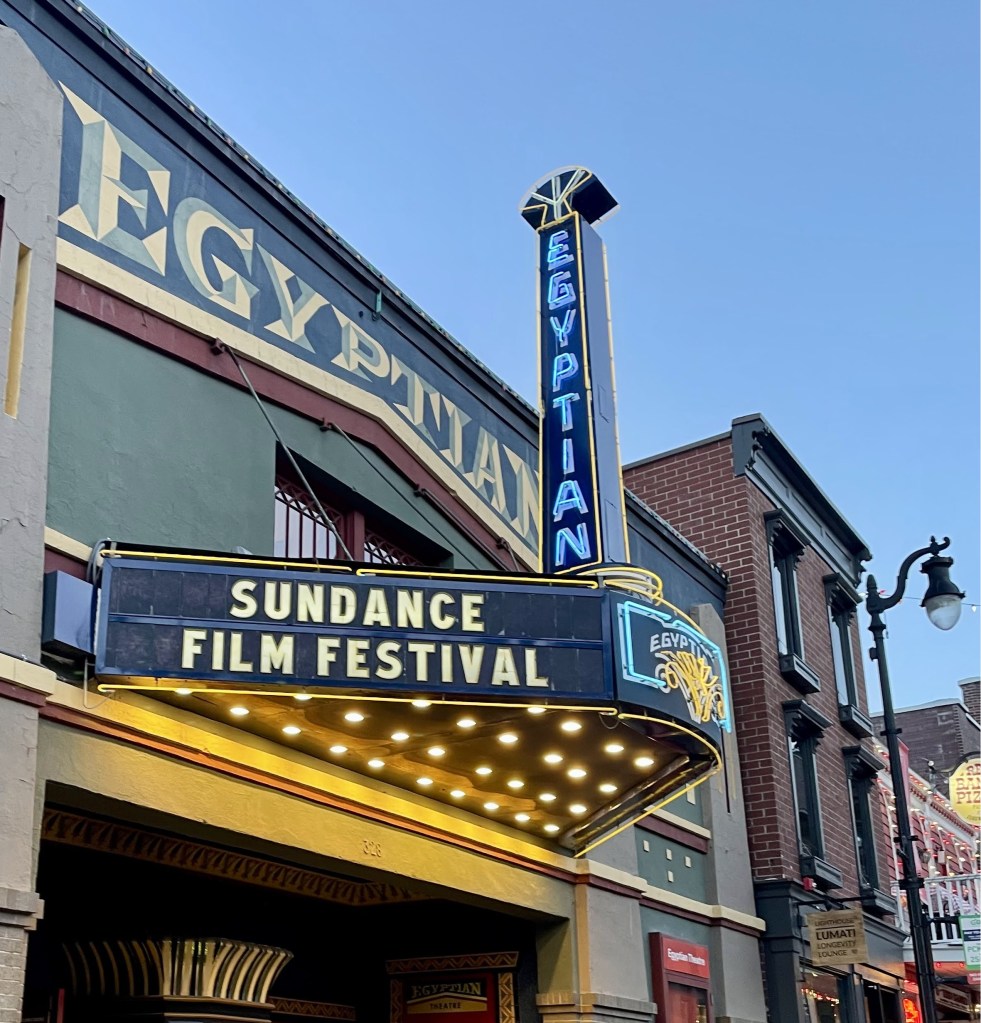
Screening Room: 2025 Sundance Film Festival

This year’s Sundance Film Festival just concluded. Your fearless correspondent delivered a roundup of the tensions roiling the festival at the moment, not to mention the films worth seeking out and the ones best avoided. That is available for your reading pleasure at PopMatters:

There seemed to be two questions on everyone’s mind at the 2025 Sundance Film Festival. The first was the same as ever at this festival or any other: “What have you seen?” This question is often academic because there aren’t many available tickets left to get by the time it’s asked – usually by a stranger in line for another film…

I also contributed some full-length reviews to Slant Magazine:

Writer’s Desk: Make Readers Believe

J.R.R. Tolkien (undated)

Every writer is a fantasist. Whether they’re writing a kitchen-sink domestic drama, romance, YA series about talking dragons, or a mystery novel about a blind accountant who solves crimes, the challenge is the same each time: Make readers believe the world you are creating and the people who inhabit it.

J.R.R. Tolkien explained the importance of this in his essay “On Fairy-Stories“:

The story-maker proves a successful ‘sub-creator’. He makes a Secondary World which your mind can enter. Inside it, what he relates is ‘true’: it accords with the laws of that world. You therefore believe it, while you are, as it were, inside. The moment disbelief arises, the spell is broken; the magic, or rather art, has failed…

Leave nothing to chance. Visualize every aspect of your fictional world. Keep the illusion going. Make readers believe.

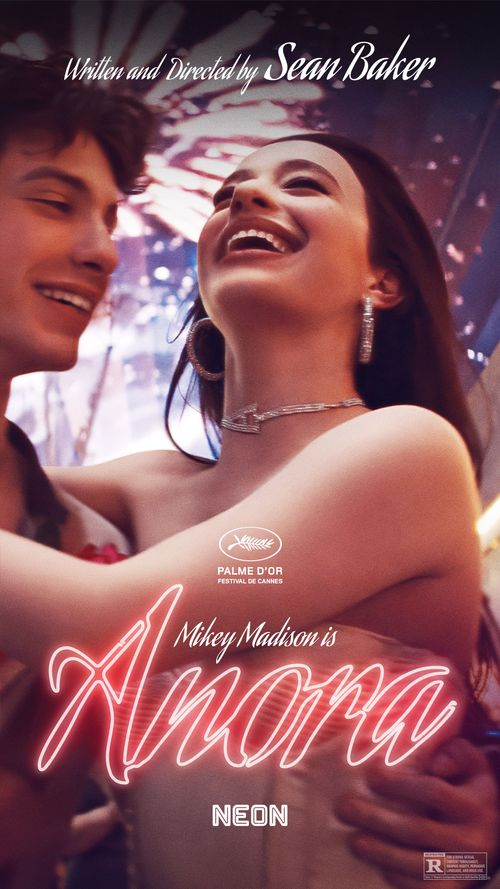
Screening Room: ‘Anora’ Wins Best Picture from OFCS

A good bit of film-related news here: one of my writers’ associations, the Online Film Critics Society, just named Anora the best film of the year. They also paid good attention to Dune: Part Two in technical areas, at least Challengers a couple nods, largely ignored Emilia Perez, and recognized All We Imagine as Light for best film not in the English language (a strong choice and preferable to the more predictable but less impressive I’m Still Here).

Here’s the rest of the awards:

  • Best Picture: Anora
  • Best Animated Feature: Flow
  • Best Director: Coralie Fargeat – The Substance
  • Best Actor: Ralph Fiennes – Conclave
  • Best Actress: Mikey Madison – Anora
  • Best Supporting Actor: Kieran Culkin – A Real Pain
  • Best Supporting Actress: Margaret Qualley – The Substance
  • Best Original Screenplay: Anora
  • Best Adapted Screenplay: Conclave
  • Best Editing: Challengers
  • Best Cinematography: Dune: Part Two
  • Best Original Score: Challengers
  • Best Production Design: Dune: Part Two
  • Best Costume Design: Dune: Part Two
  • Best Visual Effects: Dune: Part Two
  • Best Debut Feature: Vera Drew – The People’s Joker
  • Best Film Not in the English Language: All We Imagine as Light
  • Best Documentary Feature: Dahomey

Screening Room: This Year’s Weird Oscar Nominations

I wrote about the 2025 Oscar nominations and what happened as a result of their overloading the list with too many nods to a pair of highly mediocre films (Emilia Perez, Wicked).

The article is at Eyes Wide Open:

The Oscars can be weird. We all know this. Some of us, despite remembering that strange mid-2000s stretch when Million Dollar Baby and Crash were snagging best picture statues, can even think we understand why the awards are so weird. The concept of looking at hundreds of feature films released theatrically each year to determine this one or that one is the “best” is fundamentally absurd…

Writer’s Desk: Avoid Interruptions

It seems so obvious and yet turns out to be so difficult in practice. Finding a good writing space is one thing. Carving out the time on a regular basis is another. Ensuring an uninterrupted run of minutes and hours is always harder than you think. But without those blocks of time, creating something new is next to impossible.

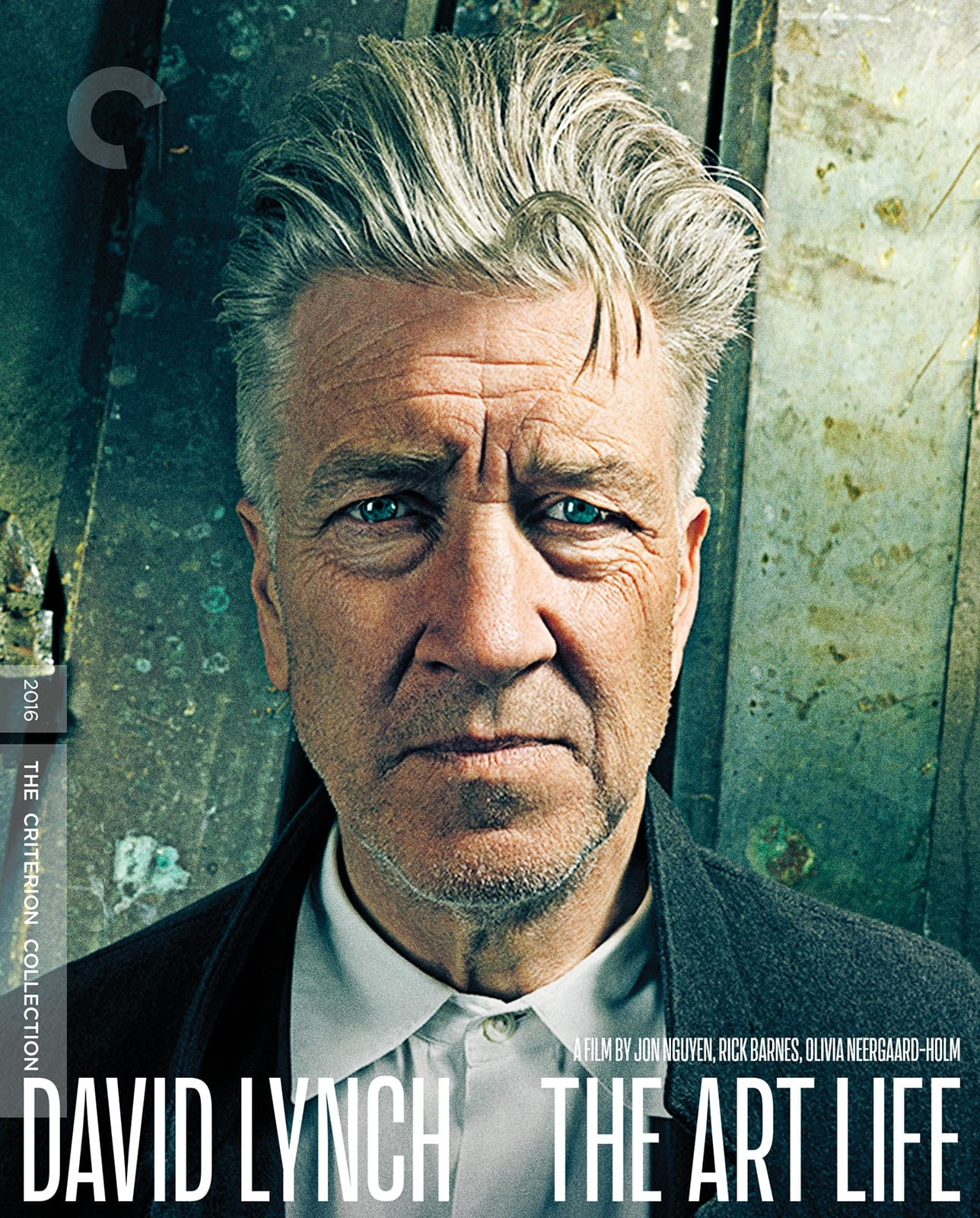
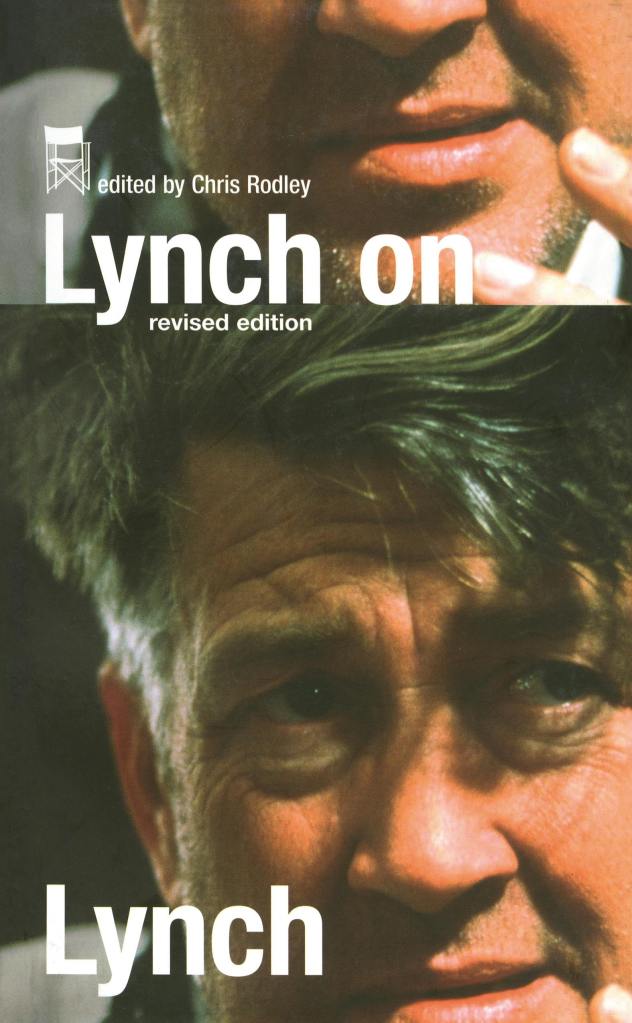
Again, let’s go to David Lynch:

Every interruption just is like a knife stab in the middle of a thought. And you gotta start again. You start again. It’s horrible. These days, there’s interruptions around every corner, almost every second. You have to be somewhat selfish…

And if anybody asks why you are acting so withdrawn, just say that Lynch told you so.

Writer’s Desk: Kill Your Adjectives

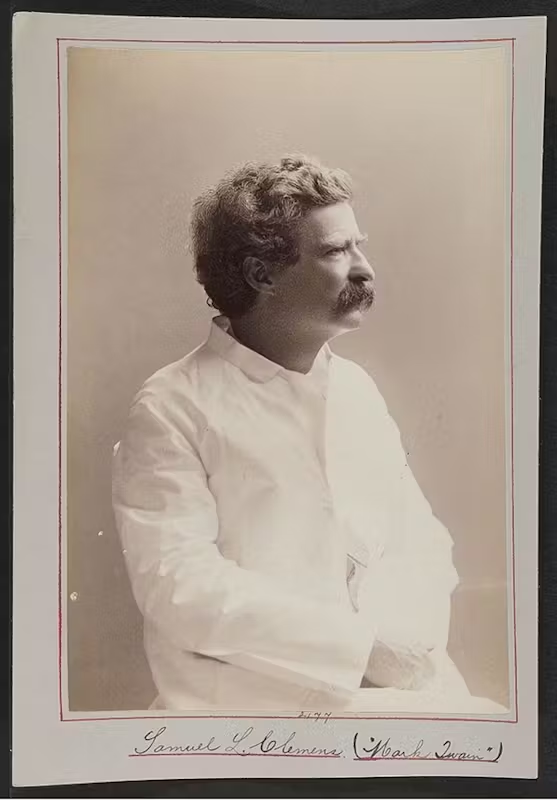
America’s greatest aphorism factory since Ben Franklin, Mark Twain had a lot to say about a lot of things. Since he was a pretty efficient writer, supposedly averaging about 1,400 words a day, Twain thought a lot about the mechanics of his craft.

One of his most frequently quoted pieces of advice came in a letter where he argued for simplicity:

I notice that you use plain, simple language, short words and brief sentences. That is the way to write English – it is the modern way and the best way. Stick to it: don’t let fluff and flowers and verbosity creep in. When you catch an adjective, kill it…

That’s where the quotation usually ends. But Twain goes on:

I don’t mean utterly, but kill most of them – then the rest will be valuable. They weaken when they are close together. They give strength when they are wide apart…

Keep it simple. Avoid excess description when you can. Get to the point. But avoid being too strict about it.

The English language is a lovely tangle of a garden. Don’t be scared of leaving the path and getting lost in the mess now and then.

Writer’s Desk: Write Like You Read

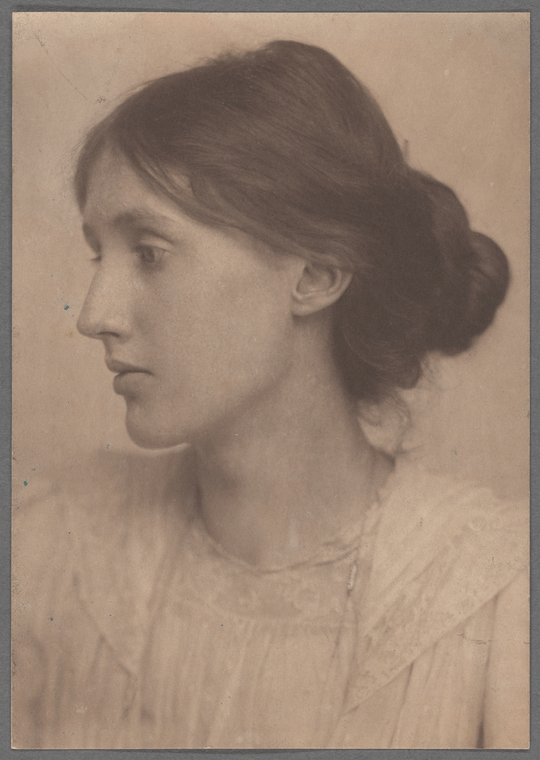
Virginia Woolf (1902)

One of Virginia Woolf’s more famous essays is “How Should One Read a Book?” And rightly so. It’s a loving and vigorous defense of not just reading itself but how to approach it with both a judicious and wide-roaming eye. She insists, in short, on reading whatever you please:

To admit authorities, however heavily furred and gowned, into our libraries and let them tell us how to read, what to read, what value to place upon what we read, is to destroy the spirit of freedom which is the breath of those sanctuaries. Everywhere else we may be bound by laws and conventions—there we have none…

Use the same approach when writing. Hear people out, seek their counsel, take what makes sense. As Woolf says about reading:

The only advice, indeed, that one person can give another about reading is to take no advice, to follow your own instincts, to use your own reason, to come to your own conclusions…

Write freely, but not thoughtlessly.

Screening Room: ‘Alfred Hitchcock: The Iconic Collection’

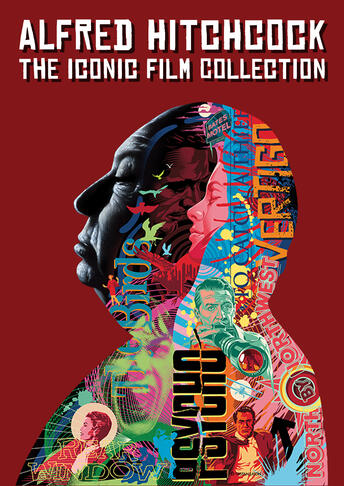
Yep, every one of those films in fully remastered 4K Ultra HD. Plus extras. And a cool bookshelf case.

My review of Alfred Hitchcock: The Iconic Collection is at PopMatters:

Far from lazy, Alfred Hitchcock: The Iconic Film Collection delivers a delectable sampling of the director in the late bloom of his career. These six films—Rear Window (1954), To Catch a Thief (1955), Vertigo (1958), North by Northwest (1959), Psycho (1960), and The Birds (1963)—provide everything from spiffy and urbane romantic crime melodramas to a road-trip espionage thriller, an eerie take on the apocalypse, a chilly study in obsession, and a proto-slasher film. It’s a staggering collection. No other mainstream director ever took on so many genres so successfully and in such a short time…

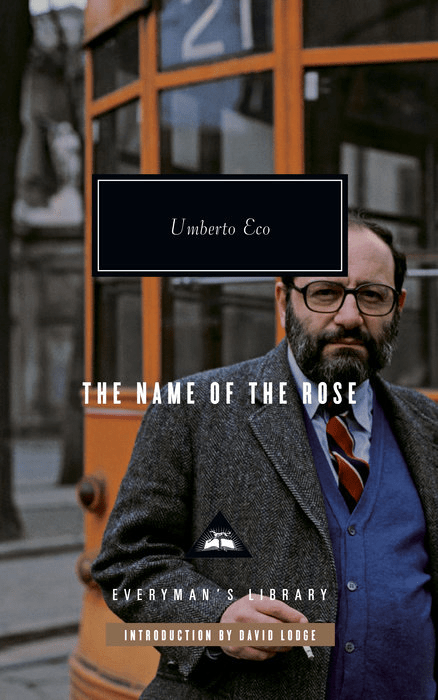
Writer’s Desk: Umberto Eco’s Rules

Umberto Eco was the kind of writer many aspire to become. Witty, pugnacious, ridiculously well-read, and generally up for anything, whether it was an ornately detailed conspiracy theory, heavily researched mystery novel, or punchy political essay.

Given that, he had a lot to tell other writers about their craft, even if he failed to follow his own advice. Here are a few of Eco’s rules for writing, delivered with tongue planted firmly in cheek:

  • “A complete sentence should comprise.”
  • “Avoid clichés: they’re like death warmed over.”
  • “No plurale majestatis, please. We believe it pompous.”
  • “Don’t write one-word sentences. Ever.”