Writer’s Desk: It’s Not Hard

Writing isn’t easy. All that time alone, the self-doubt, the back aches, the certainty that you could have nailed that one paragraph if you had just five more hours.

But on the other hand, it’s not that hard. You look at the page, put your hands on the keys, and start making stuff up. Eventually you stop.

Ethan Canin, whose cool and chiseled story collections like The Palace Thief don’t exactly feel off the cuff, cuts to the thick of it in this interview from The Atlantic where he’s talking about Saul Bellow:

In a way, plot is very simple: You have someone do something wrong. You don’t plan out a plot. You have somebody do something wrong, and that engenders other bad behavior. Behavior—especially bad behavior—is what forces character to emerge.

So: Think of a place. Put a character. Make them do something stupid. Watch them try to get out of it. There’s your story.
Writer’s Desk: Who Do You Write For?

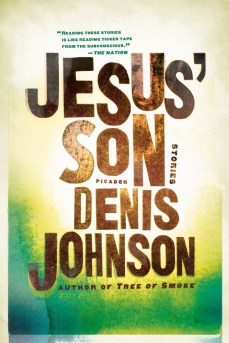
Denis Johnson, the author of Jesus’ Son and Tree of Smoke among other great works of quasi-Beat genius, died a couple weeks back at the age of 67.

Although his rehab-stippled talent took a while to be recognized, he finally won the National Book Award back in 2007. In a blessedly brief interview about that award, he gave one of the best bits of writing advice ever. In response to the question of who his ideal reader or audience was, he responded:

I write for my wife, my agent, and my editor.

Does anybody else matter, truly?

Writer’s Desk: Nora Ephron on Getting Paid

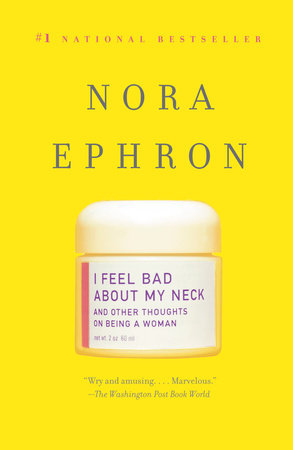
The salty yet ever-cherubic Nora Ephron was born this week in 1941 in New York, the city that she chronicled as well as just about any other writer of the century.

She started out as an ink-stained wretch at Newsweek and the New York Post before moving on to books (Heartburn) and writing and sometimes directing romantic comedies (When Harry Met Sally).

In 1974, before any of that came about, she was interviewed by Writer’s Digest—here’s some of what she had to say to young writers:

First of all, whatever you do, work in a field that has something to do with writing or publishing. So you will be exposed to what people are writing about and how they are writing, and as important, so you will be exposed to people in the business who will get to know you and will call on you if they are looking for someone for a job.

Secondly, you have to write. And if you don’t have a job doing it, then you have to sit at home doing it.

Note that second point in particular. Sure, you can get up at 4:00am and write a few pages of your book before leaving for the office. But, with all due deference to the Stones, isn’t it better to get your ya-ya’s out while getting a salary and benefits?

Get paid to write. It helps.

Writer’s Desk: Enjoy It

In 1958, Daphne Du Maurier, author of gothic treats like RebeccaJamaica Inn, and the story that inspired Hitchcock’s “The Birds,” wrote an essay about her fame called “My Name in Lights.” Du Maurier, born this week in 1930, had advice what to do when you have just done something right:

There come moments in the life of every artist, whether he be a writer, actor, painter, composer, when he stands back, detached, and looks at what he has done … This is the supreme moment. It cannot be repeated. The last sentence of a chapter, the final brush stroke, a bar in music, a look in the eye and the inflection of an actor’s voice, these are the things that well up from within and turn the craftsman into an artist…

So cherish it, because those moments don’t come often:

The feeling has gone in the next breath, and the craftsman takes over again. Back to routine, and the for which he is trained … The moment of triumph is a thing apart. It is in the secret nourishment.

Writer’s Desk: Do What Zadie Smith Says

Zadie Smith—you know her, buzzy English novelist (White Teeth, On Beauty) with an incomparably cool style and legions of fans—is an accomplished enough author at a relatively young age that when she laid down a list of writing tips for the Guardian back in 2010, people paid attention.

Listen up:

1 When still a child, make sure you read a lot of books. Spend more time doing this than anything else.

2 When an adult, try to read your own work as a stranger would read it, or even better, as an enemy would.

3 Don’t romanticise your “vocation”. You can either write good sentences or you can’t. There is no “writer’s lifestyle”. All that matters is what you leave on the page.

4 Avoid your weaknesses. But do this without telling yourself that the things you can’t do aren’t worth doing. Don’t mask self-doubt with contempt.

5 Leave a decent space of time between writing something and editing it.

6 Avoid cliques, gangs, groups. The presence of a crowd won’t make your writing any better than it is.

7 Work on a computer that is disconnected from the ­internet.

8 Protect the time and space in which you write. Keep everybody away from it, even the people who are most important to you.

9 Don’t confuse honours with achievement.

10 Tell the truth through whichever veil comes to hand – but tell it. Resign yourself to the lifelong sadness that comes from never ­being satisfied.

Take that last tip particularly to heart and nurture that dissatisfaction: It will power everything you write.

Writer’s Desk: Go Listen to Classical Music

It’s always something. Even after writers find the right time and place to get their work done, more often than not, their attention wanders. The easy accessibility of smartphones and other digital distractions further frays our already tenuously held attention spans.

Anne Quito noted her problems with this in a recent article for Quartz:

Like the rest of the so-called multitasking generation (a.k.a. GenM), my default mode is to start two or more things at the same time, and that approach had compromised my ability to finish novels, TV shows, and projects efficiently. It also made me impatient, divided my affections and diluted my resolutions.

Her suggestion to break this cycle? Attend a classical music concert:

…the concert hall, where there things can’t be paused and one can’t get up to leave easily, is the ultimate training ground.

At the symphony, the only task is to tune in to one beautiful spectacle at a time.

Writer’s Desk: Go Shopping?

themall

So there are lots of different kinds of writing programs out there. Depending on your location and availability, most are worth applying to because we could all stand to get paid to hang out somewhere and write on our own for a little while.

But how about shopping? As part of its twenty-fifth birthday, that great temple of consumerism, Legos, and fried walleye, the Mall of freaking America, is now sponsoring its very own Writer-in-Residence program.

According to the Mall folks:

The Writer-in-Residence Contest will give a special scribe the chance to spend five days deeply immersed in the Mall atmosphere while writing on-the-fly impressions in their own words. The contest winner will stay in an attached hotel for four nights, receive a $400 gift card to buy food and drinks and collect a generous honorarium for the sweat and tears they’ll put into their prose.

“Deeply immersed in the Mall atmosphere”? Hotel? Gift card for the food court? “Generous honorarium”? Sounds like a no-brainer. Let’s just say that the impressions garnered from people-watching, whether it be the packs of teenagers roaming the amusement park or the busloads of foreigners wandering dazedly about, are likely worth their weight in gold. Or cheese curds.

Applications are due March 10th.

Writer’s Desk: Type, Just Type

typewriter1For the last bit of writing advice in the year 2016, when many of us are thinking of nearly anything else than getting back to the keyboard, here’s something simple.

Famous editor Robert Gottlieb—who nurtured books by authors ranging from Robert Caro to John Le Carre and Toni Morrison—finally got around to writing his own book this year. It took some doing:

In moments of despair, when he felt incapable of setting down words, Mr. Gottlieb took his own advice, which he has doled out to countless blocked authors over the decades: Don’t write, type.

With that as your guiding principle, you’ll never be blocked again.

Remember, you can always edit later.

Writer’s Desk: Make the World a Better Place

onthemountain1

From an essay that Andrew Solomon wrote last year for the New Yorker, in which he cautioned patience as a virtue for impatient young writers, he also articulated an incredibly overarching and idealistic view of the craft:

Despite every advancement, language remains the defining nexus of our humanity; it is where our knowledge and hope lie. It is the precondition of human tenderness, mightier than the sword but also infinitely more subtle and ultimately more urgent. Remember that writing things down makes them real; that it is nearly impossible to hate anyone whose story you know; and, most of all, that even in our post-postmodern era, writing has a moral purpose … If you can give language to experiences previously starved for it, you can make the world a better place.

Empathy, hope, and action—hard to keep in mind if you’re just trying to crank out a couple more blog posts or polish off the third novel in your humorous allergic detective trilogy. But nevertheless, that is what we all need to be mindful of.

Words matter.

Screening Room: ‘Neruda’

neruda-1600x900-c-default

In the newest film from Pablo Larrain (whose Jackie just opened), Gael Garcia Bernal plays a cop hot on the heels of the titular Chilean poet.

Neruda is opening this week. My review is at Film Journal International:

Pablo Larraín has said flat-out that he didn’t want to make a biopic of Chile’s hero poet Pablo Neruda. And that’s a wise decision. Compressing Neruda’s incident-packed life, which whipsawed from writing yearning and experimental poetry to traveling the world in the diplomatic service to pursuing a career in domestic politics and spending years on the run as a political exile, into a single film would have produced fatigue, confusion, or at the very least severe neck injuries…

The trailer is here:

Writer’s Desk: Write for Yourself, First

catcher-in-the-rye-red-coverIn 1974, J.D. Salinger broke 20-plus years of silence to talk to a reporter about, in part, unauthorized editions of his work that had been appearing. One of the literary world’s most famous curmudgeons, Salinger didn’t have much use for the apparatus of publicity and publishing. And why should he? Catcher in the Rye and his short stories had made him famous and wealthy at a relatively early age.

He told Lacey Fosburgh:

There is a marvelous peace in not publishing. It’s peaceful. Still. Publishing is a terrible invasion of my privacy.

That’s to be expected from the man many saw, unfairly or not, as a not-so-grown-up Holden Caulfield.

Less so is what followed:

I like to write. I love to write. But I write just for myself and my own pleasure.

It’s not a bad piece of non-advice. After all, if you don’t like what you’re writing, it’s more than likely nobody else will, either.

Writer’s Desk: Don’t Stop Now

benjaminbnf

The great Walter Benjamin once postulated the 13 rules necessary for the writer to make a go of it with their craft. It’s a smart, detail-fixated, and lengthy list, which you can review in full here.

They’re not all for everybody—”Avoid haphazard writing materials. A pedantic adherence to certain papers, pens, inks is beneficial” is a tad on the fussy side—but the following items seem relevant to just about any ink-stained wretch out there:

  • “Talk about what you have written, by all means, but do not read from it while the work is in progress. Every gratification procured in this way will slacken your tempo.”
  • “Consider no work perfect over which you have not once sat from evening to broad daylight.”
  • “Never stop writing because you have run out of ideas. Literary honour requires that one break off only at an appointed moment (a mealtime, a meeting) or at the end of the work.”

It is likely that a broader belief in the concept of “literary honour” would serve the writing classes well.

Writer’s Desk: How Speechwriters Do It

fdr-speaking

With the election, and (who knows?) maybe a gut-punch to democracy itself, just around the corner, it seems like the right time to get some writing advice from people who have to churn out a lot of words on demand at high velocity and with extreme precision: Speechwriters.

Scholastic gathered together a bunch of them, from Paul Begala to Bob Shrum, and boiled down their advice to a few points, explained at length here. Here’s the upshot:

  • Get to the Point — Quick!
  • Make It Look Easy
  • Make ’em Laugh
  • Get Them on Your Side
  • The Meat and Potatoes (what you actually are there to say)

There’s no writer out there who couldn’t stand to get to the point quickly and effectively while making it seem effortless. And the occasional gag never hurt anybody.

Writer’s Desk: Shakespeare Wrote on Deadline, Too

shakespearefirstfolio

For his essay on the somewhat nonsensical tendency for modern authors to keep reinterpreting the plays of Shakespeare, Adam Gopnik pointed out this about the Bard:

Shakespeare grabbed his stories more or less at random from Holinshed’s history of Britain and Plutarch and old collections of Italian ribald tales. As the “ordinary poet” of a working company of players, he sought plots under deadline pressure rather than after some long, deliberate meditation on how to turn fiction into drama. “What have you got for us this month, Will?” the players asked him, and, thinking quickly, he’d say, “I thought I’d do something with the weird Italian story I mentioned, the one with the Jew and the contest.” “Italy again? All right. End of the month then?” These were not the slow-cooked stories and intricately intertextual fables of the modern art novel.

In other words, we would all do well to remember that even Shakespeare had to write on deadline, for money, and while keeping an eye toward putting asses in seats. He was a great writer, one of our greatest, but a working writer, too.

Reader’s Corner: ‘Strangers in Their Own Land’ – Fury and Crisis in Trump’s America

donald_trump_with_supporters_30040691671
(photo: Gage Skidmore)

It’s hard to look at today’s chaotic political and cultural landscape and not wonder—among many, many other things—in deference to Joan Walsh’s book from a couple years back: “What’s the matter with white people“?

strangers_in_their_own_land_finalA part of the answer can be found in Arlie Russell Hochschild’s fantastic new book Strangers in Their Own Land: Anger and Mourning on the American Right. It came out last month and is necessary reading to understand what is and has been going on in America for the past couple decades.

My review is at PopMatters:

When Arlie Russell Hochschild set out in 2011 to research her perceptive ethnography of the frustrated white American conservative, Strangers in Their Own Land, she didn’t realize how many of her subjects would later be driving off a cliff in a fume- and insult-spewing conveyance with “Trump 2016” stenciled on the side. How could she? Few of us knew it would come to this…

Here’s an interview with Hochschild from Vox. where she talks about spending five years among the people who would form the base of Donald Trump’s nationalistic insurgency.