Reader’s Corner: Richard Adams’s Book Collection

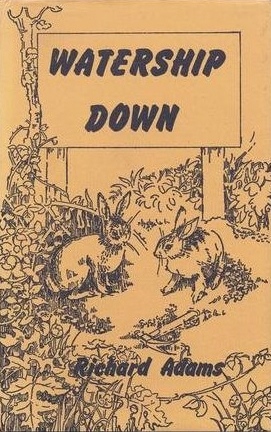
The Guardian has some news for British bibliophiles: On December 14, the literary collection of the late and very great Richard Adams will be going on sale. For anybody who wants to see where the author of Watership Down and Plague Dogs got his inspiration, here’s your chance.

According to the auction house:

The library which Richard Adams built up at Benwells, his 18th century home in Hampshire, was housed in a vast cube-shaped room. Here several thousand books lined each wall from floor to high ceiling. Valuable first editions jostled with paperbacks, piles of books were stacked next to comfy armchairs, rabbit figurines took their place on shelves next to family photographs, and the author’s desk was at the hub of it all. The overwhelming impression was of a place where books were read and enjoyed, rather than treated as mere commodities.

That collection includes “Milton’s Lycidas, a complete set of Jane Austen first editions uniformly bound, and a Bible that once belonged to Charles II.” There’s also a copy of Lord of the Flies signed by William Golding for Adams. If you’ve got about £60,000 on hand, there’s also a Second Folio of Shakespeare.
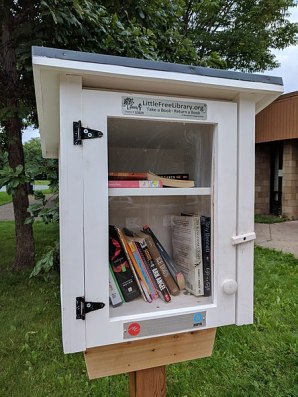
Reader’s Corner: These Cops Carry Books

The Minneapolis police department is starting something new with its community police efforts. According to the Star-Tribune:

In a partnership with Little Free Library, the department will turn a pair of its police cruisers into bookmobiles with the hope of teaching the importance of reading.

Community policing officers will carry books while they are making their rounds on the city’s North and South sides. They’ll still respond to certain emergencies, but won’t be dispatched to calls for help, freeing them up to visit neighborhoods without libraries and give away books to anyone who wants them.

But, discerning readers will ask, what kind of books will these officers be offering? A variety, it appears:

For now, available titles to be given away range from children’s books like “Camp Wildhog” and “The Box Car Children: The Yellow House Mystery” to more adult fare, including a well-thumbed unauthorized biography of Martha Stewart.

Reader’s Corner: ’10 Things I Learned About Literature from Monty Python’

My article ‘Proust, Hardy, and Spam: 10 Things I Learned About Literature from Monty Python’—including many handy and time-wasting YouTube links and a plethora of literary goodies—was just published at The Barnes & Noble Review:

As many gawky teens discovered in their misspent youths, there was comedy and then there was Monty Python. Exploding penguins, a crime-fighting bishop, and Karl Marx struggling to answer questions about soccer on a TV quiz show; it was all surreal grist for their mill. Fully embodying the high culture/low humor synthesis that produced the better countercultural artifacts of the 1970s, their TV series, films, concerts, and books embedded arch literary references inside a dense framework of Dada performance art-pieces, cultural satire, and broadly silly skits in a classically comedic idiom…

And don’t forget Monty Python FAQ, in finer bookstores now.

Reader’s Corner: Go Shopping

We know that money doesn’t buy happiness. Yet, sometimes shopping does make people feel better; or at least they think it does. So here’s the question, can buying something in particular make you happier than something else?

A study published last year in Psychological Science tried this experiment:

They gave vouchers to extraverts and introverts to either buy a drink or a book. Along the way, participants repeatedly completed a measure of positive and negative mood so that the researchers could study deviations from the mood baseline. The results showed that introverts who had bought books enjoyed mood lifts.

Easy. Feeling down? Go to the bookstore.

Reader’s Corner: Why Does Arkansas Hate History?

The word “censorship” gets thrown around a lot these days, not always responsibly. But every so often you see a case that seems to fit the textbook definition.

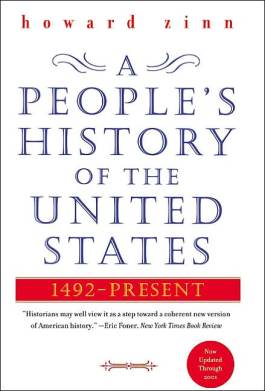
One of those instances happened this week in Arkansas, which you may also know as Missour-ah’s underachieving and even more miserable neighbor. The state legislature there is considering a bill that would actually make it illegal for schools to teach the books of Howard Zinn, author of A People’s History of the United States.

As Melville House noted:

[The bill] would force Arkansas educators to pretend that Howard Zinn had never written a single book, and furthermore (and this is the really crazy part) would require that they systematically ignore any secondary texts addressing Zinn’s scholarship.

By the logic of the law as written, even materials critical of Zinn’s approach to American history, of which there are many, may be prohibited. Teachers must simply pretend that one of the most influential and most discussed historians of the twentieth century never existed.

Making it illegal to teach from a historian known for his progressive political viewpoint? Sounds like censorship, plain and simple.

Writer’s Desk: Don’t Forget to Read

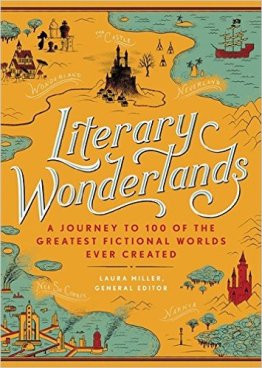
literarywonderlandsBrilliant, longtime critic Laura Miller was interviewed recently by Poets & Writers. One of their first questions was about a statement she’d made about preferring reading to writing.

Her response, in part:

We live in a time when everyone wants to write and seemingly no one “has time” to read. Everyone wants to speak and increasingly few people want to listen. People sometimes scoff when I make this observation and claim that aspiring writers read more than anyone else, but that is not my experience. I’m constantly meeting people who, when they learn what I do, always want to talk about the book they plan to write despite the fact that they seem to find no books worth reading. We fetishize the idea of being a writer in a variety of ways, most of them narcissistic. So when I meet a big reader who professes no desire to write, I think of them as a beautiful, almost mythical creature, like a unicorn, to be celebrated.

So while writers of course need (always) to get back to work (speaking of which, why are you wasting time on this?), it’s also helpful that they remember something. Save time to read, because if you don’t, you could well forget the joys of reading and thusly the reasons why anybody would want to pick up and devour what you yourself are spending so much time to create.

In other words: Write for the reader inside you.

Reader’s Corner: Vote Now

oscar-waoInstead of just announcing what the new all-city book club selection is going to be, New York took it to the people with OneBookNY. They chose five possible books and are asking people to vote on what they think everyone should read.

The five books are:

  • Americanah by Chimamanda Ngozi Adichie
  • Between the World and Me by Ta-Nehisi Coates
  • The Brief Wondrous Life of Oscar Wao by Junot Diaz
  • The Sellout by Paul Beatty
  • A Tree Grows in Brooklyn by Betty Smith

Couple interesting choices here. Coates’s book is nonfiction, departing from the usual novelistic mold, while Beatty’s (amazing) novel is set quite definitively in Los Angeles. Seems like either Diaz or Smith’s (also amazing) novels are the right choice here, but who’s to say?

Voting closes February 28.

Writer’s Desk: Be Ruthless

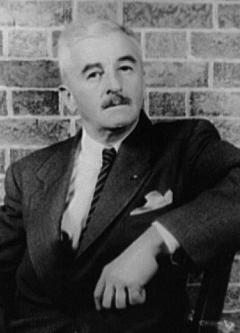
williamfaulkner1When William Faulkner was interviewed by The Paris Review in 1956, he was asked whether writers need to be “completely ruthless.”

The sage of the South replied in the affirmative, with vigor:

The writer’s only responsibility is to his art. He will be completely ruthless if he is a good one. He has a dream. It anguishes him so much he must get rid of it. He has no peace until then. Everything goes by the board: honor, pride, decency, security, happiness, all, to get the book written. If a writer has to rob his mother, he will not hesitate; the ‘Ode on a Grecian Urn’ is worth any number of old ladies.

He may not be right about the literary importance of “Ode on a Grecian Urn,” but the point is, nevertheless, an uncomfortable truth.

Reader’s Corner: What the Bigots Had to Read

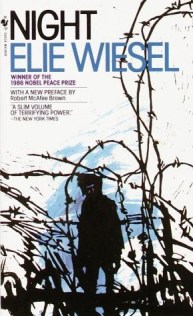
NightWieselA few months ago, some teenagers spraypainted swastikas and various other offensive things onto a historic black schoolhouse in Virginia. When they were sentenced, the judge said they were going to have to read a book each month for the next 12 months and write a report on each one.

Here’s the list of books they could choose from:

  1. The Color Purple, by Alice Walker
  2. Native Son, by Richard Wright
  3. Exodus, by Leon Uris
  4. Mila 18, by Leon Uris
  5. Trinity, by Leon Uris
  6. My Name Is Asher Lev, by Chaim Potok
  7. The Chosen, by Chaim Potok
  8. The Sun Also Rises, by Ernest Hemingway
  9. Night, by Elie Wiesel
  10. The Crucible, by Arthur Miller
  11. The Kite Runner, by Khaled Hosseini
  12. A Thousand Splendid Suns, by Khaled Hosseini
  13. Things Fall Apart, by Chinua Achebe
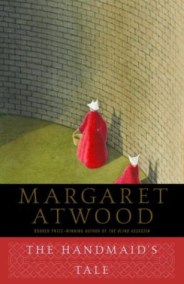
  14. The Handmaid’s Tale, by Margaret Atwood
  15. To Kill a Mockingbird, by Harper Lee
  16. I Know Why the Caged Bird Sings, by Maya Angelou
  17. The Immortal Life of Henrietta Lacks, by Rebecca Skloot
  18. Caleb’s Crossing, by Geraldine Brooks
  19. Tortilla Curtain, by T.C. Boyle
  20. The Bluest Eye, by Toni Morrison
  21. A Hope in the Unseen, by Ron Suskind
  22. Down These Mean Streets, by Piri Thomas
  23. Black Boy, by Richard Wright
  24. The Beautiful Struggle, by Ta-Nehisi Coates
  25. The Banality of Evil, by Hannah Arendt
  26. The Underground Railroad, by Colson Whitehead
  27. Reading Lolita in Tehran, by Azar Nafisi
  28. The Rape of Nanking, by Iris Chang
  29. Infidel, by Ayaan Hirsi Ali
  30. The Orphan Master’s Son, by Adam Johnson
  31. The Help, by Kathryn Stockett
  32. Cry the Beloved Country, by Alan Paton
  33. Too Late the Phalarope, by Alan Paton
  34. A Dry White Season, by André Brink
  35. Ghost Soldiers, by Hampton Sides

handmaidstale1Certainly several of these books would be considered standard assignments in any basic college course that dealt with multicultural or tolerance issues (Richard Wright, Toni Morrison, Maya Angelou, Alan Paton, Ta-Nehisi Coates, Harper Lee).

But others selections are more interesting, such as Adam Johnson’s The Orphan Master’s Son (a North Korean defector struggles to adapt to life outside the dictatorship) or Margaret Atwood’s The Handmaid’s Tale (dystopian fiction about a theocratic America in which women are merely vessels for reproduction). It sounds like the judge is looking at a broader idea of educating here that involves not just tolerance but empathy–which is, after all, one of the greatest lessons that fiction can provide.

Reader’s Corner: Orwell and Trump

orwell1

My article “Forget Orwell: No Book Will Prepare You for the Trump Years” was published earlier this week at Medium:

After Donald Trump’s human smokescreen Kellyanne Conway announced that the president was simply presenting the world with “alternative facts,” the connection was quickly made to George Orwell’s 1984. There is good reason for this. (And while one should be happy for any resulting increase in sales of the book, we shouldn’t presume that it will be any guide to the remaining years of the Trump presidency. More on that below.)…

Reader’s Corner: Obama’s Books

Something unlikely to be seen in the next four years: the President out buying books (Pete Souza)

No matter what was going on in the world, President Obama always found time to read, preferably for at least an hour a night, according to Michiko Kakutani. This wasn’t just a habit that relaxed him, it also provided grist for the mill:

In today’s polarized environment, where the internet has let people increasingly retreat to their own silos (talking only to like-minded folks, who amplify their certainties and biases), the president sees novels and other art (like the musical Hamilton) as providing a kind of bridge that might span usual divides and ‘a reminder of the truths under the surface of what we argue about every day.’

He points out, for instance, that the fiction of Junot Díaz and Jhumpa Lahiri speak ‘to a very particular contemporary immigration experience,’ but at the same time tell stories about ‘longing for this better place but also feeling displaced’ — a theme central to much of American literature, and not unlike books by Philip Roth and Saul Bellow that are ‘steeped with this sense of being an outsider, longing to get in, not sure what you’re giving up.’

You can get a sense of the breadth of his recent reading in his last couple of summer reading lists compiled by the White House:

  • “Barbarian Days: A Surfing Life” by William Finnegan
  • “The Underground Railroad” by Colson Whitehead
  • “H Is for Hawk” by Helen Macdonald
  • “The Girl on the Train” by Paula Hawkins
  • “Seveneves” by Neal Stephenson
  • “All The Light We Cannot See” by Anthony Doerr
  • “The Sixth Extinction” by Elizabeth Kolbert
  • “The Lowland” by Jhumpa Lahiri
  • “Between the World and Me” by Ta-Nehisi Coates
  • “Washington: A Life” by Ron Chernow

It’s a superb mix of literary and popular fiction, along with of-the-comment commentary and even science fiction (who’d have thought the president, any president, would be reading Neal Stephenson?), the kind of list that a particularly good bookseller would have put in your hands if you told them: “What’s good now?”

So, if Obama’s looking for something to do, maybe there’s a bookstore hiring.

Reader’s Corner: The Book Bus

Eau Claire, Wisconsin just had a pretty cool idea:

As early as late spring, all 22 city buses could be outfitted with special racks filled with books that people can read on the ride or bring home if they want to – free of charge. Consider it a road-bound riff on the Little Free Library movement that began in Hudson a few years ago and spread throughout Wisconsin and the world, with literally thousands of book-filled boxes springing up at homes, businesses, and schools. In this case, the free books will be close at hand for people who rely on city buses for their transportation.

Everybody’s city should be so lucky.

(h/t: Melville House)

Weekend Reading: December 23, 2016

christmas_card2_bylouisprang

Writer’s Desk: Make the World a Better Place

onthemountain1

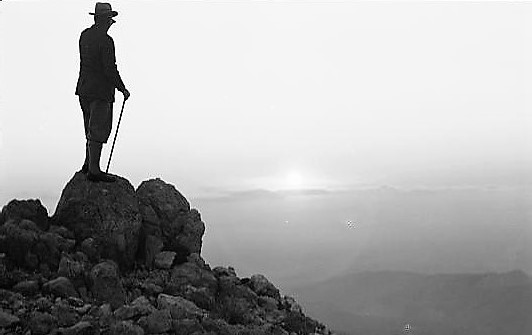
From an essay that Andrew Solomon wrote last year for the New Yorker, in which he cautioned patience as a virtue for impatient young writers, he also articulated an incredibly overarching and idealistic view of the craft:

Despite every advancement, language remains the defining nexus of our humanity; it is where our knowledge and hope lie. It is the precondition of human tenderness, mightier than the sword but also infinitely more subtle and ultimately more urgent. Remember that writing things down makes them real; that it is nearly impossible to hate anyone whose story you know; and, most of all, that even in our post-postmodern era, writing has a moral purpose … If you can give language to experiences previously starved for it, you can make the world a better place.

Empathy, hope, and action—hard to keep in mind if you’re just trying to crank out a couple more blog posts or polish off the third novel in your humorous allergic detective trilogy. But nevertheless, that is what we all need to be mindful of.

Words matter.

Reader’s Corner: What the President Read

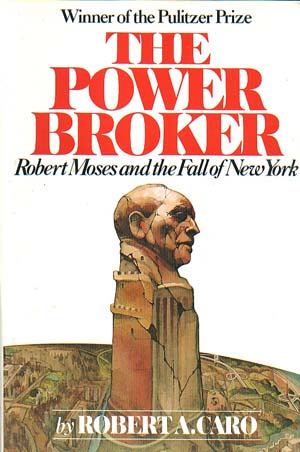
the_power_broker_book_coverRecently, Barry told Wired about the books that have shaped him over the years. They broke down his syllabus in typical efficient-nerd fashion, by how long it would take to read. Predicting one could get through Robert Moses’s 1,300-odd page The Power Broker in 19 hours seems dubious unless you’re a speedreader.

Still, this list is nonetheless a fascinatingly mixed one, jumping from fiction (a surprising Steinbeck selection) to urban studies (Caro, the book that explains New York City) and environmentalism (Kolbert’s terrifying study of climate change and mankind-caused extinctions):

  • The Collected Works of Abraham Lincoln
  • Parting the Waters: America in the King Years 1954–63, Taylor Branch
  • The Power Broker: Robert Moses and the Fall of New York, Robert Caro
  • The Fire Next Time, James Baldwin
  • Andy Grove, The Life and Times of an American, Richard S. Tedlow
  • Sapiens: A Brief History of Humankind, Yuval Noah Harari
  • Thinking, Fast and Slow, Daniel Kaheman
  • The Sixth Extinction: An Unnatural History, Elizabeth Kolbert
  • In Dubious Battle, John Steinbeck
  • Behind the Beautiful Forevers: Life, Death, and Hope in a Mumbai Undercity, Katherine Boo