Writer’s Desk: Love Words More Than Your Voice

AudenVanVechten1939
W. H. Auden (c. 1939)

According to legend, or at least a book with the lilting title How Does a Poem Mean?, W. H. Auden was once asked what advice he would give to a young poet. Auden responded that if he asked the young poet why they wanted to write and the answer came back that they thought they had something important to say, Auden’s conclusion was that there was no hope.

However, Auden went on to say that if the answer came back as “I like to hang around words and overhear them talking to one another,” then he thought the young poet might have promise after all.

Following Auden’s line of thought, you could say that if you start with a love of words, their flow and shading and endless permutations, you might get to somewhere important. But starting in grandiloquence will get you nowhere.

Writer’s Desk: Rely on Your Instincts

Rilke in 1900
Rainer Maria Rilke

In Letters to a Young Poet (1929), Rilke corresponded with Franz Xaver Kappus, a young poet who was not sure whether or not to go ahead with a career in the arts or to stick with the Austrian military. It seems clear that anybody seriously considering those two paths in life would not be well-suited for a lifetime of uniformed service, but Rilke took the query seriously.

Commenting on some poems that Kappus had sent and some questions about their worth, Rilke had this to say:

You ask whether your poems are good. You send them to publishers; you compare them with other poems; you are disturbed when certain publishers reject your attempts. Well now, since you have given me permission to advise you, I suggest that you give all that up. You are looking outward and, above all else, that you must not do now. No one can advise and help you, no one.

Feedback is necessary, particularly when it helps writers overcome blocks or be more attentive to flaws that escaped their notice in the first draft. But waiting for acceptance from the outside world or permission to continue on is a fool’s errand. Better to follow Rilke’s advice to dig deep, find a reason, and write as though it were your last day on Earth:

Go within. Search for the cause, find the impetus that bids you write. Put it to this test: Does it stretch out its roots in the deepest place of your heart? Can you avow that you would die if you were forbidden to write? Above all, in the most silent hour of your night, ask yourself this: Must I write? Dig deep into yourself for a true answer. And if it should ring its assent, if you can confidently meet this serious question with a simple, “I must,” then build your life upon it. It has become your necessity. Your life, in even the most mundane and least significant hour, must become a sign, a testimony to this urge.

Writer’s Desk: Don’t Worry About What Sells

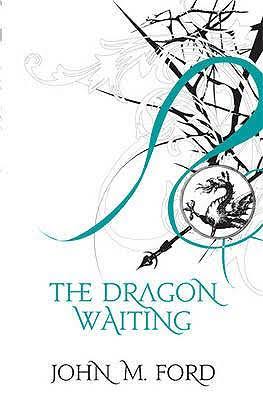
Image result for The Dragon Waiting

Sometimes you can have all the talent in the world and not enough people will notice. Take the much-beloved writer John M. Ford, who published a bewildering array of fantasy and science fiction that earned him plaudits from a devoted core of fans but little popular success. From Isaac Butler in Slate, about one of Ford’s unsung classics:

The Dragon Waiting is an unfolding cabinet of wonders. Over a decade before George R.R. Martin wrote A Song of Ice and Fire, Ford created an alternate-history retelling of the Wars of the Roses, filled with palace intrigue, dark magic, and more Shakespeare references than are dreamt of in our philosophy. The Dragon Waiting provokes that rare thrill that one gets from the work of Gene Wolfe, or John Crowley, or Ursula Le Guin. A dazzling intellect ensorcells the reader, entertaining with one hand, opening new doors with another…

But Ford never stuck long enough with one genre or style to make a great success of it. He jumped around, played games (literally, he had a strong side career in role-play gaming), and was not interested in making things easy for his fans.

“He could have had a more successful career,” Patrick Nielsen Hayden [husband of Ford’s editor] and Tor’s editor in chief, said, “if he had been more disciplined about his writing” and stuck to one genre, or written a series. “But Mike wanted to write what he wanted to write.”

The argument could be made that writers like Ford (whose work, by the way, is finally being re-released in 2020) do themselves a disservice by not finding a lane and sticking to it.

But if you know what you enjoy writing, have fun writing it, can find at least a few people who enjoy it, and one person who will pay you a few bucks to write it, do that. If writing is not fun, it becomes a job.

Writer’s Desk: Keep at It

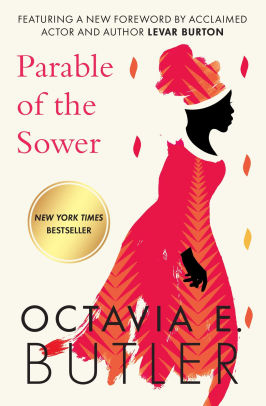
Parable of the Sower

Like many writers of science fiction, Octavia Butler spent many long years working at her craft while remaining mostly unknown and with precious little to show for it. She is revered today for her classics like The Parable of the Sower and Kindred but for much of her career she toiled in relative obscurity, as so many female writers of color do.

Point being, she knew something about sticking with it.

Here’s what she told Locus magazine back in 2000:

I’ve talked to high school kids who are thinking about trying to become a writer and asking ‘What should I major in?’, and I tell them, ‘History. Anthropology. Something where you get to know the human species a little better, as opposed to something where you learn to arrange words.’ I don’t know whether that’s good advice or not, but it feels right to me. You don’t start out writing good stuff. You start out writing crap and thinking it’s good stuff, and then gradually you get better at it. That’s why I say one of the most valuable traits is persistence. It’s just so easy to give up!

Writer’s Desk: Remember to Tell a Story

Wilmington, Delaware. Tower Hill School, noted country day school for pupils from three to eighteen years of age. A young pupil writing in a notebook at her desk

Since the Great Recession, more college students have been shifting their majors from English toward more supposedly employment-friendly study in the STEM fields like engineering, math, and computer science.

But one advantage held by people who study literature and write (though they may not be so hot at calculating a tip on the fly) is knowing how to make an argument and tell a story in a clear and engaging manner. Who thinks that? Nobel Prize-winning economist Robert Shiller:

Shiller, who is famous for predicting the dot-com crash and coming up with the Case-Shiller Home Price Index, is spending a lot of time looking at old newspaper clippings to understand what stories and terms went viral and how they influenced people to buy things — or stop buying things.

When asked if he’s essentially arguing for more English and history majors, Shiller said, “I think so,” adding: “Compartmentalization of intellectual life is bad.”

The world needs storytellers. Regardless of your field.

Writer’s Desk: Write Like the Ukraine Whistleblower

Washington, D.C. A government clerk's room, showing a desk with books, telephone and directory, and a desk lamp on it

Jane Rosenzweig, director of the Writing Center at Harvard, has some surprising advice for where to find good writing: Follow the example of the government whistleblower who filed a complaint about how the *President has been degrading the office (most recently). According to Rosenzweig, this might be a government report, but it does what all good writing must:

  • Right to the point!

He wastes no time on background or pleasantries before stating that he is writing to report “an ‘urgent’ concern.” And then he immediately states it.

  • Subheadings!

The whistle-blower’s subheadings do what the best subheadings do: They structure the complaint and provide a clear outline of what the document contains.

  • Great topic sentences!

Strong persuasive or expository writing features topic sentences that tell the reader what to focus on.

  • Active verbs!

Passive constructions leave us hanging about who did what, which can be useful if you’re trying to deflect responsibility for something. But if you want to keep your reader focused on who is accountable for what, tell them by making sure your sentences feature real people performing actions.

The whistle-blower could turn out to be a writer in their free time. They could also just be a person who understands that it’s not enough to tell somebody something, you have to tell them well.

So pay attention to your writing. You never know when the fate of democracy could depend on it.

Writer’s Desk: Get Past the Terror

Detroit, Michigan. Art director and copy writer at a large advertising agency

David Simon (Homicide, The Wire, The Deuce) on writing the character of Creighton on Treme, a frustrated novelist who committed suicide:

… there were some underlying fears that as a creative soul Creighton had shot his bolt. That fear is probably latent in every writer. You stare at the page for the first time and if you’re honest at all, you know there’s a little part of you screaming, “But what if I can’t do it anymore?” And then you start writing, and usually the first things are not great, and then you try again and eventually you’re off and running. But every time, there’s that first moment of vague terror.

It’s not that every writer has actually experienced terror at the idea that they couldn’t do the work anymore. There must be plenty who have happily floated past such worries.

But it is almost certainly true that a person who doesn’t understand the concept of being stricken in the soul over being unable to create, must not in the end have ever truly been a writer.

Writer’s Desk: Persevere

writing1
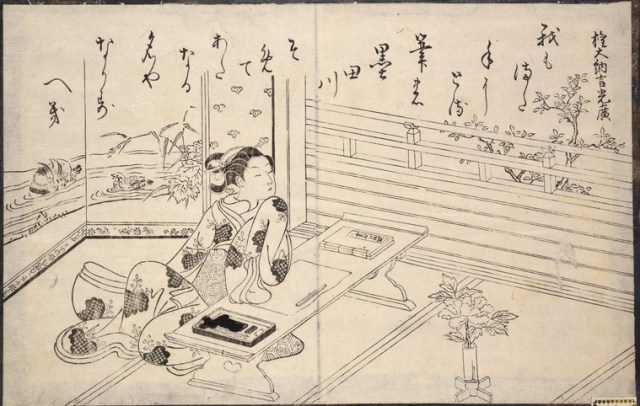
“Woman at desk, gazing at outside view” (c. 1768)

Some days it comes. The words flow, you forget to look up, and before you know it, the whole morning has passed and you have five good new pages.

Some days it does not. Nothing comes. Everything sounds terrible. You write and delete and rewrite the same two lines before getting up and going for a walk.

Still, the desk remains. The page needs to be filled. How? No easy way around it, per screenwriter Akiva Goldsman:

Successful writers don’t wait for the muse to fill themselves unless they’re geniuses. I’m not a genius. I’m smart, I have some talent, and I have a lot of stubbornness. I persevere. I was by no means the best writer in my class in college. I’m just the one still writing…

Chances are, you are not a genius (no offense).

So, failing that, just keep at it. Be the tortoise.

And stop looking out the window.

Writer’s Desk: Stop Complaining


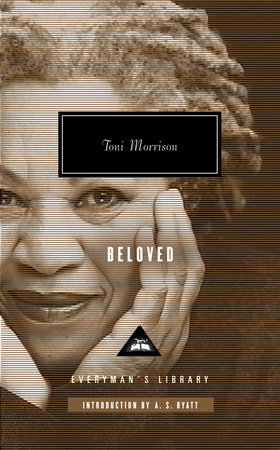
In honor of the great Toni Morrison, who passed this week at 88, here’s some well-needed advice from a woman who was not just a great novelist and inspiration to millions, but a sharp-eyed editor and teacher who did not care for complaints.

Per a Salon interview from 1998, in which Morrison talked about whether she could teach confidence in addition to writing:

Well, that I can’t do much about. I’m very brutal about that. I just tell them: You have to do this, I don’t want to hear whining about how it’s so difficult. Oh, I don’t tolerate any of that because most of the people who’ve ever written are under enormous duress, myself being one them. So whining about how they can’t get it is ridiculous…

Writing can be miserable, when the words just refuse to flow and you hate everything you do write. But writers also by temperament veer toward the solipsistic. So we always need to remember that no matter how tough it feels, writing is still just putting words on paper. Get it done, stop complaining, open your ears, and if you’re lucky a great writer like Morrison will give you some good edits and advice.

(h/t: Emily Temple)

Writer’s Desk: Try a New Format

Sometimes the same-old, same-old just does not work for what you are trying to accomplish. If you feel that you (or your work, or both) are in a rut, try changing things up.

Consider Jennifer Egan. She has written a number of novels the usual way. On some kind of computer, using a word-processing program, the results of which are ultimately designed and laid out on printed pages, bound together, and shipped around the world.

But in 2010, she tried something different. Her novel, A Visit from the Goon Squad, featured an entire chapter written in PowerPoint slides. It’s a brilliant way of showing how the 12-year-old autistic character can best express herself. (The Guardian has the whole chapter here.)

Then, in 2012, Egan serialized an entire story on Twitter. She didn’t compose “Black Box” on her phone, though, rather writing everything in longhand and spending about a year polishing it down to the chiseled nub required to produce fiction 140 characters at a time. Check out the full result at the New Yorker.

Think about the different avenues you want to take with your writing, what the obstacles are that keep you from getting there, and what tools might help you out.

Writer’s Desk: Get It Down

File:Rod Serling photo portrait 1959.JPG

A veteran of some pretty horrendous fighting in the Pacific Theater during World War II, Rod Serling suffered from nightmares much of the rest of his life. He also had a deeply-ingrained sense of justice.

Both came together in the somewhat maniacal writing schedule he maintained as one of early television’s most acclaimed live teleplay authors and then the showrunner and primary writer for The Twilight Zone.

The only way he could keep the pace going? According to Nicholas Parisi’s biography, he told a writing class at Ithaca College this:

The instinct of creativity must be followed by the act—the physical act of putting it down for a sense of permanence. Once you have that prod, that emotional jar that “I witnessed something” or “I felt something” … Write it down…. Don’t let it die aborning in your head.

Never wait. Keep a notebook around. Type it into your phone if you have to. But once you have that idea or that worthy experience, do not assume you will remember it a day or an hour hence.

Write it down.

Writer’s Desk: Don’t Listen to Advice

When Roxane Gay set out to write a novel, at first she got tired up in logistical questions:

… Is it really true that every chapter should be self-contained and readable as its own thing? Do you have to write from beginning to end or is it acceptable to jump around the story and pull it all together at the end? How do you pace a novel? How explicit is too explicit? Is it okay to leave gaps in the narrative? There is lots of advice on novel writing out there but I struggled to find satisfying answers for my specific set of questions…

Not surprisingly, this tied her up in knots and didn’t produce much writing. So she chucked all those questions:

Finally, there came a time when I decided to ignore all the advice I had read and do the only thing I know how to do, which is write. I wrote what I felt like writing, when I felt like writing, how I felt like writing. I jumped all over the place. None of my chapters had numbers. I didn’t take notes, or create a timeline, or plot anything out.

Once she stopped worrying about how to write, she wrote.

Writer’s Desk: Ask the Questions

Unless you’re Karl Ove Knausgard, writing entails getting in touch with life outside of yourself. That can present problems in fiction. Why? Most writers’ lives just are not that exciting.
Lynda La Plante, the crime novelist responsible for the series Widows and Prime Suspect, has a simple solution for finding out what you need to know:
If you want to find out something you go to source. If you want to know what a man serving life for murder is like, call your nearest prison and register as a visitor … That’s what’s so exciting as a writer, if you put yourself out there, you come home with the goodies
So if you want to truly engage with your invented characters, go find their closest real-life corollaries and talk to them. That’s how you get the goodies.

Writer’s Desk: Money Helps

JP Donleavy died earlier this month at the age of 91. About a half-century ago he wrote The Ginger Man, another of those great racketing novels from the British Isles about charismatic and sodden rakes. It had the unusual distinction of being highly praised in print by both Dorothy Parker and Hunter S. Thompson, who knew a few things about booze and wit.

In any case, Donleavy proffered some sound advice about those pursing his craft to a magazine in the late 1970s:

Writing is turning one’s worst moments into money.

Better definitions have yet to be located.

Writer’s Desk: Listen to Your Editor

In the current publishing environment, one thing remains the same as in years past: Nearly all writers with a publishing contract have an editor. However, not all editors and not all publishers are made the same. Often, whether due to intent or time or budget (often all of the above), all that an editor can do is fix errors, make some suggestions, and generally guide the manuscript through the pipeline.

For those writers and editors who are lucky enough to be given the time and support to really work on a book together, though, the results can be revelatory. Take this essay by Thomas Ricks, in which he describes in some detail the lengthy, painful, and ultimately rewarding journey he went on with the editor on his (incredible) book Churchill and Orwell:

I asked Scott why he had been so rough on me the previous winter. ‘Sometimes my job is to be an asshole,’ he explained with equanimity. I wasn’t startled at this. At one point on an earlier book, when I told him how stressed I was feeling, he had replied, a bit airily, I thought, ‘Oh, every good book has at least one nervous breakdown in it.’

Near the end of our lunch, Scott offered one more wise observation about the writing process: ‘The first draft is for the writer. The second draft is for the editor. The last draft is for the reader.’

Negative feedback, especially from a trusted editor and/or friend, can be crushing.

But it can also save your book.