Screening Room: ‘The Lost Arcade’

lost_arcade-1465404120-726x388

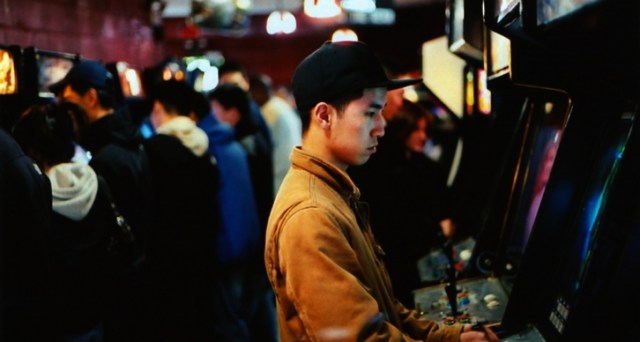
For years, the last arcade in New York was a gritty little spot called the Chinatown Fair. There, night after night, gamers gathered to compete, play, gossip, and boast until the early hours. Then it closed.

The Lost Arcade has been playing the festival circuit. It opens at the Metrograph in New York this week. My review is at Film Journal International:

Everything about the videogame palaces in The Lost Arcade makes them look like oases. Shot mostly at night, because that’s when the gamers come out, the arcades blaze into the darkness with their teenage-Vegas cacophony of strobing lights, electronic bleeps, and the hoots and hollers of victors and vanquished. Clearly, these are not just places to drop some quarters and kill a half-hour on the latest Street Fighter; they are clubhouses, homes away from home…

Here’s the trailer:
Screening Room: ‘Richard Linklater – Dream is Destiny’

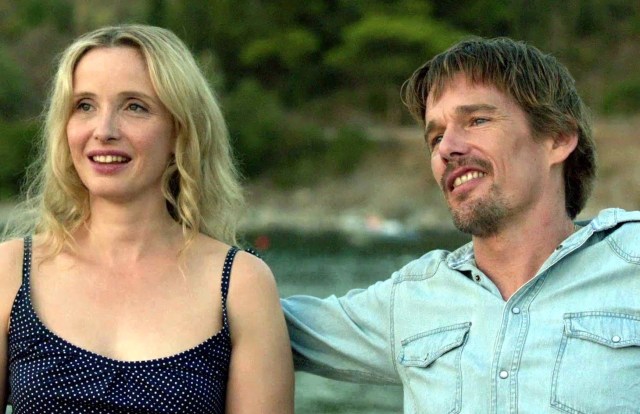
Julie Delpy and Ethan Hawke in Linklater's 'Before Midnight' (2013)
Julie Delpy and Ethan Hawke in Linklater’s ‘Before Midnight’ (2013)

In 1991, Richard Linklater helped blow open the American indie filmmaking scene with Slacker, his rambling odyssey of drifters and dreamers on the edge in Austin, Texas. Since then, he’s made everything from high school party films (Dazed and Confused) to modern romances (the Before trilogy).

Richard Linklater – Dream is Destiny opens this week in limited release. My review is at Film Journal International:

It almost seems wrong to use the word auteur when talking about Richard Linklater, especially after seeing this friendly and appreciative survey of his life’s work. As unique and idiosyncratic as Linklater’s body of work is, there remains a modesty to it that carries over into the person who appears onscreen. Unlike in many documentaries about great directors or other artists, co-directors Louis Black and Karen Bernstein hardly stand back in awe from their subject, they sidle right up next to the unassuming artist and simply ask him how he does it. “It’s a lot of hard work,” says the director of Slacker, Boyhood, and other touchstones of the American independent film movement. “And people don’t want to hear that”…

Here is the trailer:

Screening Room: ‘Zero Days’

zero days2

With all the news the last few days about not just the thousands of emails stolen from the Democratic National Committee but the possibility that the hack was directed by a foreign power (and a certain presidential candidate’s request that that power do yet more hacking), the as-yet mostly theoretical idea of cyberwar has suddenly hit the mainstream.

zero days-posterIn a rare convergence, Alex Gibney’s prescient documentary Zero Days hit theaters just a couple weeks ago. My article, “DNC Hack Could Make Zero Days the Year’s Most Prescient Film,” is at Eyes Wide Open:

Zero Days does not directly relate to the kind of offensive cyber operation that is alleged to have happened with the DNC. However, in his deep-undercover, whistleblower-thick narrative, Gibney does paint a picture of the types of motives and capabilities that directly relate to what is potentially happening now. It serves as a kind of road map for the new geopolitical battleground that many of us might have just gotten a glimpse of in this sweltering summer of unease…

Here’s the trailer:

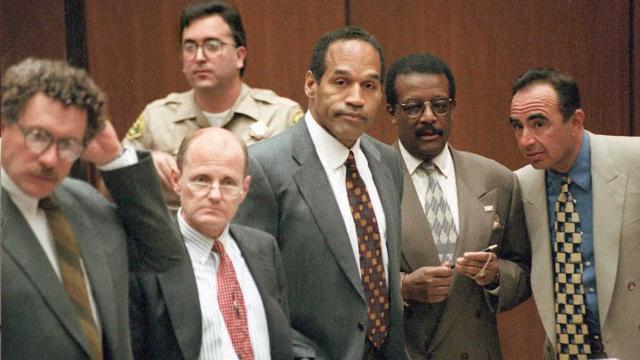
TV Room: ‘O.J.: Made in America’

OJ-1

ESPN’s “30 for 30” series has been responsible for some of the better sports-themed documentaries of recent years (Peter Berg’s King’s Ransom, on the trade of Wayne Gretzky to Los Angeles; Ron Shelton’s Jordan Rides the Bus, in which Michael Jordan retires from the NBA to play minor-league baseball) by understanding a simple rule: Sports stories get more interesting the further afield they run from the sport in question.

Ezra Edelman’s sprawling five-part epic O.J.: Made in America follows that rule to a tee. It is not just a high point for the series, it’s one of the great long-form documentaries you will ever see.

It’s been shown on ESPN, had a brief theatrical run, and should be available on various streaming services soon. My review is at Eyes Wide Open:

“I thought he was a has-been.” That’s Marcia Clark, no sports fan, in Ezra Edelman’s O.J.: Made in America. She’s describing her reaction to hearing about O.J. Simpson being wanted for double murder. Clark would spend an incredible-to-believe nine months in a courtroom trying to put him behind bars for those murders. But given the portrait of Simpson that emerges from Edelman’s masterfully dense, dramatic, and journalistic five-part documentary, it’s likely that the one-time sports star and permanent celebrity wannabe would be more offended by Clark thinking he was a has-been than a murderer…

Here’s the trailer:

Screening Room: ‘T-Rex’

t_rex-01

As if growing up poor in Flint, Michigan wasn’t difficult enough, Claressa “T-Rex” Shields decided to set herself a lofty goal: Becoming the first woman to win a gold medal in boxing at the Olympics.

Shields’s awesomely gripping story is the subject of T-Rex, which is playing now in limited release and should show up on PBS in the next year. My review is at Film Journal International:

Outgoing but tough and pragmatic, Shields is blunt about how she got started at the gym she’s been boxing at since age eleven: “I was just down here, beating guys… It was something I liked to do”…

Here’s the trailer:

Screening Room: ‘Do Not Resist’

do not resist1

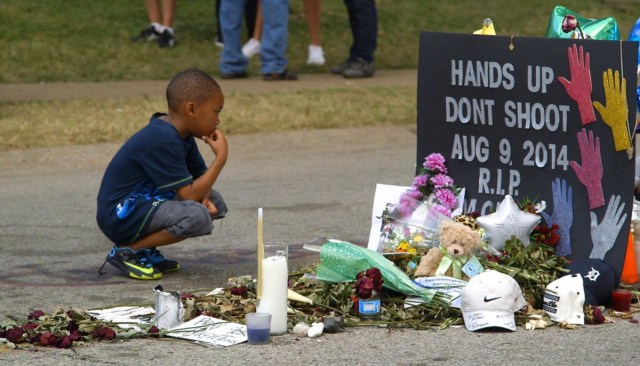
Following the Ferguson riots of 2014, there was a brief moment where the county noticed that all of a sudden, its police departments—stuffed with billions of dollars worth of military surplus and bristling with body armor, assault rifles, and make-my-day attitude—were looking more like a domestic military.

Craig Atkinson’s sober, occasionally terrifying Do Not Resist keeps the spotlight on the militarization of American police forces. It’s screening tomorrow night at the Human Rights Watch Film Festival in New York and should be showing up around the country in more festival dates.

My review is at Eyes Wide Open:

The film starts in the tear gas-fogged streets of Ferguson, Missouri during the riots of August 2014 that followed the fatal shooting of Michael Brown, a black teenager, by a white police officer. As the St. Louis County police department tries to clear the streets of protestors, their body armor and gas masks, plus their hulking dark-green armored transports, turn the scene into something out of a war zone, not a Midwestern suburb…

Screening Room: ‘De Palma’

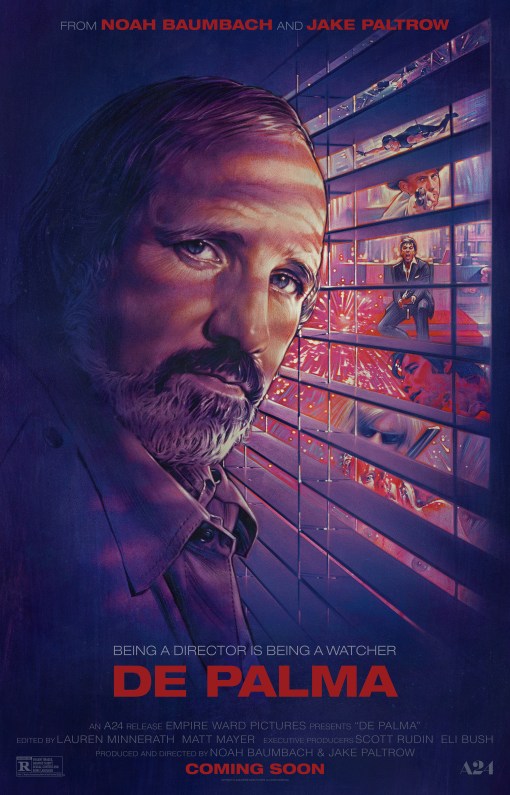
de palma-poster

Brian De Palma isn’t the kind of director who usually gets his own appreciative documentary. For one, he’s still alive and making films. For another, those films are usually twisted psychodramas just barely this side of exploitation thrillers.

Directed by filmmakers Noah Baumbach and Jake Paltrow, De Palma opens this week. My review is at Film Journal International:

Baumbach and Paltrow’s approach is simple: Put a camera on De Palma as he walks us through his oeuvre, inserting strategic clips from his work or cinematic references as needed. There’s a brief dash through his autobiographical particulars before getting to the heart of the matter. Afterward the structure is chronological, bracketed by his little-seen college work from the 1960s (Wotan’s Wake) to the smaller independently financed films made since his self-imposed exile in Paris (Redacted, Femme Fatale). In between is one of cinema’s most unique and unlikely careers, swerving from psychological thrillers to horror, camp, gangster and war epics, and back again to psychological thrillers. It’s more than enough for De Palma to discuss…

Here’s the trailer:

Screening Room: ‘Hooligan Sparrow’

hooligan-sparrow1

This year’s Human Rights Watch Festival opens with a strong indictment of the institutional and moral corruption of modern-day China, as laid bare by a tiny insurgent band of determined women activists.

My review of Hooligan Sparrow, whose footage had to be smuggled out of China and which opens the festival this Friday in New York, is at Little While Lies.

Here’s the trailer:

Screening Room: ‘The Witness’

thewitness2

When 28-year-old Kitty Genovese was raped and murdered while walking home in Kew Gardens, Queens one night in 1964, the story spread that many of her neighbors heard the assault take place but did nothing to stop it. 

Her case became a totemic story of the apparent moral lassitude spreading across the country. James Solomon’s documentary about Genovese opens the case back up, to see what really happened.

The Witness is opening this week in limited release. My review is at Film Journal International.

Screening Room: ‘How to Let Go of the World…’

howtoletgooftheworld1

The new environmental documentary from Josh Fox (Gasland) starts off as a terrifying plunge into what climate change will be doing to the Earth, and the human race, over the next few decades. But then Fox does something unusual: He tries to find what there is to be happy about in all this terrifying prognostication.

How to Let Go of the World and Love All the Things Climate Can’t Change is playing now in limited release. My review is at Film Journal International:

Josh Fox’s first two films—Gasland and Gasland Part II—were micro-targeted issue documentaries about the environmental dangers of fracking for natural gas, particularly near his home in upstate New York. So it makes sense that his newest film, How to Let Go of the World and Love All the Things Climate Can’t Change, would start off in the same vein. He opens on a shot of him dancing with a charming lack of rhythm to the Beatles’ “Ob-La-Di, Ob-La-Da.” It’s a way of celebrating the rare victory: After years of activism, fracking was outlawed in the Delaware River watershed…

Here’s the trailer:

Rewind: The Real Anita Hill Story

anita-poster1Tonight, HBO is premiering Confirmation, their fictional take on the Clarence Thomas Supreme Court confirmation hearings in 1991. It was the first of the decades televised scandal melodramas, not least for the spectacle of the Senate’s hostile grilling of Anita Hill about her accusations of sexual harassment by Thomas.

Freida Lee Mock’s documentary Anita (2014) is an instructive take on Hill’s experience under the spotlight and how the resulting controversy changed the country.

My review is at Film Racket.

Here’s the trailer:

Screening Room: ‘Vaxxed,’ Film Fests, and Truth

Tribeca2016.jpg

The Tribeca Film Festival, which has long been one of the country’s premier venues for new documentaries, ran into controversy recently when they pulled one of their films from the schedule. Vaxxed: From Coverup to Catastrophe is a documentary by Andrew Wakefield, one of the top pushers of the vaccines-cause-autism conspiracy theory. Not surprisingly, some people had a problem with this.

My article “Why the Tribeca Film Festival was Right to Pull Vaxxed‘ ran in the online edition of Little White Lies:

The argument to screen Vaxxed regardless of its relationship to the truth feels similar to that pushed by creationists who cloak their school agendas under the cloak of “teaching the controversy,” when in fact no actual controversy exists…

Screening Room: ‘The Brainwashing of My Dad’

brainwashing1

It’s the kind of thing too many people are familiar with. Once middle-of-the-road parents suddenly, after immersing themselves in Fox News and talk radio, turn into angry ditto-heads, sending email forwards filled with birther conspiracy theories and ALL CAPS freakout. That’s what happened to filmmaker Jen Senko, who chronicled the experience in a new documentary.

The Brainwashing of My Dad opens this week in limited release. My review is at Film Journal International:

Presenting itself as a Chomsky-esque takedown of a well-oiled propaganda machine, Jen Senko’s The Brainwashing of My Dad defines itself as “a story about a media phenomenon that changed a father and divided a nation.” The phenomenon Senko’s referring to is the “vast right-wing conspiracy” that Hillary Clinton identified back in 1998, after years of unhinged assaults on her and Bill by a well-funded network of conservative magazines, columnists, TV personalities and talk-radio hosts. It’s a conspiracy that Senko knows quite well, having watched her father turn from a “nonpolitical Kennedy Democrat,” the kind who would give a homeless black man money while calling him “Sir,” into the sort of splenetic crank who rants about “feminazis” and how the liberals are destroying America…

Here’s the trailer:

Screening Room: ‘Boom Bust Boom’

Terry Jones: What are we missing?

Ever wonder why every time there’s a bubble in the economy, nearly all market-watchers and economists seem to say, “Don’t worry about it, because This Time It’s Different”? Monty Python’s Terry Jones’s nifty new comedic documentary Boom Bust Boom tries to find out why.

My review of Boom Bust Boom, opening this week in quite limited release, is at Film Journal International:

Wearing the dashingly ironic grin of a BBC host who just can’t wait to let you in on a real cracker of a story, Terry Jones starts off his musical-theatre economics lecture by pointing to what he calls “the Achilles’ heel of the economy.” What he’s referring to is the fact that most economies are irregularly plagued by seemingly random and unpredictable crises. This is despite the fact that universities pump out a steady stream of newly minted economists who one would imagine would be able to focus their well-trained brains on preventing the next such crisis…

Here’s the trailer:

Rewind: ‘Winter Soldier’

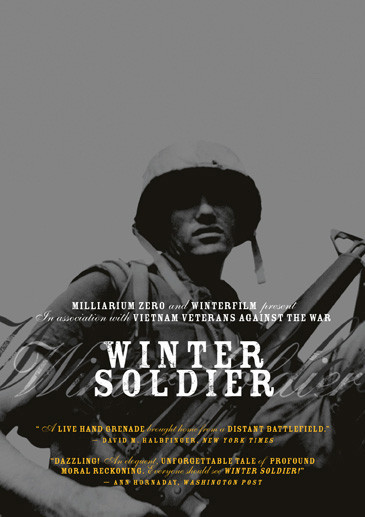
Winter_Soldier_2155687

In early 1971, a group of Vietnam veterans (future senator and Secretary of State John Kerry among them) gave several days of public testimony about the atrocities they had witnessed or, in some cases, participated in during the war. The results were filmed by a collective that included future Oscar winner Barbara Kopple and released as the stunning, grueling documentary Winter Soldier.

My essay on Winter Soldier is at Eyes Wide Open:

… the film is essentially a parade of grainy, black-and-white footage of morose, shaggy-headed vets talking in confession-booth tones about laying waste to villages and butchering civilians; this is not a fun night out at the movies (but, then, neither is Shoah). In general, we as a country have preferred to have our Vietnam horror stories served up to us as part of thrilling wartime adventure tales, like Apocalypse Now and Platoon, or used as nihilistic punch lines in the morbidly inhumane Full Metal Jacket. And yet it remains well-nigh unconscionable that Winter Soldier, a burningly crucial missive delivered straight from the frontline, never become one of the standard texts on the Vietnam War and didn’t receive its first proper theatrical release until 2005.

Here’s the trailer: