Screening Room: ‘The Virgin Spring’

My review of the Criterion Blu-ray edition of The Virgin Spring is at PopMatters:

You can easily imagine the characters in Ingmar Bergman’s devastating The Virgin Spring (Jungfrukällan, 1961) calling where they live “God’s country”. Their farm is situated in a kind of pristine wonderland of thick pine forests and gurgling streams. Religion plays a central role in most of their lives as well, with the mother, Mareta (Birgitta Valberg), seeming to spend her every waking moment in contemplation of God, and her husband, Tore (Max von Sydow), only slightly less fervent in his faith. They are certain of their place in the world, and God’s gifts to them…

Here’s a clip:

Screening Room: ‘A Matter of Life and Death’

There’s a new Criterion Blu-ray edition out with a gorgeous presentation of Michael Powell and Emeric Pressburger’s 1946 wartime afterlife romance A Matter of Life and Death. And yes, it’s pretty much required viewing.

My review is at PopMatters:

After making a run of cheery but subversive movies during World War II, always under the watchful eye of Winston Churchill — who refused to shut down the film industry as it was during the Great War — the Ministry of War came to [Powell and Pressburger] with a request: Could they make a movie that would make the British and Americans love each other? A seemingly odd request, given that the nations were at the time fighting tooth and nail to dislodge the Nazis from Western Europe…

Here’s a trailer:

Nota Bene: The New Canon

eternalsunshine1

The Washington Post‘s Ann Hornaday has just addressed an obvious lacuna in movie criticism by declaring first that not only has the Great Movie Canon remained stubbornly fixed for too long (Vertigo, Citizen Kane) but that there are many movies post-2000 that stand up alongside all the greats of yesteryear.

Hornaday’s article “The New Canon” is an absolute must-read. She also selected a fairly unassailable list, excepting maybe Spike Lee’s adventurous but uneven 25th Hour and Kenneth Lonergan’s solid but somewhat unremarkable You Can Count on Me. Her list is here but it’s best reading her arguments are each of them as well:

  • Children of Men
  • 25th Hour
  • The Hurt Locker
  • Michael Clayton
  • Pan’s Labyrinth
  • There Will Be Blood
  • Boyhood
  • 4 Months, 3 Weeks, and 2 Days
  • Old Joy
  • Eternal Sunshine of the Spotless Mind
  • Hunger
  • You Can Count on Me
  • No Country for Old Men
  • I’m Not There
  • Minority Report
  • Dunkirk
  • Mudbound
  • Spotlight
  • Son of Saul
  • Stories We Tell
  • The Fog of War
  • The Royal Tenenbaums
  • Spirited Away

Nota Bene: Film Forum Reopens

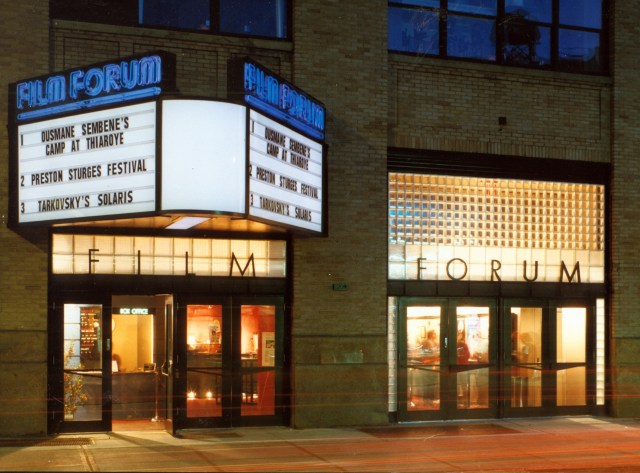
August is here and, just in time, Film Forum has reopened after a long-overdue renovation. The place is almost a half-century old. “Not bad” (as their website notes) “for a scrappy non-profit that started with 50 folding chairs and a 16mm projector the size of a breadbox.”

More than just another arthouse, Film Forum is one of the last standing temples of American cinephilia, the sort of place that can mix obscure spaghetti westerns and avant-garde documentaries with an Andrei Tarkovsky retrospective and the latest in Iranian or South Korean cinema without missing a beat. Plus, the popcorn is amazing, even sans butter.

The Times published some recollections about Film Forum, from filmmakers like John Turturro to Christopher Nolan. Ramin Bahrani (99 Homes) speaks for many cinephiles’ aching backsides:

Their renovations sound wonderful, because, yes, we all know, their seats were a little uncomfortable and the sightlines were not ideal — but their programming was so impeccable that we went anyway.

Screening Room: ‘One Sings, the Other Doesn’t’

A new restoration of Agnes Varda’s One Sings, the Other Doesn’t from 1977 is in limited release now. Check it out while you have the chance. There’s absolutely nothing else like it playing at any theater anywhere near you.

My review is at The Playlist:

When Agnès Varda’s delightfully gonzo song-studded paean to sisterhood “One Sings, the Other Doesn’t” opened the 1977 New York Film Festival, it landed in the middle of a differently fraught world for women’s rights issues. Abortion, which is a recurring theme in this newly restored and re-released classic, had only been legal in the United States for five years and in Varda’s native France, for just two. The campaign for the Equal Rights Amendment was grinding to a halt in the face of conservative opposition. Female directors were still essentially unheard of in the movie industry. Expectations were high…

Shameless Self-Promotion: ‘Monty Python FAQ’

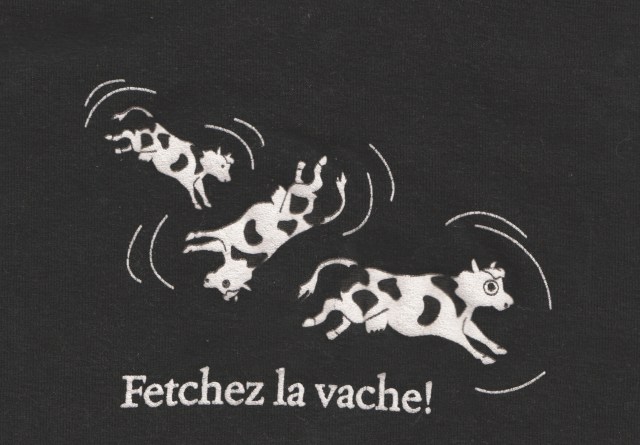
Have you any inkling what this T-shirt refers to?

Did you ever hop around on one foot while shouting, “’tis but a flesh wound!”?

Can you sing “The Philosopher’s Song” without referring to notes?

Was there a point during the United Kingdom’s recent snap election where you wondered whether there should have been a candidate from the Very Silly Party?

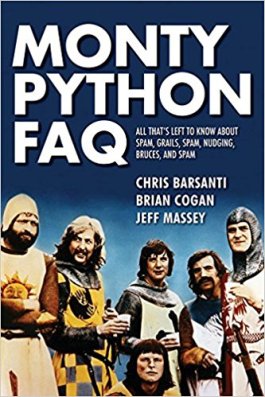
If you answered “yes” or asked “what’s all this, then?!” then it’s about 583% likely that Monty Python FAQ is the book for you!

Scribbled down in crayon by yours truly and his boon companions Brian Cogan and Jeff Massey, and then lovingly transcribed into proper book form by the dedicated editors at Applause Books, Monty Python FAQ is just about everything you ever wanted to know about the Python boys. That includes:

  • Words! Pictures! Lots of ’em.
  • An exegesis of every single Monty Python’s Flying Circus episode.
  • More than one could ever want or need to know about fish-slapping.
  • The deep, dark secret behind the one American Python, who hailed from the mystical, faraway land of … Minnesota.
  • Exploding penguins, dead budgies, Grannies from Hell … you get the picture.

It’s on sale now. Here. And hereAnd here. Don’t say we didn’t warn you.

And now … this:

Reader’s Corner: ‘Talking Pictures’

The new book, Talking Pictures, from Washington Post film critic Ann Hornaday, is in stores now and it’s a fantastic read.

My review is at PopMatters:

… even though the water-cooler factor of all this frantic locking of eyeballs to screens is at an all-time high, nobody is really talking about it much beyond “wasn’t that funny?” or “did you see that coming?” It’s almost as though people just don’t have the time or tools for talking about what they’re watching. That’s one of many factors that makes Ann Hornaday’s Talking Pictures such a vital book for this moment.

Screening Room: ‘The Man Who Fell to Earth’

manwhofelltoearth-dvdIn 1976, David Bowie was a rock star, but pretty much still just that. Then Nicolas Roeg cast the singer/songwriter with the alien alter ego(s) as an alien wandering around Earth and having an existential crisis. The film was remembered less for itself

My review of The Man Who Fell to Earth, now out in a deluxe new Blu-ray/DVD release with fab new digital transfer, is at PopMatters:

The Man Who Fell to Earth is one of those curious sci-fi projects that are occasionally indulged in by filmmakers who didn’t have any particular interest in the genre per se, but found it a useful springboard for their ideas. David Bowie plays an alien who’s come to Earth looking for a water supply for his drought-ravaged planet. Calling himself Thomas Jerome Newton and looking like some kind of spectral hipster in his sunglasses and anorak, he’s first spotted wandering through a small New Mexico town, pawning a ring and drinking stagnant water as though it were the nectar of the gods…

Here’s the trailer.

Screening Room: ‘His Girl Friday’

his-girl-friday1

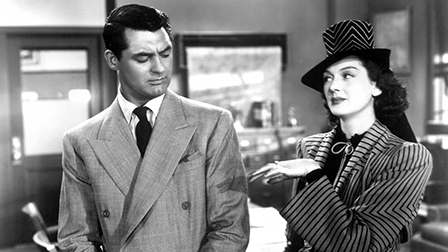
Criterion’s two-disc edition of Howard Hawks’s His Girl Friday hit stores last week and it’s a real pip. Packaged with all the usual supplemental features and interviews, you’ve also got the full edition of Lewis Milestone’s first film adaptation of the play The Front Page from 1931. But all you really need is the film itself, a sparkling new 4K restoration that makes every gag from this whirlwind-speed screwball comedy ring clear.

his-girl-friday-dvdMy review of His Girl Friday is at PopMatters:

Unlike his lionized peers Alfred Hitchcock and John Ford, Hawks didn’t stick to one genre. He made some crime and war dramas like Scarface and The Road to Glory, but was better known for romances and screwball comedies like Bringing Up Baby and Twentieth Century. His defining characteristic, though, served him in good stead for his newest project: speed…

Check out the trailer here.

Screening Room: ‘A Touch of Zen’

Screen Shot 2016-01-08 at 4.53.14 PM.tif

In 1971, former martial-arts director King Hu embarked on an epic reimagination of what the genre would look like. The three-hour A Touch of Zen was magical, weird, and breathtaking, often in the same scene. It was mostly ignored in its butchered release, except for some brief acclaim after finally getting a proper showing at the 1975 Cannes Film Festival.

touchofzen-dvdSince then, the film—which deeply influenced Ang Lee’s Crouching Tiger, Hidden Dragon—has been mostly confined to obscurity. Thankfully, Janus Films gave it a proper release earlier this year, and now there’s also a beautiful new Criterion DVD edition.

My review is at PopMatters:

The film’s second third comes as a relief after the deliberate mannerisms and fussy perfectionism of the first third. Here, A Touch of Zen pivots from quiet pastoral with supernatural elements to more John Sturges Western. As villainous forces marshal against Yang and the two fugitive generals who came to her aid, Ku uses his study of classic works of strategy to plan their defense. The set-piece battle in which the small army of guards are lured into the supposedly haunted fort for a spectacular night-time ambush is a marvel of geometric precision and subterfuge…

Here’s the trailer:

Writer’s Desk: Don’t Be Fussy

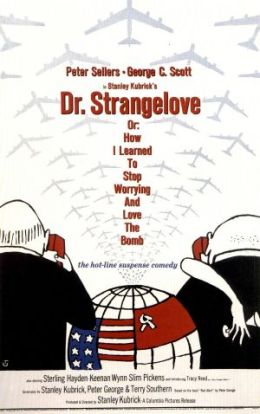
Dr._Strangelove_posterTerry Southern, who was born this day in 1924, was a writer familiar with the movies. He adapted other people’s work—freely satirizing Peter George’s thriller novel Red Alert into Dr. Strangelove—and had his own work put on screen—Buck Henry adapted Southern’s sexual fantasia Candy for film in 1968.

So, when Southern has advice about writers whose work is so (un?)lucky to be optioned by Hollywood, it’s best to listen:

If a writer is sensitive about his work being treated like Moe, Larry and Curly working over the Sistine Chapel with a crowbar, then he would do well to avoid screenwriting altogether…The wise thing, of course, is to become a filmmaker.

Note that The Three Stooges in the Sistine Chapel would have been a keeper.

Rewind: ‘In Bruges’

inbruges1

With Martin McDonagh’s killer new play Hangmen having sold out on the West End—and now available in some theaters via National Theatre Live digital broadcast—it seems a good time to look back at his debut film, 2008’s hitman comedy In Bruges.

Assassins on Vacation” is at Eyes Wide Open:

The Bruges Chamber of Commerce was probably delighted with at least part of Martin McDonagh’s 2008 debut film In Bruges, as it delivers a ravishing viewpoint on this gorgeous Belgian town that appears to have been dropped into the 21st century from a fairy-tale version of the Middle Ages … Local boosters were certainly less taken, though, with most of what happens in this dark-as-night comedy, in which a pair of hitmen hiding out in the town spend their time arguing over whether or not the town is, in fact, “a shithole.” Later on, the guns come out, large quantities of blood are spilled, and a story that had been weaving a fairy-tale ambiance turns into a wholly different kind of fairy tale — one that doesn’t cater to tourists…

Here’s the trailer:

Quote of the Day: Explaining Things to Nazis

manhattan-dvd

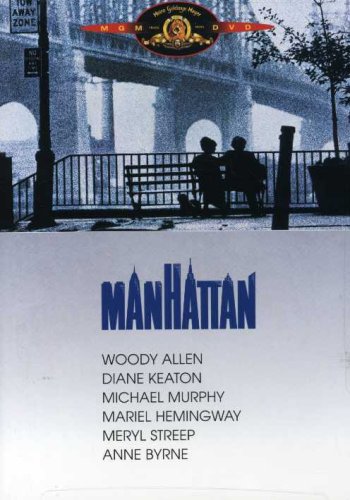
From a party scene in Woody Allen’s Manhattan, where Allen plays a writer named Isaac who, like many of us these days, seems confused that some matters are believed to still be up for discussion:

Isaac: Has anybody read that Nazis are going to march in New Jersey, you know? We should go there, get some guys together, you know, get some bricks and baseball bats and really explain things to them.

Man: There was this devastating satirical piece on that on the op-ed page of the Times. It is devastating.

Isaac: Well, a satirical piece in the Times is one thing, but bricks and baseball bats really gets right to the point.

Woman: Oh, but really biting satire is always better than physical force.

Isaac: No, physical force is always better with Nazis. It’s hard to satirize a guy with shiny boots.

Rewind: ‘Winter Soldier’

Winter_Soldier_2155687

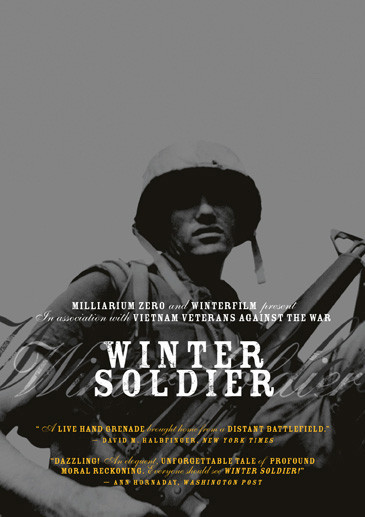
In early 1971, a group of Vietnam veterans (future senator and Secretary of State John Kerry among them) gave several days of public testimony about the atrocities they had witnessed or, in some cases, participated in during the war. The results were filmed by a collective that included future Oscar winner Barbara Kopple and released as the stunning, grueling documentary Winter Soldier.

My essay on Winter Soldier is at Eyes Wide Open:

… the film is essentially a parade of grainy, black-and-white footage of morose, shaggy-headed vets talking in confession-booth tones about laying waste to villages and butchering civilians; this is not a fun night out at the movies (but, then, neither is Shoah). In general, we as a country have preferred to have our Vietnam horror stories served up to us as part of thrilling wartime adventure tales, like Apocalypse Now and Platoon, or used as nihilistic punch lines in the morbidly inhumane Full Metal Jacket. And yet it remains well-nigh unconscionable that Winter Soldier, a burningly crucial missive delivered straight from the frontline, never become one of the standard texts on the Vietnam War and didn’t receive its first proper theatrical release until 2005.

Here’s the trailer:

Quote of the Day: Film Snob

A film snob's film, in all the best ways (Milestone).
Charles Burnett’s ‘Killer of Sheep’: A film snob’s film, in all the best ways (Milestone).

From A.O. Scott’s quasi-manifesto “Film Snob? Is That So Wrong?

What I’m trying to say is: Yes, fine, I am a snob. I revere the formal achievement of the first and most recent “Mad Max” movies. I sneer at most biopics and costume dramas. I like my pleasures slow and difficult. I would rather watch a mediocre film from South America or Eastern Europe about the sufferings of poor people than a mediocre Hollywood comedy about the inconveniences of the affluent. I look up in admiration at models of artistic perfection, sound judgment and noble achievement, and I look down on what I take to be the stupid, cheap and cynical aspects of public discourse…

Sometimes a snob is a person enjoying certain things for their cachet, for what they believe it will say about them.

Other times, a snob is somebody with very definitive tastes that happen to not agree with the majority of people. This tends to make the majority annoyed and defensive about their own tastes.

Here’s to that kind of snob.