Liv LeMoyne, Mira Barkhammar, and Mira Grosin in ‘We Are the Best!’ (Courtesy of Magnolia Pictures)
A trio of disaffected 1980s Swedish punks form a mostly tuneless band with one great should-have-been-a-hit song in Lukas Moodysson’s We Are the Best! It opens in limited release tomorrow after a batch of well-received festival dates.
It’s assumed that the thorny flowers of punk need rocky, hostile ground to take root. Think of how the gone-to-seed, junkie-littered, class warfare cityscapes of late-1970s New York or Maggie Thatcher’s Britain bred those first mohawked shock troops. But that wasn’t always the case, as Lukas Moodysson’s slight but charming growing-up story We Are the Best! shows. Just as punk could flourish as easily in America’s sprawling, sunny suburbs as its bombed-out cities, its seething fury was also an enticing reaction to the complacent communitarianism of 1980s Sweden. The scrawny kids gelling their hair and scornfully twisting up their faces aren’t just angry about the miserable state of the world, they’re furious that nobody else seems to get it…
Two of the award-winning narrative films at the 2014 Tribeca Film Festival didn’t quite fit the fest’s usual mold. Neither Zero Motivation (which won for best narrative feature) or Gueros (best cinematography) were the usual small, tightly-focused chamber-piece dramas. Both had large ambitions that might have outstripped their abilities, but were thrilling nonetheless.
Zero Motivation is a deft Israeli comedy set in a military post’s administrative office that’s most easily described as a mash-up of M*A*S*H* and Office Space, with a little surrealism thrown into the mix:
Sullen whiner Daffi is so resistant to doing anything of value that she’s been designated “Paper Shredding NCO;” a position at which she fails miserably. All she cares about is transferring to cosmopolitan Tel Aviv, which holds an exalted a position in her mind. The kibbutz-raised Zohar doesn’t understand Daffi’s desire, and finds her own distractions, channeling her energy into desperately trying to lose her virginity. They kill more time with an epic staple-gunfight and general slackness. In other words, these are barely soldiers you would trust to carry live ammunition, much less defend a nation’s borders…
The Mexican film Gueros is a sprawling, black-and-white, French New Wave-inspired ramble through Mexico City:
Even with its striking compositions and embrace of visual disorder, Güeros gets hung up on its own cleverness. The longer it ambles on, the more it takes on the feel of a string of short films mashed together. A midpoint breaching of the fourth wall (we see a clapper, and one actor talks out of character regarding his opinions on the screenplay so far) doesn’t serve much purpose. Neither does Sombra’s declamation on the state of Mexican film: “They grab a bunch of beggars and shoot in black and white and think they’re making art movies.” Enough moments like that, and the film begins to take on an unfortunate tone of self-satisfaction. There’s beauty here, though, that portends greater things in Ruizpalacios’s future…
Hopefully these wins will lead to both films getting at least a limited American release and enlivening what’s been a fairly limited slate of foreign films that made it to these shores so far this year.
Getting to the Tribeca Film Festival only in its final weekend, but better late to the festival than never. My coverage will be running in pairs at PopMatters over the next few days, usually a documentary along with a narrative film that has little to no relation to the other. Hopefully the randomness of the pairings will help replicate the festival experience, only without the long lines and well-meaning volunteers.
First up is An Honest Liar, all about the magician and professional debunker James “The Amazing” Randi, still as spritely and snarky as ever, like a miniature Gandalf for the forces of logic:
Disturbed to the point of distraction by the sight of mystics and faith healers fleecing the vulnerable, even if they weren’t technically harming anyone, Randi became committed to telling the truth. According to Randi, it’s okay for magicians to entertain their audiences, as long as they’re honest that this is what they’re doing. As he puts it, it’s fine “to fool people as long as you’re doing it to teach them a lesson.” This crusade that he calls “my battle” makes for a great tale, particularly when Randi literally follows the patently fake mystic Uri Geller from one TV show to the next…
Stellan Skarsgard in ‘In Order of Disappearance’ (image courtesy of TrustNordisk)
Then there’s In Order of Disappearance, a black comedy from Norway with Stellan Skarsgard as an obsessed dad getting revenge on the gangsters who killed his son. Very Coen brothers by way of a third-rate Martin McDonagh impersonation:
Beyond this hard-boiled revenge tale, In Order of Disappearance introduces some distractions, beginning with “The Count” (Pal Sverre Hagen), the prissy gangster who is Nils’ ultimate target. A vegan who hides his cocaine trade behind a line of cupcake bakeries and lathers his home with punchline-bad modern art, the Count is all bluster and rage as his minions are picked off one after the other. This gets old fast…
Nevertheless, due to the audience-friendly mix of ultraviolence and low humor, it’s likely to get a full release later in the year.
In Yuval Adler’s West Bank thriller, a Palestinian teenager whose older brother is a high-ranking terrorist finds his loyalties divided between family and the Israeli intelligence agent who he’s feeding information to.
Nothing in Yuval Adler’s tangled-up thriller Bethlehem is far removed from anything else. It’s a crowded film, with agendas, rivalries and frustrations crashing into one another like dancers in an over-capacity club. The Israeli agents and Palestinian terrorists and civilians populating this world of hot extremes are always in close proximity (there’s a fog of gossip and innuendo that makes a mockery of keeping any secret for long) while remaining diametrically opposed in their politics, orders and goals. This might be a war, but the stakes are personal. For both sides, the fields of battle are their homes…
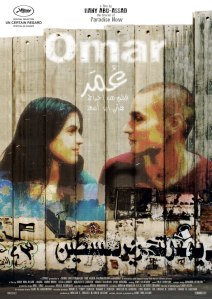
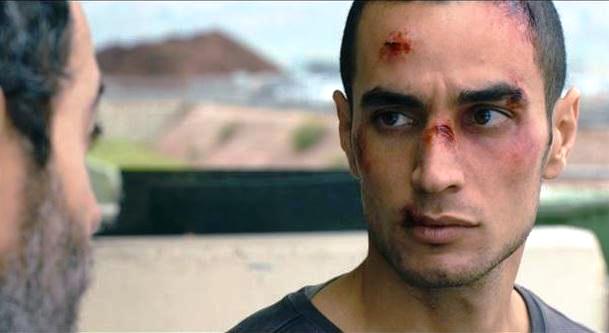
In the Oscar-nominated thriller Omar, a young Palestinian man in the West Bank is faced with two challenges: First, how to convince his friend that he’d be a good bet to marry the friend’s little sister? Second, and more importantly, how does he escape the law after helping to murder an Israeli soldier?
Omar opens this week. My review is at Film Racket:
For such a razor-sharp thriller, the West Bank-set Omar smuggles a dense packet of ambiguity into its compact running time. This shouldn’t be a rarity, given how many stories there are about the conflict between occupiers and occupied, the dueling taxonomy of “freedom fighters” and “terrorists.” But too often these clashes are related in absolutes, where one narrative is bought into more than another. Hany Abu-Assad’s skillful story wrestles with those grey moralities without spoon-feeding one or the other to the audience. It’s a story about people, not ideologies, but it knows how inextricably the former intertwine with the latter…
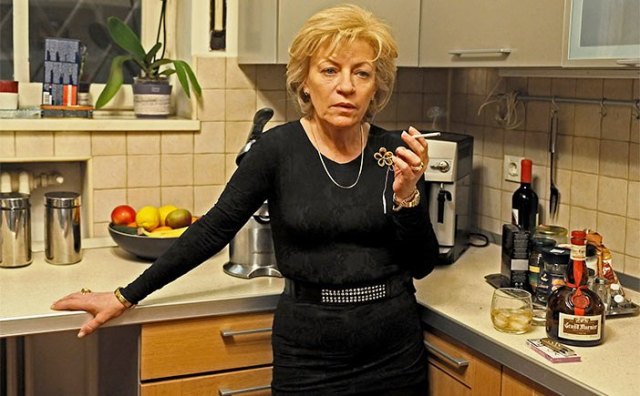
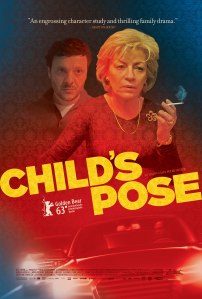
Winner of the Golden Bear at last year’s Berlin Film Festival, Child’s Pose is playing now in limited release, and is worth seeking out. My review is at Film Racket:
“A mother’s love” has rarely felt more dagger-like or malevolent than in the chilling morality thriller Child’s Pose. Part anatomy of a villain and part crime procedural, Calin Peter Netzer’s film follows what happens after a domineering upper-class Bucharest mother finds out her coddled son has been accused of running down and killing a young boy from the outskirts of town. It’s another in a series of European films (Italy’s The Great Beauty, in particular) that have served as X-rays of societies riddled with corruption like mold veined through a hunk of old cheese. What makes Child’s Pose even more affecting is that many of its characters come off as spiritually corrupt as the society at large. And the rot comes from the top…
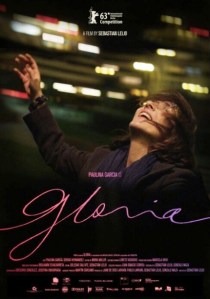
The sublime daffiness of Paulina García in ‘Gloria’
Chile’s submission for this year’s Foreign Film Academy Award, Gloria, doesn’t have the most instantly engaging of storylines: single woman tries to find love. But with deftly rambunctious storytelling and one of the greatest, most soulful performances you’re likely to see all year, it achieves tragicomic greatness.
Gloria is playing around the country right now in limited release. My review is at PopMatters:
…[The film] is shaded with both a dark melancholy and a bright, getting-on-with-it playfulness. Gloria endures more than her share of spirit-crushing moments, but these appear in between glimmers of joy that buffet her relentless persistence, her will not to sink into a sinkhole of near-retirement surrender. There’s no certainty that she will find any kind of new love again, or forge some new kind of bond with children. If she’s going to carve out a happy life, it will be in her hands, not dependent on approvals from her family, friends or lover…
The great Tom Servillo lives it up in ‘The Great Beauty’
Every now and again, a filmmaker is able to conquer the cinematic world with a work that might not have a lot to say (coherently, at least), but it throws enough at the viewer to send them away impressed and a little dazed. Last year’s version of that film was Paolo Sorrentino’s The Great Beauty, a bright and comic variation on Dante’s Inferno that doesn’t hold together in the light of day but seduced enough lovers of Rome and the high life to garner an Oscar nomination.
It’s still playing in arthouses across the land and likely will through the Academy Awards. My review is at PopMatters:
Spectacle is everything in Paolo Sorrentino’s fabulistic Roman candle The Great Beauty (La grande bellezza), and why not? He’s a grand visualist and ringleader of chaos whose talents might remind you of Fellini and Scorsese. Like those directors, however, his films can also suffer for lack of story. It’s almost as though the images come piling up one after another with such rapidity that a framework must be created for them, rather than the other way around. Whatever might have inspired The Great Beauty, it doesn’t come close to sustaining the resulting film. But what a show…
‘Upstream Color’: One of the year’s great movies that didn’t make it onto the Oscar shortlist
Just in time for the upcoming Academy Awards but way too late for the SAG Awards, Golden Globes, and just about every movie awards ceremony that means anything, here comes the newest iteration of my now-annual Best-Of and Worst-Of compilation: Eyes Wide Open 2013: The Year’s 25 Greatest Movies (and 5 Worst).
The title should be basically self-explanatory, but here’s the gist of it: I pulled together what I thought were the 25 best films from 2013—trying best as I could to cover the gamut from the awards magnets that actually deserved the accolades like 12 Years a Slave to lesser-seen fare like Stories We Tell, Upstream Color, and A Touch of Sin. I alsothrew in some other odds and ends like notable DVD reviews, shorter appreciations of great movies that didn’t get into the top 25, great quotes, and of course, the year’s 5 worst films.
2013 was a good year all in all, so the 25 best was much harder to compile than the 5 worst. A nice surprise, for once.
You can buy the book now either in handy-dandy ebook formats here and here. There’s also a paperback edition available here.
Like the writer said, The past is never dead, it isn’t even past. In Oscar-winner Asghar Farhadi’s newest drama, a French woman (Berenice Bejo, from The Artist) invites her ex-husband back from Iran supposedly to finalize their divorce only to ensnare him in her tangled new relationship.
The Past opened this week in limited release but should roll out around the country over the next couple months. My review is at Film Racket:
Asghar Farhadi’s powerful but unraveled film starts as a domestic drama and then shifts into a mystery. Strangely, the further it pushes the mystery angle, with secrets peeling off like onion skin from the knotted core of the past, the less engaging it becomes. Farhadi’s greatest strengths lie in the parsing of intra-family conflict, where expectations and resentments bubble all around like a musical score. He’s on less sure footing when it comes to building tension by way of soap-operatic revelation. But give the man a husband and wife and a kitchen sitting between them as though it were the battlefield of their lives, and he’s in his element…
Pauline Burlet as the daughter caught between her battling parents in ‘The Past’
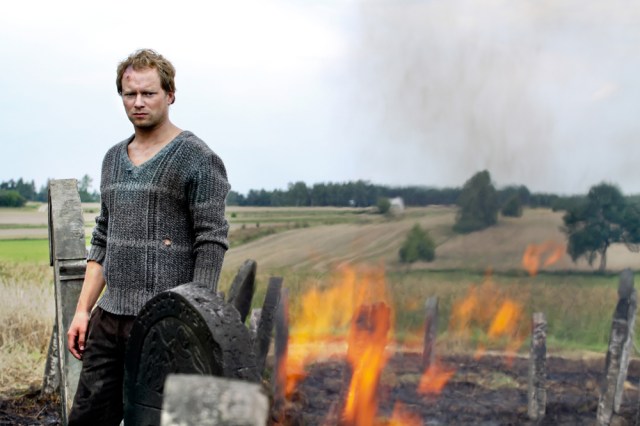
For almost a decade, Polish filmmaker Wladyslaw Pasikowski has been trying to produce a drama based on the real-life story of a village where Polish Catholics conspired in 1941 to murder hundreds of their Jewish neighbors without any help from the Nazis. After the film, Aftermath, was released, right-wing pundits, determined to ignore the past, lined up to denounce it as “anti-Polish” and untruthful.
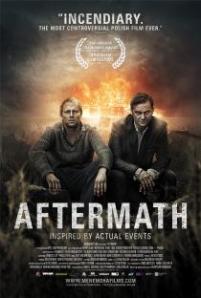
Now playing in limited release, Aftermath is a powerful drama, if unevenly executed. My review is at Film Journal International; here’s part:
One of the most shocking things about the controversial-in-Poland film Aftermath is just how depressingly un-shocking it is for anybody with even a passing knowledge of the Holocaust. This isn’t a criticism of writer-director Wladyslaw Pasikowski’s work. Instead, it’s a sad commentary on just how off-limits aspects of the past apparently remain for some in Poland. History, this grim and tension-laced mystery suggests, can seem easier to bury than acknowledge. But it never goes away—as the death threats that one of the film’s actors received clearly show…
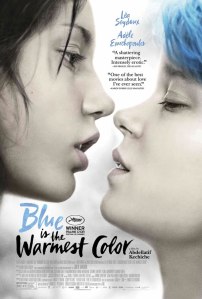
Adèle Exarchopoulos and Léa Seydoux in ‘Blue is the Warmest Color’
The winner of the Palme d’Or at this year’s Cannes Film Festival is finally getting its American release after months of controversy, hype, and speculation. That’s what will happen with a sexually explicit, NC-17, three-hour romance about two young women who literally seem to fall in love at first sight. Blue is the Warmest Color is opening this week in limited release and should be expanding around the country through the fall; at least to those theaters that agree to screen NC-17 films.
Unabashedly romantic in the grandest, tear-stained way, Blue is the Warmest Color is also a strangely empty epic of the heart. Abdellatif Kechiche’s extravagant film is an indulgently overlong romance of long pauses, watchful glances, and infatuated lovemaking. It features two glowing performances from Lea Seydoux and Adele Exarchopoulous as the young women bound up in a relationship whose minefields and fireworks they can barely comprehend, let alone control. This old-fashioned, love-at-first-sight view of romantic attraction is not exactly en vogue these days, so it’s even more frustrating that Kechiche botches it…
The film is based very loosely on Julie Maroh’s gorgeous graphic novel, which is one of the best things to hit bookshelves this year. The author herself had some criticisms of the (male) director’s take on her story here.
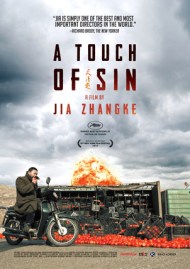
It’s hard to know what to make of Jia Zhangke’s newest film A Touch of Sin. On the one hand, it’s a docudrama that links together four based-on-reality stories about Chinese people taking desperate measures in horrendous circumstances. But as much as it reminds one of great novels about people caught in the capitalist machinery of the 19th century (Balzac and Dreiser, in particular), it’s also a stylized revenge film with some surrealism thrown in for good measure. Whatever it is, this is not a film to miss.
Winner of the best screenplay award of this year’s Cannes Film Festival, A Touch of Sin is playing now in limited release. My review is at Film Journal International; here’s part:
The closest you’ll come to a happy person in Jia Zhangke’s A Touch of Sin is the grim-faced loner Zhou San (Wang Baoqiang). Unfortunately, he’s probably a psychopath. The film’s three other major characters are all eventually thrust into a type of insanity, but Zhou is the only one who seems to have both already crossed over and be content with it…
Terraferma is the second movie that’s in theaters right now which digs into the tragic drama of the refugee crisis. The other one is Elysium—you can tell them apart easily since Terraferma is the quieter one in Italian that won several awards at the Venice Film Festival and features beautiful Mediterranean scenery and many fewer gun-toting androids.
My review of Terraferma ran in PopMatters; here’s part:
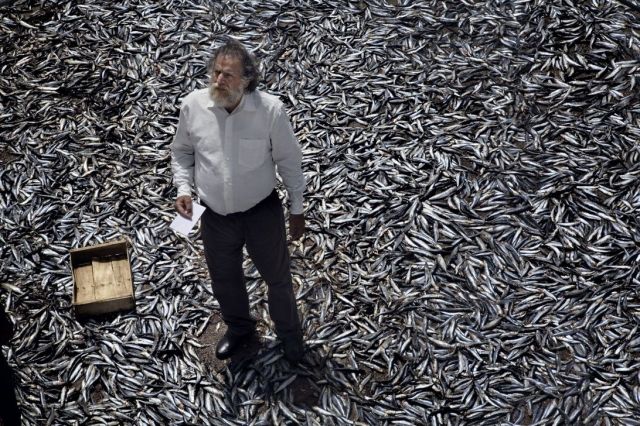
What happens to an island fishing village in the Mediterranean when the only things the Italian fishermen seem to be pulling from the sea are drowned or near-drowned African refugees? The economic, cultural, and personal effects of this shift shape Emanuele Crialese’s story of stark choices and uncertain futures. In this elegantly structured film, everybody’s concept of home is in flux, their eyes fixed either stubbornly on the ground beneath their feet or hopefully on the horizon…
Nothing passes the time on a long flight like a Pointer Sisters routine.
News of a new Almodovar film is always welcome, particularly something like I’m So Excited!, which finds him back in full comic form. It’s a dizzy piece of candy-colored nonsense set on a plane where the attendants have drugged all the passengers in coach to keep them from complaining. Meanwhile, in first class, things get more interesting.
I’m So Excited! opened in limited release on Friday and will be expanding around the country soon. My full review is at Film Journal International; here’s part:
The Spanish title for Pedro Almodóvar’s newest film, The Amorous Passengers, is more to the point than its English title, I’m So Excited!, even if it doesn’t leave as much to the imagination. That’s alright, though, as the film itself doesn’t have much truck with leaving anything unsaid. It’s a fashion-magazine potboiler, gossipy and brash, whose attention keeps wandering south of the waistline…














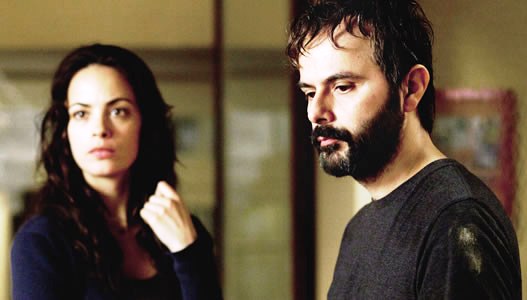
 Like the writer said, The past is never dead, it isn’t even past. In Oscar-winner Asghar Farhadi’s newest drama, a French woman (Berenice Bejo, from The Artist) invites her ex-husband back from Iran supposedly to finalize their divorce only to ensnare him in her tangled new relationship.





 Chris Barsanti
You must be logged in to post a comment.