Screening Room: ‘Mudbound’

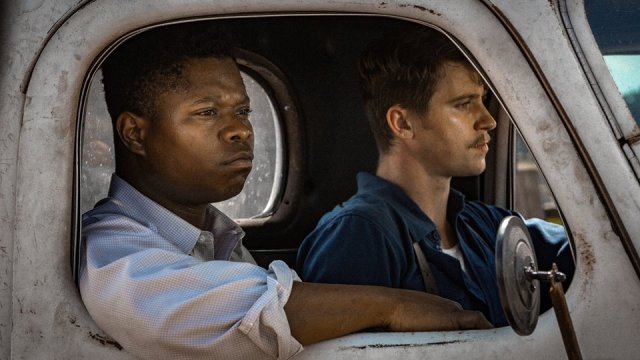
The historical melodrama Mudbound has been making the festival rounds, from Sundance to the New York Film Festival. It’s due on Netflix and in select theaters on November 17.

My review is at PopMatters:

A surprisingly assured big-canvas effort from director Dee Rees (PariahBessie), Mudbound is adapted from Hillary Jordan’s 2008 novel about two families, one white and one black, who find themselves unwillingly bound by land, happenstance, poverty, and the persistence of persecution in the Jim Crow South. The Jacksons are a family of black sharecroppers who have to adjust to their new white landowners, an unsure bunch known as the McAllans whose various missteps (intentional and accidental) lead to bloody tragedy…

Here’s the trailer:

Writer’s Desk: Take the Train

Among the books listed for the Man Booker Prize 2017 were familiar names like Arundhati Roy, George Saunders, Colson Whitehead, and Zadie Smith.

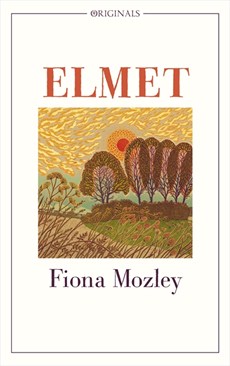
New to the list was Fiona Mozley, a 29-year-old bookseller from York whose debut novel, Elmet, hasn’t even been published yet. According to her editor, Mozley wrote the story while commuting on the train.

To be longlisted is an impressive achievement for anyone but for a debut author who wrote Elmet while travelling up and down to London from York on the train is just amazing.

This might be tricky if you take the New York subway to work (fewer seats, after all), unless you’re one of those dictating writers.

Screening Room: ‘Silence’

silence2

A spiritual epic of the kind he hasn’t tried since Last Temptation of Christ, Martin Scorsese’s Silence is playing now in limited release and should be expanding nationwide soon. My review is at PopMatters:

…with his long-gestating adaptation of Shūsaku Endō‘s 1966 novel Silence, Scorsese returns to a scenario where souls are lost and seeking answers. Set in 17th-century Japan, a world distant from his usual contemporary American settings, the movie presents characters who willingly undertake punishments as brutal as anything experienced by the great martyrs of his early work, from Jake LaMotta to Jesus Christ…

Here’s the trailer.

Reader’s Corner: Michael Chabon’s ‘Moonglow’

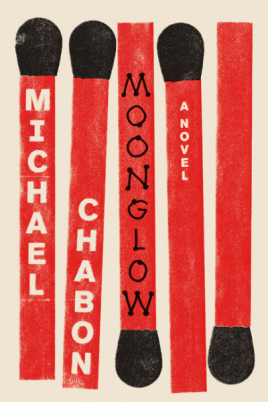
moonglowMy review of Michael Chabon’s latest novel, Moonglow, which is hitting stores tomorrow, is at PopMatters:

Chabon starts Moonglow in a great, glowing gush of reminiscence and incident. The narrator character that he has created for himself adheres to the broad outlines of his biography, though one who keeps himself surprisingly small in the background; no Philip Roth-ian excavations of the self to be found here. Instead, Chabon places himself at the bedside of his grandfather who is near death in the late-‘80s. This is just after The Mysteries of Pittsburgh has come out, and Chabon is there to hear the tales of his grandfather’s life. They come pouring out in a rush, “Dilaudid was bringing its soft hammer to bear on his habit of silence”…

Screening Room: ‘Diary of a Chambermaid’

diaryofachambermaid1

MirbeauChambermaidDiaryIn Octave Mirbeau’s scandalous 1900 novel, Diary of a Chambermaid, he uses the exploits of a canny maid unencumbered by bourgeois morality to satirize the hypocrisies and power games of French society. It’s been filmed a couple times, most famously by Luis Bunuel with Jeanne Moreau in the title role.

Benoît Jacquot’s new version stars Léa Seydoux (Blue is the Warmest Color) and is playing now in limited release. My review is at Film Journal International:

The loathsomeness of humanity is so thickly painted in this latest adaptation of Octave Mirbeau’s satirical novel that by the time anti-Semitism and murder rear their head, they almost can’t bring the film’s opinion of its characters any lower. That isn’t to say that director BenoîtJacquot doesn’t relish watching his players scheme and plot their way around hard work or simple decency. In this world, fin de siècle French society is a rigged game. Those not born to its few crucial advantages of money or place have to do what they can to survive. Of course, many don’t put as much into that struggle as his manipulative heroine Célestine (Léa Seydoux), who hasn’t met a corner she didn’t cut or an angle she didn’t play…

Here’s the trailer:

Screening Room: ‘The Revenant’

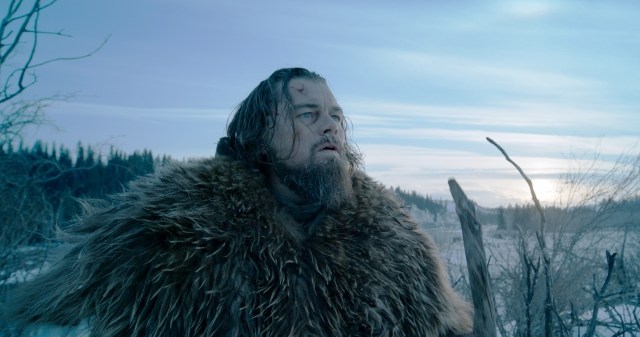
Leonardo DiCaprio in 'The Revenant' (20th Century Fox)
Leonardo DiCaprio in ‘The Revenant’ (20th Century Fox)

The Revenant, the new film from Alejandro G. Iñárritu (Gravity, Birdman), is a revenge epic based on Michael Punke’s 2002 novel and starring Tom Hardy and Leonardo DiCaprio.

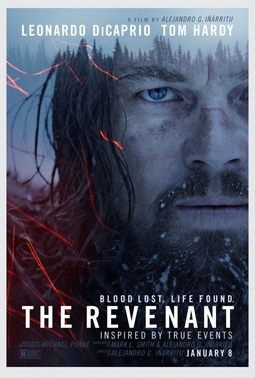
The_Revenant_2015_film_posterIt’s opening on Christmas Day in limited release and will expand wider in January. My review is at PopMatters:

A spiritual view of the natural world clashes with the animalistic drives of a fallen humanity in Alejandro Gonzalez Inarritu’s operatic wilderness survival tale,The Revenant. This freewheeling adaptation of Michael Punke’s novel about fur trappers, Indians, and soldiers tangling in primal ways on the Western American frontier in the 1820s stretches the limits of endurance in more ways than one. Inarritu’s film pushes against known boundaries of art, suffering, and revenge tale…

Here’s the trailer:

Reader’s Corner: Umberto Eco’s ‘Numero Zero’

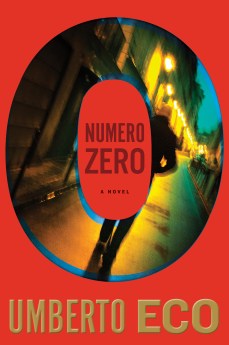
9780544635081_hresUmberto Eco’s latest novel Numero Zero goes on sale today. It’s a slim fantasy about crackpot conspiracy theories and journalists who play the game of massaging the truth a little too well.

Eco told NPR that he hopes readers of his novel “will become more suspicious and attentive when reading a newspaper.”

My review is at PopMatters:

Beware of stories by hack journalists who are given a chance at doing something greater and in the process discover that the seemingly too-good-to-be-true offer masks something darker that will test the limits of their conflicted ambition and fraying morality. Fortunately, Umberto Eco’s newest crackpot thriller, Numero Zero, is not one of those stories. His hack journalist doesn’t aspire to much more than he is, and he’s in on the big secret from the get-go. Unfortunately, the novel, for all its intellectual zip and brash erudition, never builds into anything more than a trifle…

Here is an excerpt from Numero Zero.

Writer’s Desk: Alone Time

Is there anybody here who can write in a loud room full of people? There are people out there who can somehow accomplish that feat; your average journalist, say, who doesn’t have the luxury of going off to find a cozy tea shop with decent coffee and good Wi-Fi. They’ve got 45 minutes to pound out that 1,100-word piece on the newest unemployment numbers or a listicle on the month’s top 10 most cringe-inducing GOP candidate flubs, and a deadline waits for no man or woman.
Them1Prose is a different matter. Because that’s what we’re generally talking about when we say writing, yes? Those of us who toil on both sides of the fiction divide don’t waste too much time worrying about process and idea-mongering when it’s time to work on the nonfiction material. It’s just as much work, and frequently just as much artistry. But nonfiction writing is simply different. Not to get into fuzzy notions of the muse, but one usually doesn’t need to be struck by inspiration to knock out 500 words on a new misery memoir or 1,500 on what the popularity of Game of Thrones says about the impending collapse of Western hegemony. You just need to find a way in and then how to put all the building blocks together. That’s a vast oversimplification, of course, but it generally holds.

Prose (or verse, assumedly), though, is a creature of a different hue. And it’s not an easy thing to do with others around. Joyce Carol Oates said this to Salon on the question of creativity requiring being alone:

Probably nothing serious or worthwhile can be accomplished without one’s willingness to be alone for sustained periods of time, which is not to say that one must live alone, obsessively. Ultimately, any art is intended for an audience — a community. In this way, the artist/writer is linked to the community and is only temporarily “alone.”

So buckle up, close the door, put on the headphones, whatever you have to do. Don’t worry. The world will still be there when you get back.

New in Theaters: ‘Far from the Madding Crowd’

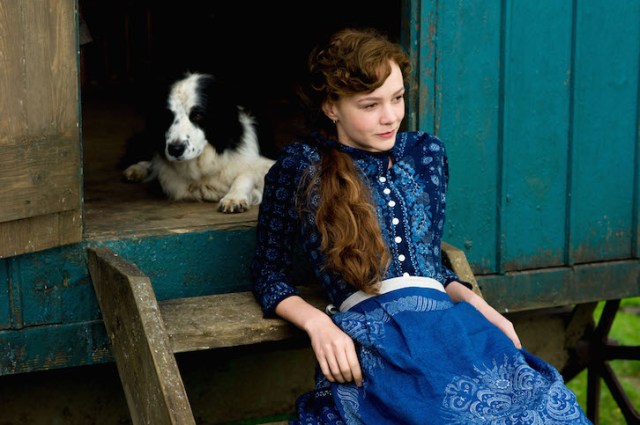
Carey Mulligan and dog in 'Far from the Madding Crowd' (Fox Searchlight)
Carey Mulligan and dog in ‘Far from the Madding Crowd’ (Fox Searchlight)

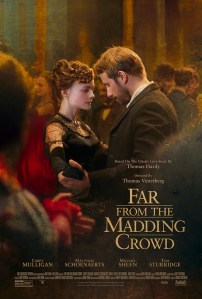
postimageimage-ffmc-ffmc_blogIn Thomas Vinterberg’s take on Thomas Hardy’s Far from the Madding Crowd, the beautiful outfits and gorgeous Dorset vistas don’t detract a bit from a story about a strong-willed woman willing to rebuff all suitors, no matter how well-suited they might seem.

My review is at PopMatters:

Some people have all the luck. Take Bathsheba Everdere (Carey Mulligan), the willful heroine in Thomas Vintenberg’s gleamingly romantic adaptation of Thomas Hardy’s Far from the Madding Crowd. Mulligan’s perceptive performance gives some hint of Bathsheba’s internal anxieties, but in the main, she is blessed and seems to know it. In 1870 Dorset, at a time in Europe when it was by no means uncommon to fall sick and die or starve to death simply for lack of funds, she is beautiful and unattached, a young woman free to find her way in the world. This comes before her surprise inheritance…

Here’s the trailer, feast your eyes:

Writer’s Desk: Finding Time

writing1“Where do you find the time?” That may be one of the questions writers hear the most. It’s heard just about as often as “Where do you get your ideas?” and is possibly as hard to answer.

The most likely response is, “I have no idea.” Every writer tries to carve off little pieces of time here and there. But none of us live in a vacuum. Family, work, joy—There are lives to be led, after all. Because of the time crunch difficulty, advice can help.

Here’s some time management ideas that Fast Company gathered from people who took part in National Novel Writing Month (NaNoWriMo):

As a single working mom of two, [Toni Morrison] carved out a few minutes to write before bed. She cranked out The Bluest Eye in that time.

I absolutely refused to go to sleep until I’d written 500 words. This was a ridiculously small goal for each night but I found that this was my own personal ‘hump.’ If I could get to 500 I could usually get to at least 1,500

When you have a big goal, you may need to turn down opportunities or invitations, or let go of a few responsibilities. Sometimes people feel guilty about this, but people who care about you will likely support you, especially if there’s an end in sight.

It’s not always about inspiration. Sometimes it can be about what you’re willing to give up. How important is writing to you in the end? If you’re not sure about how to answer that question, you may have your answer.

In Books: Richard Price’s ‘The Whites’

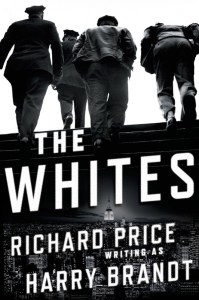
The Whites-coverEven though The Whites was technically published under Richard Price’s genre pen name Harry Brandt, the publisher didn’t even bother leaving his real name off the thing. It might be a crime novel instead of straight realist fiction and a couple hundred pages shorter than his usual. But the style is unmistakably that of the writer who brought such lived-in detail to novels like The Wanderers and Lush Life and his scripts for The Wire. This time, it’s just a little tighter, more razored. So in short: great stuff.

My review of The Whites is at PopMatters:

Fitting his moniker, Billy Graves is a cop working the night shift. Exhaustion is his permanent state, eyes falling out of his head from the damage being done to his circadian rhythms. All the caffeine in the world, those long-after-midnight energy-drink bodega injections, can’t keep his thought processes straight. As a result, he’s a little slow on the uptake when things start getting squirrelly. But, then, maybe he always was on the slower side…

You can read the full first chapter here.

New in Theaters: ‘Inherent Vice’

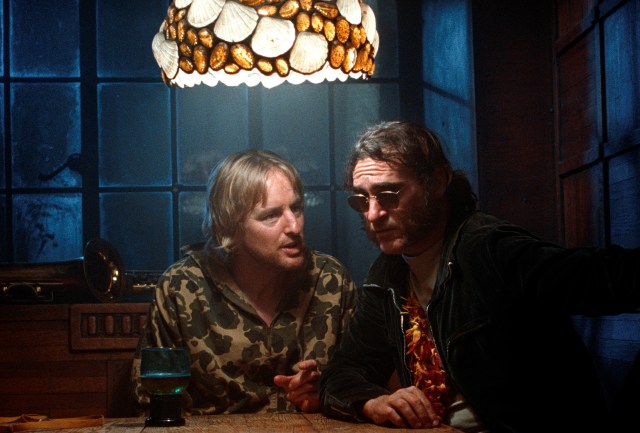
Owen Wilson and Joaquin Phoenix sleuth confusedly in 'Inherent Vice' (Warner Bros.)
Owen Wilson and Joaquin Phoenix sleuth confusedly in ‘Inherent Vice’ (Warner Bros.)

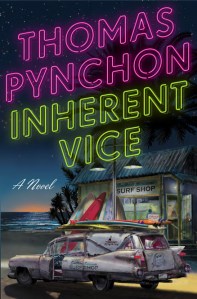
inherentvice-coverWhen Thomas Pynchon published Inherent Vice in 2009, it became very clear that the revered author of Gravity’s Rainbow was still interested in his basics (baffling plots, conspiratorial confusion) but was now also cool with knocking out an honest-to-God fun read. Paul Thomas Anderson’s resume of overbusy, overcrowded Southern California anthology meta-fictions (Magnolia, in particular) would seem to make him the perfect man to bring this book to the screen.

Inherent Vice is opening this week in limited release and likely to wide befuddlement; it’ll go wider around the nation in January. My review is at Film Racket:

“Thinking comes later,” mumbles Larry “Doc” Sportello (Joaquin Phoenix) at the start of Paul Thomas Anderson’s foggy, funny film of Thomas Pynchon’s psychedelia-noir Inherent Vice, only he never quite gets around to it. A lot of things get in his way, you see, from the moment that his ex-old lady Shasta Fay Hepworth (Katherine Waterston, an angelic , transfixing moonbeam of a smile but with not much to do here) lays on him a whole rap about needing help with her new old man. In the grand tradition of beautiful women whose true motives are submerged beneath shimmering layers of twinkle, Shasta’s initial request is more complicated and dangerous than it initially seems, particularly after she goes missing. Doc’s journey starts off being about making sure that Shasta (clearly the love of his life, though neither of them may know or want to know it) is okay, it turns into a quasi-historical tour of a Southern California counterculture circa 1970 on the verge of imploding under the weight of its own bafflement and paranoia…

Here’s the (fantastic) trailer:

Writer’s Corner: Novel Writing Month Has Already Started

(Image courtesy of National Novel Writing Month)

Every year, a small but intensely committed band of writers try to ensure that November is known for something besides candy-hangover and Christmas dread. November is also known as National Writing Month (NaNoWriMo to the dedicated), to at least a few.

The basic idea is to write a 50,000-word manuscript in just 30 days. Last year, over 310,000 people apparently took part. It’s more than just an idea, the NaNoWriMo group offers writing spaces and the occasional pep talk, as well as ways to get together with your fellow scriveners.

Maybe you’ve got a novel in you, maybe you don’t. Either way, churning out 50,000 words in a month (that’s about 7 double-spaced pages a day) will at least give you an idea of whether you have what it takes. Better get started; after all, it’s already the 2nd.

New Books: In ‘California’ the World Has Gone to Hell for No Good Reason

Earlier this summer, first-time novelist Edan Lepucki caught a lucky break. Just as her debut book California was due to come out, her publisher and Amazon got into a pricing dispute that caught the eye of Stephen Colbert. In an attempt to help out authors caught in the crossfire, Colbert chose Lepucki’s book as a title to champion. In his show’s appeal, he asked viewers to buy the book in droves—from anywhere but Amazon.

Now we can appreciate the novel itself, and not the furor around it.

California-cover1My review of the post-apocalyptic California is at PopMatters:

The setting is almost a generation after a slow-motion apocalypse has ground the modern age into dust. Lepucki’s two narrators, a young couple who unhurriedly trade off chapters, remember some of the earlier age’s technological glories. They’re of the last generation that experienced things like broadband and daily showers and refrigeration. By their childhoods, the world was already collapsing. They just managed to be there for civilization’s dying embers.

A more naïve writer might have made us think that they were unlucky to have these memories, that the ones who follow them would be happier without that knowledge. But that’s not the way Lepucki plays it: There is a Dark Age on the wing, and it will be savage and bleak, not a return to some pre-modern Edenic state…

You can read an excerpt here.