Writer’s Desk: Remember to Tell a Story

Wilmington, Delaware. Tower Hill School, noted country day school for pupils from three to eighteen years of age. A young pupil writing in a notebook at her desk

Since the Great Recession, more college students have been shifting their majors from English toward more supposedly employment-friendly study in the STEM fields like engineering, math, and computer science.

But one advantage held by people who study literature and write (though they may not be so hot at calculating a tip on the fly) is knowing how to make an argument and tell a story in a clear and engaging manner. Who thinks that? Nobel Prize-winning economist Robert Shiller:

Shiller, who is famous for predicting the dot-com crash and coming up with the Case-Shiller Home Price Index, is spending a lot of time looking at old newspaper clippings to understand what stories and terms went viral and how they influenced people to buy things — or stop buying things.

When asked if he’s essentially arguing for more English and history majors, Shiller said, “I think so,” adding: “Compartmentalization of intellectual life is bad.”

The world needs storytellers. Regardless of your field.

Writer’s Desk: Be the Bird

A lot of writing, whether fiction or nonfiction, involves research. Crime novelists go out on ride-alongs with cops and interview morticians to figure out the tricks of the trade to embed in their books so that the made-up feels more authentic. Most nonfiction writers, even if they have a specialty, have to write about things they are not expert in, and so have to draw on others’ work.

Then there’s Malcolm Gladwell, the journeyman journalist who writes about everything from sports to music to the problem of elite education and solving homelessness. How does he cover it all? A few years back, here is what he told students at Yale:

I’m not doing the original work … There’s that bird on the back of the elephant that picks off the ticks — I am the bird.

Following that approach still involves being able to tell a good story. Narrative excitement and creating a sense of discovery and thrill is the duty of every writer. But in order to have a story to tell, writers need raw material.

Read widely. Absorb as much as you can. Find a better to tell a story, with connections nobody else thought of. Spread your wings and write.

Writer’s Desk: Get Past the Terror

Detroit, Michigan. Art director and copy writer at a large advertising agency

David Simon (Homicide, The Wire, The Deuce) on writing the character of Creighton on Treme, a frustrated novelist who committed suicide:

… there were some underlying fears that as a creative soul Creighton had shot his bolt. That fear is probably latent in every writer. You stare at the page for the first time and if you’re honest at all, you know there’s a little part of you screaming, “But what if I can’t do it anymore?” And then you start writing, and usually the first things are not great, and then you try again and eventually you’re off and running. But every time, there’s that first moment of vague terror.

It’s not that every writer has actually experienced terror at the idea that they couldn’t do the work anymore. There must be plenty who have happily floated past such worries.

But it is almost certainly true that a person who doesn’t understand the concept of being stricken in the soul over being unable to create, must not in the end have ever truly been a writer.

Writer’s Desk: Take Your Time

One piece of advice that many new writers get is to write as much as possible. That way you can publish more often. And the more you publish, the more people get to know your work, success breeds success, and so on.

But at what point does that approach start to feel less like art and more like industry?

Donna Tartt had thoughts:

People say that perfectionism is bad. But it’s because of perfectionists that man walked on the moon and painted the Sistine Chapel, OK? Perfectionism is good. It’s all about production and economy these days. I don’t want to be the CEO of a corporation, of Donna Tartt Inc. I work the way I’ve always worked, and I don’t want a big desk and fancy office and people answering the telephone.

Of course, she had the advantage of writing a bestseller right out of the gate (The Secret History). That left her able to basically take a decade per novel.

Still, it’s good to remember that not every author needs to be out there selling themselves every minute of the day, contributing to anthologies, blurbing their friends’ books, writing a 16-part Netflix series.

Maybe that means keeping your day job and writing at night or in the morning. If you think you need the time to get the lines right, take the time.

Writer’s Desk: Write, Write, Talk, Write, Get Lucky

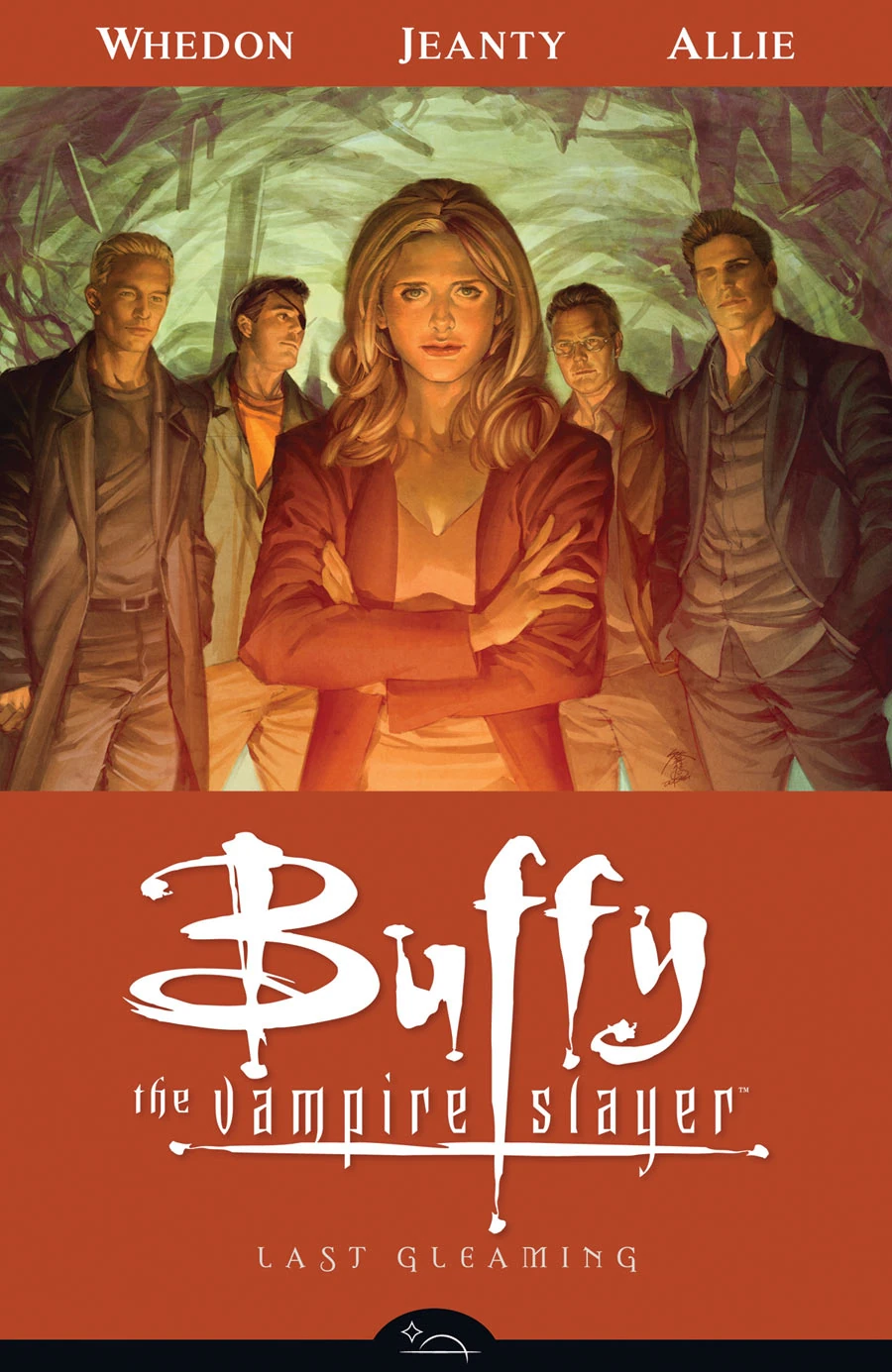
Image result for Buffy the Vampire Slayer Season Eight buffy graphic novels

Among the many questions that young writers have, besides “How do you make a living at it?”, is what they should do and what should they read to help them hone their craft.
There is no good answer. But embedding yourself in an ecstatically committed community of writers or at least people who love writing is a good way to start.
It has been a long time since I dared reread any of the wish-fulfillment stories I scribbled in my lonely teenage notebooks, but I suspect if I did, they’d contain something a little like this: You’re a freewheeling political reporter on assignment on a ship in the middle of the Mediterranean, covering a tech conference full of Ukrainian models, when Joss Whedon calls and asks if you’ve ever thought of writing for television. Of course you have, but only in the way that you’ve thought of being an astronaut. Six weeks later you’re in California, sitting in your first writers’ room, on Whedon’s new sci-fi show for HBO, The Nevers, and it turns out that the evenings you spent at college arguing about Buffy with your best friends were a better use of your time than you realized…
Sometimes writers get lucky. Very lucky. But for that luck to mean something, they have to have spent years preparing. Even if that means spending years writing, debating, and absorbing cultish fan-fiction. Whatever it is, commit yourself totally. It helps to be prepared.

Writer’s Desk: Tell Your Story

The next time you are not sure what to write about, maybe take a crack at your own story. It doesn’t have to be a biography, or a college essay about an adversity that you overcome, maybe just a few pages on a childhood memory, or a piece about the chasm between what you thought your life would be and what it became, or an essay about the first time your heart was broken, or when you broke somebody else’s.

Everyone has a story, it’s all in the framing, the insight, how you build it.

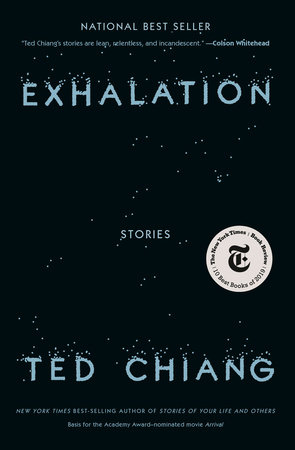
In Exhalation, the beautiful new collection from Ted Chiang (whose “Story of Your Life” was adapted into the movie Arrival), he has a story called “The Truth of Fact, the Truth of Feeling.” It’s a future fable about a world in which everyone will have cameras that record everything, which can then be instantly accessed, dismantling the entire concept of memory. Chiang writes this:

People are made of stories. Our memories are not the impartial accumulation of every second we’ve lived; they’re the narrative that we assembled out of selected moments. Which is why, even when we’ve experienced the same events as other individuals, we never constructed identical narratives: the criteria used for selecting moments were different for each of us, and a reflection of our personalities. Each of us noticed the details that caught our attention and remembered what was important to us, and the narratives we built shaped our personalities in turn…

The best stories are not from people who have the best stories. People who lead exciting lives can tell very, very dull stories. The best stories come from the best storytellers.

Do your best.

Writer’s Desk: Ignore ‘The Elements of Style’

elementsofstyle

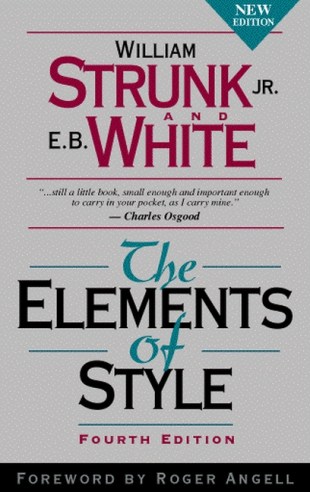
Any writer who has made at least a passing effort to improve their work is familiar with the lessons gleaned from Strunk and White’s The Elements of Style. The slim little handbook has been featured on curricula since it first came out in 1959. Following its own advice, the book is pithy, to the point, and highly usable. More than likely the sentences you just read break at least three of its rules.

If you listen to this podcast from linguist John McWhorter—who has been writing some great pieces on language in the popular and political spheres for The Atlantic, by the way, particularly here and here—there is no reason to take Strunk and White’s many rules (avoiding the passive voice, qualifiers and the word “hopefully,” all of which are sound) as gospel.

“It’s just a couple of guys,” McWhorter says. Not that there is no need for standards in writing. But as a proponent of communication, not a pedantic enforcer of codes (looking at you, Lynne Truss), McWhorter sees no reason for writers to wrap themselves up in worry over breaking a few rules.

Be clear, vivid, original, and to the point. Keep it short. If it feels wrong, cut it. If you’re not sure about a line, toss it or redo. Otherwise, write on, and that should do the trick.

Hopefully.

Writer’s Desk: Persevere

writing1
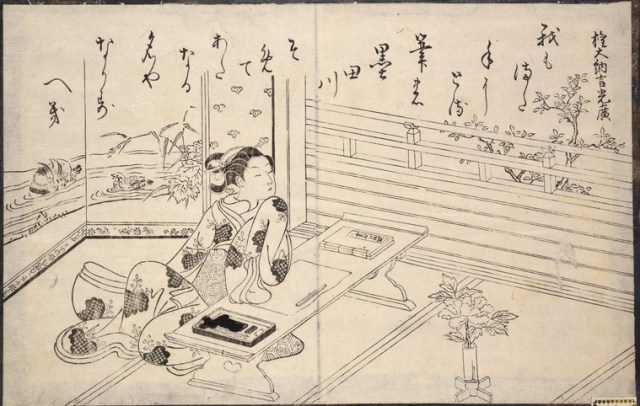
“Woman at desk, gazing at outside view” (c. 1768)

Some days it comes. The words flow, you forget to look up, and before you know it, the whole morning has passed and you have five good new pages.

Some days it does not. Nothing comes. Everything sounds terrible. You write and delete and rewrite the same two lines before getting up and going for a walk.

Still, the desk remains. The page needs to be filled. How? No easy way around it, per screenwriter Akiva Goldsman:

Successful writers don’t wait for the muse to fill themselves unless they’re geniuses. I’m not a genius. I’m smart, I have some talent, and I have a lot of stubbornness. I persevere. I was by no means the best writer in my class in college. I’m just the one still writing…

Chances are, you are not a genius (no offense).

So, failing that, just keep at it. Be the tortoise.

And stop looking out the window.

Writer’s Desk: Don’t Be a Menace

File:Leonid Pasternak - The Passion of creation.jpg

According to novelist Maria Semple, when her first novel, This One is Mine, came out, the notices were good but the sales were not. So she retreated into herself, stopped writing, and blamed everything and everybody but herself.

Then one day, a friend told her something:

Maria, you’re a writer. Writers must write. If you don’t write, you’ll be a menace to society.

That line later showed up in her novel, Where’d You Go, Bernadette?

It’s good advice. In fact, one could use the reverse of it as something of a test. If you don’t write for an extended period of time, and feel just fine about that, then maybe writing is just something you do, and not a vocation.

Not to mention a generally healthier way to live.

Writer’s Desk: Stop Complaining


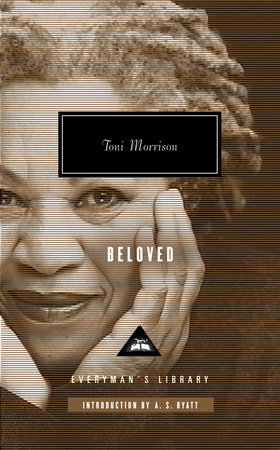
In honor of the great Toni Morrison, who passed this week at 88, here’s some well-needed advice from a woman who was not just a great novelist and inspiration to millions, but a sharp-eyed editor and teacher who did not care for complaints.

Per a Salon interview from 1998, in which Morrison talked about whether she could teach confidence in addition to writing:

Well, that I can’t do much about. I’m very brutal about that. I just tell them: You have to do this, I don’t want to hear whining about how it’s so difficult. Oh, I don’t tolerate any of that because most of the people who’ve ever written are under enormous duress, myself being one them. So whining about how they can’t get it is ridiculous…

Writing can be miserable, when the words just refuse to flow and you hate everything you do write. But writers also by temperament veer toward the solipsistic. So we always need to remember that no matter how tough it feels, writing is still just putting words on paper. Get it done, stop complaining, open your ears, and if you’re lucky a great writer like Morrison will give you some good edits and advice.

(h/t: Emily Temple)

Writer’s Desk: Try a New Format

Sometimes the same-old, same-old just does not work for what you are trying to accomplish. If you feel that you (or your work, or both) are in a rut, try changing things up.

Consider Jennifer Egan. She has written a number of novels the usual way. On some kind of computer, using a word-processing program, the results of which are ultimately designed and laid out on printed pages, bound together, and shipped around the world.

But in 2010, she tried something different. Her novel, A Visit from the Goon Squad, featured an entire chapter written in PowerPoint slides. It’s a brilliant way of showing how the 12-year-old autistic character can best express herself. (The Guardian has the whole chapter here.)

Then, in 2012, Egan serialized an entire story on Twitter. She didn’t compose “Black Box” on her phone, though, rather writing everything in longhand and spending about a year polishing it down to the chiseled nub required to produce fiction 140 characters at a time. Check out the full result at the New Yorker.

Think about the different avenues you want to take with your writing, what the obstacles are that keep you from getting there, and what tools might help you out.

Writer’s Desk: Get It Down

File:Rod Serling photo portrait 1959.JPG

A veteran of some pretty horrendous fighting in the Pacific Theater during World War II, Rod Serling suffered from nightmares much of the rest of his life. He also had a deeply-ingrained sense of justice.

Both came together in the somewhat maniacal writing schedule he maintained as one of early television’s most acclaimed live teleplay authors and then the showrunner and primary writer for The Twilight Zone.

The only way he could keep the pace going? According to Nicholas Parisi’s biography, he told a writing class at Ithaca College this:

The instinct of creativity must be followed by the act—the physical act of putting it down for a sense of permanence. Once you have that prod, that emotional jar that “I witnessed something” or “I felt something” … Write it down…. Don’t let it die aborning in your head.

Never wait. Keep a notebook around. Type it into your phone if you have to. But once you have that idea or that worthy experience, do not assume you will remember it a day or an hour hence.

Write it down.

Reader’s Corner: Indies Support Authors

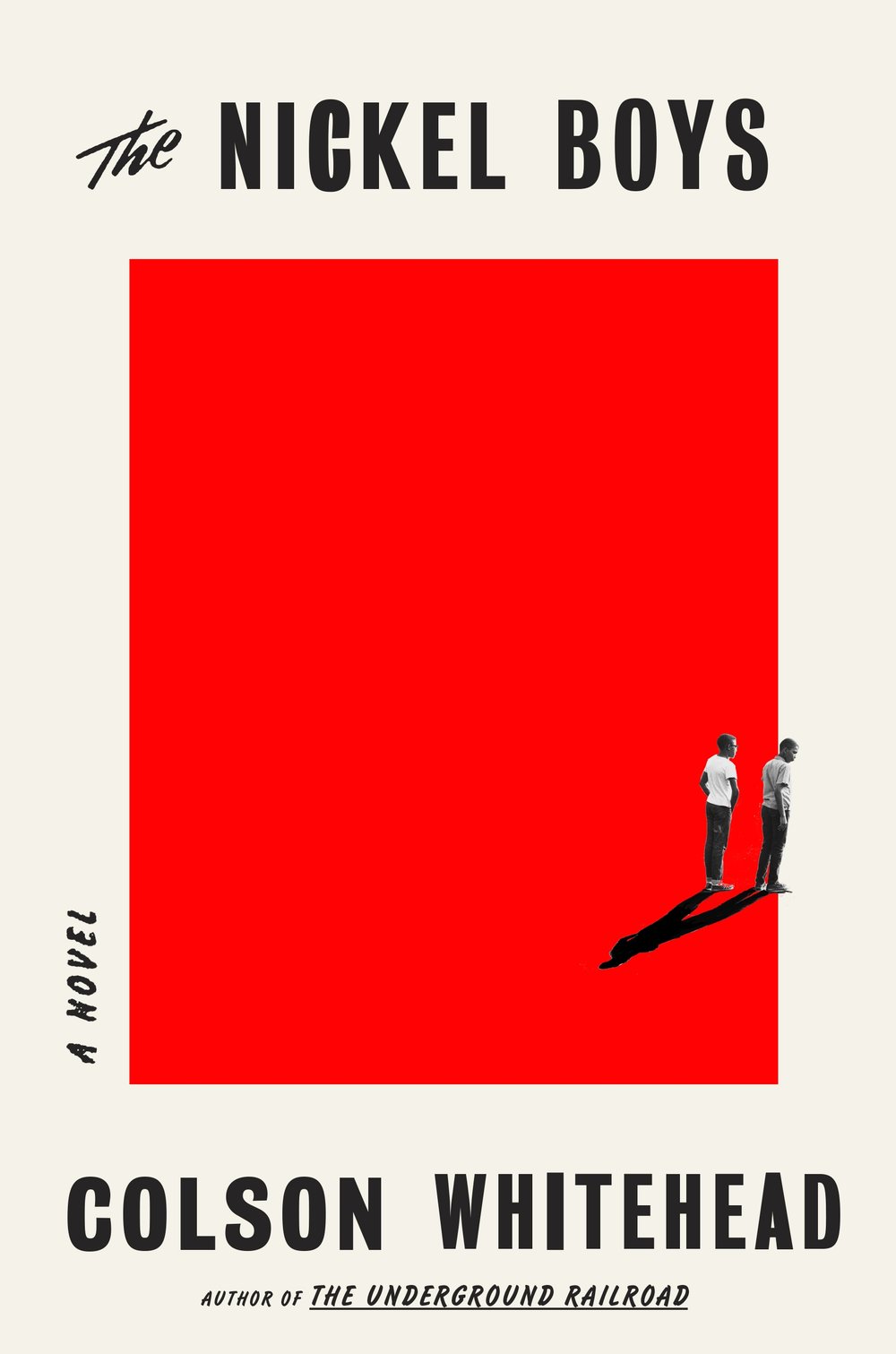
  The Nickel Boys

Colson Whitehead is touring around now to read from his latest novel, The Nickel Boys. While he’ll be going to some chains, he’s a big supporter of indie bookstores. Why? He told Shelf Awareness:

My first book was about elevator inspectors, and who is going to support a debut novel by some weird black guy about elevator inspectors? And the answer is independent bookstores. They’ve always been supportive of my books no matter how oddball they sounded…

Writer’s Desk: Be Prepared

nickcave
Nick Cave in ‘20,000 Days on Earth’ (Drafthouse Films)

Nick Cave, onetime prince of the gothic rock dark arts via his time with the Birthday Party and that killer Wings of Desire cameo, might still be releasing albums and touring with his band but he now fashions himself more writer than rock star.

His process seems positively disciplined these days. As he says in the beautiful documentary 20,000 Days on Earth, “I wake, I write, I eat, I write, I watch TV.” And when he writes, he doesn’t just sit down and wait for inspiration. He gets ready:

Well, as anyone who actually writes knows, if you sit down and are prepared, then the ideas come. There’s a lot of different ways people explain that, but, you know, I find that if I sit down and I prepare myself, generally things get done…

And if nothing comes, then have a sandwich. Watch a little TV. But get back to work.

Reader’s Corner: Living in the Worst Place in America

ifyoulivedhere-bookcover

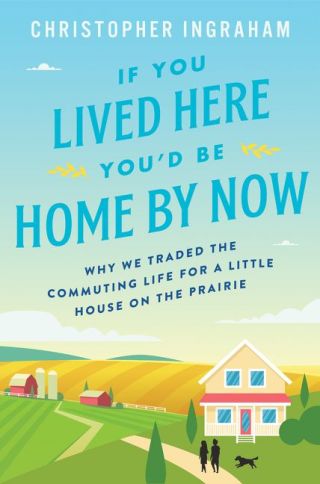
One of the year’s more interesting books is Christopher Ingraham’s If You Lived Here, You’d Be Home By Now. A data reporter for the Washington Post, Ingraham became the  focus of some viral blowback after publishing a story in 2015 about how federal government-compiled data showed that Red Lake County in Minnesota was supposedly the worst place in America to live.

The residents were not happy. He went to visit, ended up moving his family there, and wrote a book about the experience.

My interview with Ingraham ran in Publishers Weekly.