Screening Room: ‘In the Heart of the Sea’

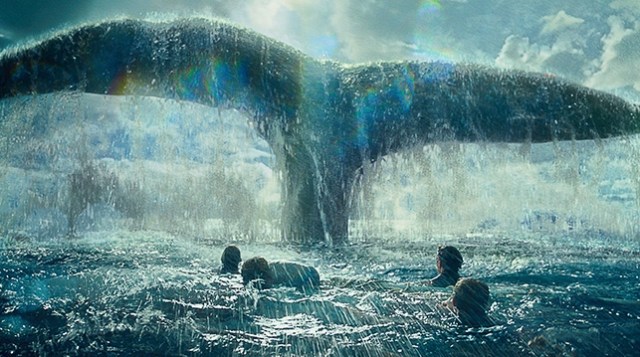
One big whale: 'In the Heart of the Sea' (Warner Bros.)
One big whale: ‘In the Heart of the Sea’ (Warner Bros.)

In 1820, the Nantucket whaling ship Essex met a disastrous fate in the Pacific; only a few men survived. Later, the story that the ship had run afoul of a massive whale became the kernel of Moby-Dick and was more recently dissected in Nathaniel Philbrick’s In the Heart of the Sea.

In_the_Heart_of_the_Sea_--_book_coverRon Howard’s 3D adaptation of Philbrick’s book is opening this week, and hoping very much for some Oscar attention. My review is at Film Journal International:

…It starts in 1850 with a spry young Herman Melville (Ben Whishaw) trying to claw a story out of Tom Nickerson (Brendan Gleeson), a drunk old salt who has refused for 30 years to talk about his connection with the Essex whaling-boat disaster. Melville’s money and Nickerson’s exasperated wife finally crack open that whiskey-sodden shell. But only after Nickerson fixes Melville with a probing look. “Have you read Nathaniel Hawthorne, Mr. Melville?” He asks. “Great writer”…

The trailer is here:
Screening Room: ‘Carol’

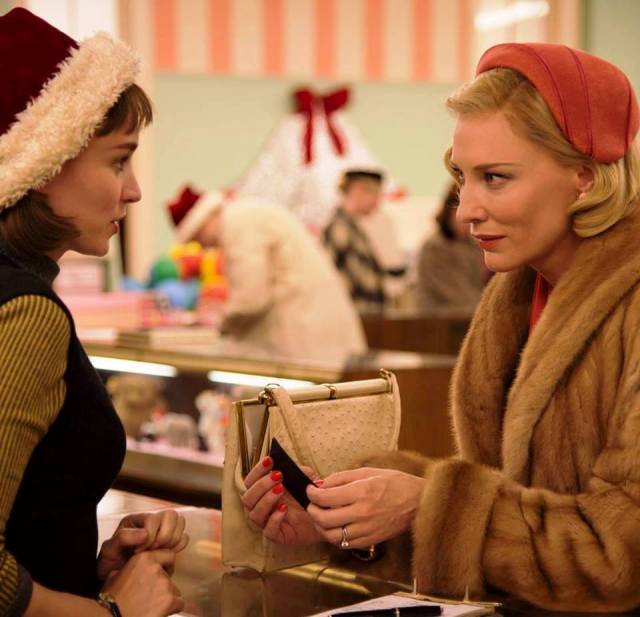
Rooney Mara and Cate Blanchett exchange Christmas cheer in 'Carol' (Weinstein)
Rooney Mara and Cate Blanchett exchange Christmas cheer in ‘Carol’ (Weinstein)

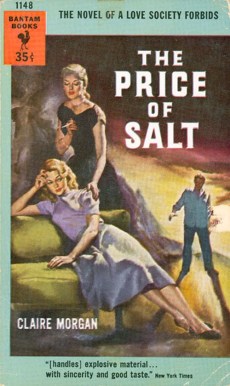
priceofsalt1In 1952, Patricia Highsmith — riding high after the success of Strangers on a Train but before she started her Ripley series — published her semi-autobiographical novel about a love affair between two women, The Price of Salt, under a pseudonym. It went on to sell over a million copies.

Now, Todd Haynes (Far From Heaven) has adapted it for the big screen as a lush period romance, with Rooney Mara as the inexperienced shopgirl and Cate Blanchett as the older married woman who falls for her.

Carol is playing now in limited release. My review is at PopMatters:

Todd Haynes’ Carol offers two views of the holiday season. In 1952’s New York City, we first see family gatherings, snowy sidewalks, and shopping trips. Just below that surface, two women engage in illicit romance, at every turn reminded of everything they are not allowed to have. Their world doesn’t allow for same-sex attraction, much less the idea that two women could share a life together. As everyone else around them is making merry, their secret turns sharp enough to cut glass…

Here’s the trailer:

Screening Room: ‘Legend’

Tom Hardy and Tom Hardy in 'Legend' (Universal Pictures)
Tom Hardy and Tom Hardy in ‘Legend’ (Universal Pictures)

Back in the 1960s, the Kray twins were a couple of the flashiest, most press-hungry gangsters that London’s East End had ever seen. In Brian Helgeland’s take on their story—based on John Pearson’s book The Profession of Violence—Tom Hardy plays both Krays because, well, he’s Tom Hardy and there’s no good reason to think he can’t.

Legend is opening this week. My review is at Film Journal International:

By the time Legend starts, its real-life East End gangster twins Ronnie and Reggie Kray(Tom Hardy, each time) are already the toast of Swinging 1960s London. BrianHelgeland’s crime epic dispenses with any rise to power, presenting us with these men already hitting peak power. They swagger though town as though they were ten feet tall, mocking the hapless cops detailed to follow them, knowing that fear and the East End’s tribal loyalties will keep anybody from informing. There is nowhere for them and the film to go, in other words, but down…

Here’s the trailer:

Screening Room: ‘The Martian’

Matt Damon works on not dying in 'The Martian' (20th Century Fox)
Matt Damon works on not dying in ‘The Martian’ (20th Century Fox)

Astronauts go to Mars and a storm makes them bug out early, thinking they’ve left one of their own behind dead. Only that astronaut, a botanist played by Matt Damon with Chuck Yeager panache, isn’t dead and he’s got to figure out how to stay alive on an alien planet for years while Mission Control tries to put together a rescue plan. The Martian, based on Andy Weir’s bestseller, is the first Ridley Scott film in years that registers a pulse and might be the year’s first film to grab attention from both mainstream audiences and Oscar voters.

A can-do paean to engineering and astronaut awesomeness, The Martian is opening everywhere this week. My review is at PopMatters.

Here’s the trailer:

In Books: Richard Price’s ‘The Whites’

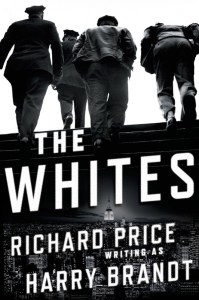
The Whites-coverEven though The Whites was technically published under Richard Price’s genre pen name Harry Brandt, the publisher didn’t even bother leaving his real name off the thing. It might be a crime novel instead of straight realist fiction and a couple hundred pages shorter than his usual. But the style is unmistakably that of the writer who brought such lived-in detail to novels like The Wanderers and Lush Life and his scripts for The Wire. This time, it’s just a little tighter, more razored. So in short: great stuff.

My review of The Whites is at PopMatters:

Fitting his moniker, Billy Graves is a cop working the night shift. Exhaustion is his permanent state, eyes falling out of his head from the damage being done to his circadian rhythms. All the caffeine in the world, those long-after-midnight energy-drink bodega injections, can’t keep his thought processes straight. As a result, he’s a little slow on the uptake when things start getting squirrelly. But, then, maybe he always was on the slower side…

You can read the full first chapter here.

New in Theaters: ‘Unbroken’

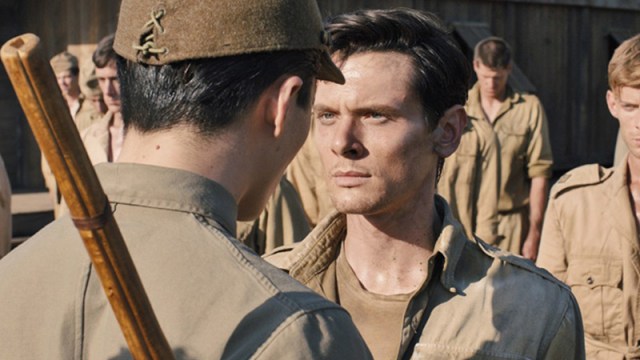
Jack O'Connell faces down a sadistic prison guard in 'Unbroken' (Universal Pictures)
Jack O’Connell faces down a sadistic prison guard in ‘Unbroken’ (Universal Pictures)

unbroken-coverLaura Hillenbrand’s Unbroken has been sitting atop the bestseller lists for close to 200 weeks now, which is no surprise, given its incredible true story of Louis Zamperini, who went from a record-breaking performance running in the 1936 Berlin Olympics to being a brutalized Japanese prisoner of war. Angelina Jolie’s (yes, she directed) take on the book is respectful and professionally done, but never quite gets at what made Zamperini such a survivor.

Unbroken opened wide on Christmas Day. My review is at Film Racket:

If one learns anything from a handsomely-told World War II survival fable like Unbroken, it’s that if you are marooned at sea for weeks and then tossed into a brutal prison camp, it’s best to do so with an Olympic runner by your side…

Here’s the trailer:

New in Theaters: ‘American Sniper’

Bradley Cooper (right) as Chris Kyle in 'American Sniper' (Warner Bros.)
Bradley Cooper (right) as Chris Kyle in ‘American Sniper’ (Warner Bros.)

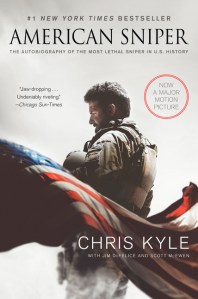
americansniper-cover1Before Chris Kyle was murdered at the age of 38, he had amassed a legendary kill record as an army sniper; possibly the most lethal one in American military history. His bestselling memoir, American Sniper, was originally planned as a Steven Spielberg project, but the film was ultimately directed by Clint Eastwood, no stranger to squint-eyed dramas of force and will.

American Sniper hit theaters today. My review is at Film Racket:

Bradley Cooper is rarely the sort to grab one’s attention at center stage; he only truly lights up films like American Hustle or The Hangover series when there’s a co-star for him to bounce his nervy patter and blue eyes off of. But Cooper’s performance as Kyle delivers the proper mix of humility and bottled-up frustration called for in a soldier from whom so much is expected. The film starts off with Kyle on a rooftop in Iraq, covering a column of Marines advancing through a city. He sees a woman hand a grenade to a young boy, who runs with the weapon towards the Marines. No other soldiers have eyes on the pair. His spotter reminds him that if he gets it wrong, “they’ll burn you”…

Here’s the trailer:

New in Theaters: ‘The Hobbit: The Battle of the Five Armies’

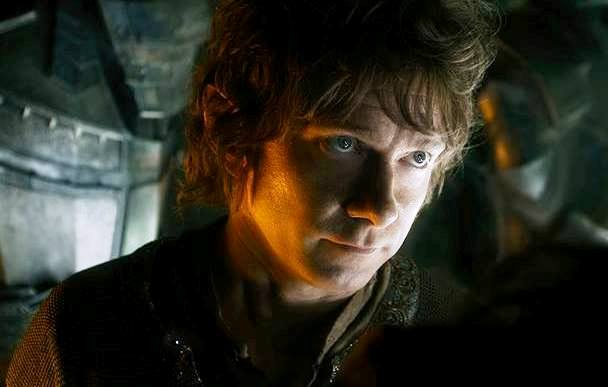
Martin Freeman as Bilbo in 'The Hobbit: The Battle of the Five Armies' (Warner Bros.)
Martin Freeman as Bilbo in ‘The Hobbit: The Battle of the Five Armies’ (Warner Bros.)

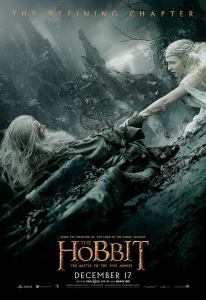
hobbit-posterSix films and who knows how many gajillion dollars of revenue later, Peter Jackson’s monumental, exhausting adaptation of J.R.R. Tolkien’s Ring novels comes to an end with the third film in the second Hobbit cycle. Love it or loathe it, this is the end—and it’s going out with a bang.

The Hobbit: The Battle of the Five Armies opens in all known territories next Wednesday. My review is at Film Journal International:

Amidst all the clashing armies, fell spirits, and talk of destinies and dynasties that fill J.R.R. Tolkien’s mythological adventure novels, the author’s eye never drifts far from the plucky little hero who finds unknown strengths in terrifying times. Peter Jackson dutifully sounded the same tune in his films of Tolkien’s The Hobbit and Lord of the Rings. But where Tolkien was a humanist, Jackson is a strategist, ever marshaling his forces for grander victories. There’s no denying the films’ quality as battle-ready spectacle of the first order. But the final installment, The Hobbit: The Battle of the Five Armies, is just about all Jackson and precious little Tolkien. In other words, if you like orc-killin’, and lots of it, this is your film…

Here’s the trailer:

New in Theaters: ‘Inherent Vice’

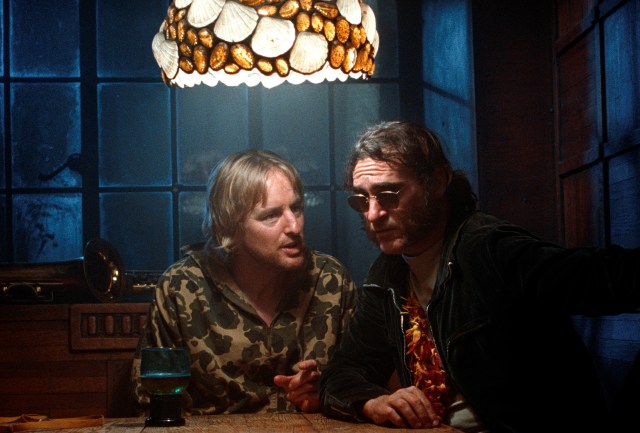
Owen Wilson and Joaquin Phoenix sleuth confusedly in 'Inherent Vice' (Warner Bros.)
Owen Wilson and Joaquin Phoenix sleuth confusedly in ‘Inherent Vice’ (Warner Bros.)

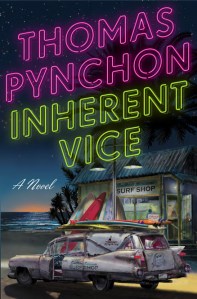
inherentvice-coverWhen Thomas Pynchon published Inherent Vice in 2009, it became very clear that the revered author of Gravity’s Rainbow was still interested in his basics (baffling plots, conspiratorial confusion) but was now also cool with knocking out an honest-to-God fun read. Paul Thomas Anderson’s resume of overbusy, overcrowded Southern California anthology meta-fictions (Magnolia, in particular) would seem to make him the perfect man to bring this book to the screen.

Inherent Vice is opening this week in limited release and likely to wide befuddlement; it’ll go wider around the nation in January. My review is at Film Racket:

“Thinking comes later,” mumbles Larry “Doc” Sportello (Joaquin Phoenix) at the start of Paul Thomas Anderson’s foggy, funny film of Thomas Pynchon’s psychedelia-noir Inherent Vice, only he never quite gets around to it. A lot of things get in his way, you see, from the moment that his ex-old lady Shasta Fay Hepworth (Katherine Waterston, an angelic , transfixing moonbeam of a smile but with not much to do here) lays on him a whole rap about needing help with her new old man. In the grand tradition of beautiful women whose true motives are submerged beneath shimmering layers of twinkle, Shasta’s initial request is more complicated and dangerous than it initially seems, particularly after she goes missing. Doc’s journey starts off being about making sure that Shasta (clearly the love of his life, though neither of them may know or want to know it) is okay, it turns into a quasi-historical tour of a Southern California counterculture circa 1970 on the verge of imploding under the weight of its own bafflement and paranoia…

Here’s the (fantastic) trailer:

New in Theaters: ‘Wild’

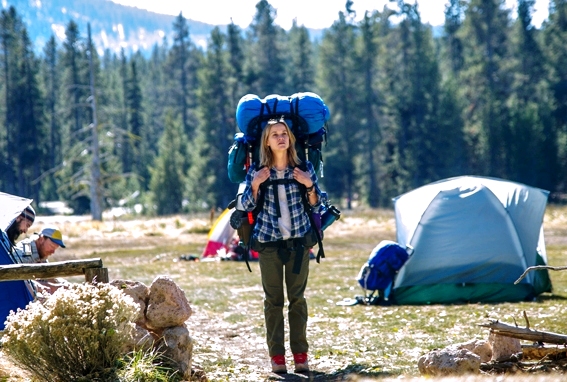
Reese Witherspoon explores the great outdoors and finds herself in 'Wild' (Fox Searchlight)
Reese Witherspoon explores the great outdoors and finds herself in ‘Wild’ (Fox Searchlight)

wild-bookCheryl Strayed’s 2012 memoir Wild—about her brave and highly foolish decision to hike the Pacific Crest Trail with no training as a way of exorcising her painful past—was many things that a bestseller and Oprah often aren’t: emotionally lacerating, unexpected, vulnerable, and clear-eyed about people’s weaknesses and dark sides. For the inevitable and surprisingly spot-on film adaptation, Reese Witherspoon plays Strayed in what could be an Oscar-worthy performance. That’s Nick Hornby of High Fidelity behind the keyboard.

Wild hits theaters this week. My review is at Film Racket:

Strayed is first spotted on the side of a mountain, pulling a bloody toenail out after days of grueling walking in too-small boots under a groaning pack one could fit the possessions of a small nation-state into. Dropping one boot down the side of the mountain by mistake, she impulsively throws the other boot after it, screaming in rage. Director Jean-Marc Vallee shoots it in all the wrong ways, with slow-motion and elongated vocals, trying to create a drama that the story hasn’t earned yet. It’s a rough start to what is mostly a solidly-crafted and cathartic drama of discovery about a woman who nearly kills herself in order to learn how to live again…

Here’s the trailer:

Readers’ Corner: Every Book, Ever

You always hear people complaining about there being just not enough time to read all the books out there. Just too much on the shelves to get to in this lifetime. Not the worst thing to have to complain about, of course, but still, frustrating—even if you’re not Burgess Meredith after the apocalypse.

So here’s the question: Has that always been the case? Was there a time at which one could have actually read every single book that had been written? (For the sake of this exercise, we’re limiting it to English-language titles.) Fortunately, there’s always a numbers guy out there working just about any conceivable problem, so now we may have an answer:

According to the site what if?:

If we estimate that during their active periods, writers are producing somewhere between 0.1 and 1 word per minute, then one dedicated reader might be able to keep up with a population of about 500 or 1,000 active writers … the date at which there were too many English books to read in a lifetime—happened sometime before the population of active English writers reached a few hundred. At that point, catching up became impossible.

The magazine Seed estimates that the total number of authors reached this point around the year 1500 and has continued rising rapidly ever since. The number of active English writers crossed this threshold shortly thereafter, around the time of Shakespeare, and the total number of books in English probably passed the lifetime reading limit sometime in the late 1500s.

So there you have it. It’s been a few centuries since reading everything out there was even possible. So if you can’t finish the complete works of Joyce Carol Oates in this lifetime (and, honestly, who could—as she publishes at the rate most people read), well, just hope for reincarnation.

DVD Tuesday: ‘The Great Gatsby’

greatgatsby1
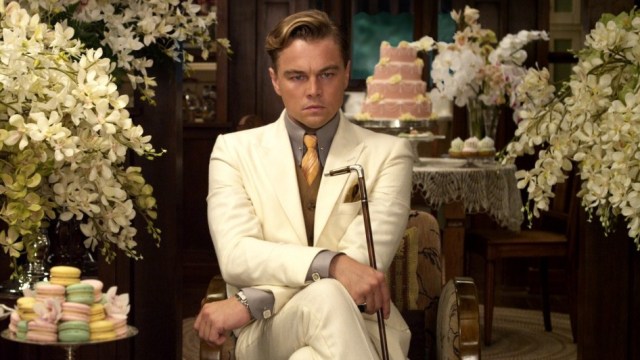
Leonardo DiCaprio as Jay Gatsby, hidden somewhere in the set decoration like the rest of the cast.

greatgatsby-dvdThe first and biggest movie spectacle of the 2013 summer movie season had nothing to do with IMAX superheroes, but a genre-blending half-musical Baz Luhrmann adaptation of F. Scott Fitzgerald’s The Great Gatsby. Sound like a refreshing change of pace? It should have been. Unfortunately the result was more like a feature-length trailer for a movie that never quite arrived.

The Great Gatsby hits DVD and Blu-ray. My review is at Short Ends & Leader:

Luhrmann’s take on F. Scott Fitzgerald’s Jazz Age fable is all about trying to make it seem as “modern” as possible; a story gambit that makes sense, given the current economic climate. Of course, the one percent’s current Gilded Age just kept on trucking after the Great Recession, unlike the excesses of the 1920s fantasized about so lovingly in Gatsby, which were put on ice by the Great Depression. To that end, Luhrmann comes to the story armed not with a respectable screenplay, great location scouts, and the best actors he could find but a war chest of whizbang computer graphics, some pretty faces, and executive music producer Jay-Z. It’s gonna be a show, kids!…

Here’s the trailer:

Quote of the Day: Cash by Johnny Cash

They're here to make you feel bad about your choices: the record-store clerks of 'High Fidelity'.
They’re here to make you feel bad about your choices: the record-store clerks of ‘High Fidelity’.

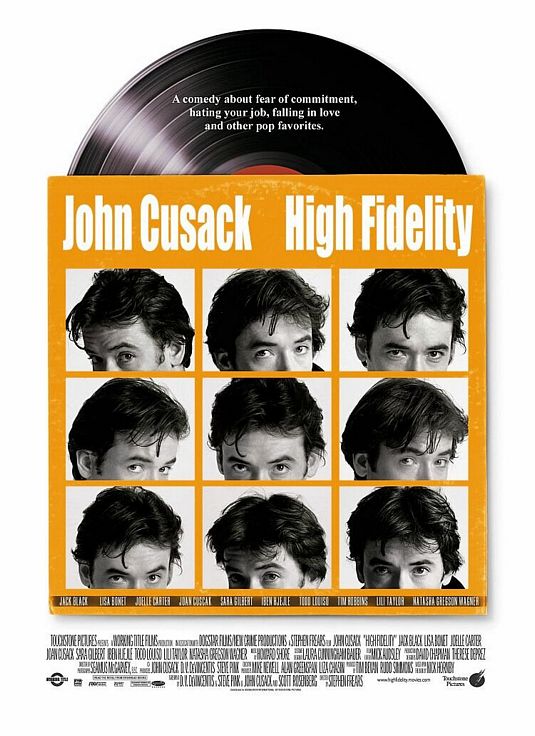
high_fidelity-posterIn the eternal classic High Fidelity, John Cusack plays Rob, a happily embittered record-store owner who spends a lot of time talking to the camera, when he’s not grousing about women, his employees, life. While his particular angle is music and the collecting rare examples thereof, many of his ruminations about that habit (“fetish properties are not unlike porn”) could apply equally to most any other art form. For instance:

What really matters is what you like, not what you are like… Books, records, films — these things matter. Call me shallow but it’s the fuckin’ truth.

Anybody out there who doesn’t believe deep down that there isn’t some truth to what he’s saying? Shallow or not, doesn’t bonding over the shared love of a particular cultural object (book, film, whatever) stand as its own unique and valid type of connection?

cashbook1Here’s Rob on books:

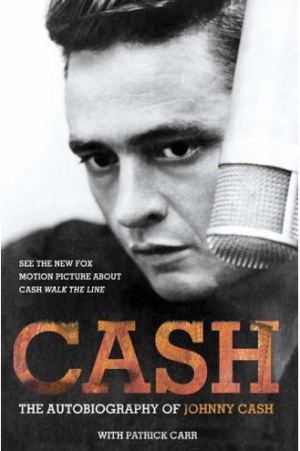
I’m not the smartest guy in the world, but I’m certainly not the dumbest. I mean, I’ve read books like The Unbearable Lightness of Being and Love in the Time of Cholera, and I think I’ve understood them. They’re about girls, right? Just kidding. But I have to say my all-time favorite book is Johnny Cash’s autobiography Cash by Johnny Cash.

Note the obsessive’s need to add the wholly unnecessary “Cash by Johnny Cash” there, just in case you didn’t get what he meant with “Johnny Cash’s autobiography.”

And here, just for kicks, the Top 5 Records scene from High Fidelity:


Readers’ Corner: Teddy Roosevelt

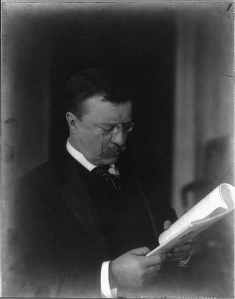
teddyrooseveltBooks are almost as individual as friends. There is no earthly use in laying down general laws about them. Some meet the needs of one person, and some of another…. I am speaking of books that are meant to be read. Personally, granted that these books are decent and healthy, the one test to which I demand that they all submit is that of being interesting…. Personally the books by which I have profited infinitely more than by any others have been those in which profit was a by-product of the pleasure; that is, I read them because I enjoyed them, because I liked reading them, and the profit came in as part of the enjoyment.

—Theodore Roosevelt, An Autobiography


Reader’s Corner: The Fiction Pulitzer

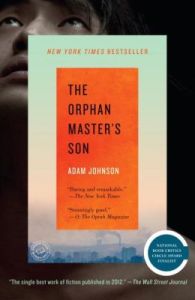
orphanmaster1So the wise folks over at the Pulitzer committee gave out their 2013 awards and there was a nice surprise there in the fiction column. The winner was Adam Johnson’s brilliantly perverse black comedy of North Korean mind tricks, The Orphan Master’s Son. 

I reviewed the book for PopMatters when it first came out in early 2012, here. It’s available now in paperback.

And since we’re in that brave new world of video book publicity, here’s the novel’s trailer: