The first performance of “Messiah,” in Dublin, in 1742, was, according to a contemporary announcement, presented “for the Relief of the Prisoners in the several Gaols.” Proceeds from the première helped the Charitable Musical Society to free a hundred and forty-two people from debtors’ prison…
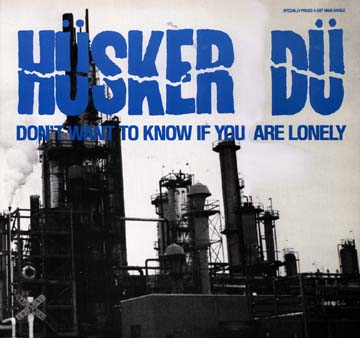
It was the Fall of 1978. I was attending Macalester College in St. Paul, Minnesota. One block from my dormitory was a tiny store called Cheapo Records. There was a PA system set up near the front door blaring punk rock. I went inside and ended up hanging out with the only person in the shop. His name was Grant Hart.
And now, probably Grant’s greatest song (make sure to play on repeat):
It’s in stores now and a necessary addition to your bookshelf. My review is at PopMatters:
…stuffed with everyone from Robert Christgau to Nick Tosches and Nelson George, this anthology is like some steam-powered hurdy-gurdy of sound and vision. In these gnarled curlicues of theoretical musings, cool-handed thematic unpackings, freakout rave-ups, and widescreen snapshots of postwar America’s sonic landscapes, this is a book that will remind you of just about everything you love about music.
Meryl Streep’s latest role requires her to do some stretching, as it involves playing a woman who was absolutely terrible at doing the thing she loved most.
Florence Foster Jenkins is playing now. My review is at Eyes Wide Open:
There’s an old joke about the difference that money makes for people suffering from mental illness. Most mentally ill people are just referred to as “crazy.” The ones with money, though, are tagged as “eccentric.” Very few statements have more clearly defined the advantages that wealth bestows upon those who have it. Until, that is, the release earlier this month of Florence Foster Jenkins. It’s a dialed-in, feel-good period piece in which almost all the main characters bend over backwards to protect the fragile delusions of one extremely eccentric woman…
In addition to politicians trotting out their newest talking points in between dodging questions, you can occasionally find writers on the Sunday talk shows flogging their newest book. This past weekend, viewers of Face the Nation were treated to the sight of former Reagan speechwriter and current dispenser of fatuous bromides for the Wall Street Journal Peggy Noonan talking about her new collection of columns. She did drop one decent piece of advice, if you need music when writing, try movie soundtracks:
Because other music would take me away from my work but movie music is meant to help the story along. And … when you’re writing a column or an essay, you’re writing a story.
You need to match the music with the material, of course. For a science fiction piece, the otherwordly Daft Punk soundtrack for the Tron remake is a fine choice. For something more fanciful, try Dan Romer’s beautiful music for Beasts of the Southern Wild. And John Corigliano’s lush score for The Red Violin works for just about anything.
Before you sit down and actually write on this fine Sunday, though, waste a little time with Dame Peggington Noonington from the good folks at Wonkette.
So what do you do, if you’re Motörhead’s Lemmy and you need to unwind? You’re 69 years old, an aging metal icon, with a string of furiously guitar-slashing albums behind you and the status of somebody whose like will never be seen again. As The Atlantic‘s James Parker puts it, what you do “cannot be counterfeited or repeated“:
Lemmy once roadie’d for Jimi Hendrix; these days, retiring postshow to his tour-bus bunk, he reads P. G. Wodehouse.
We should all be so smart. Jeeves will take care of all. Even after the evening’s encore…
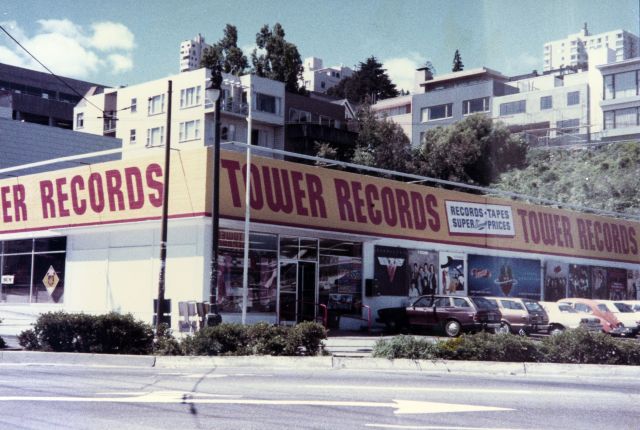
In 1999, Tower Records had $1 billion in revenue. They were bankrupt by 2006.
All Things Must Pass: The Rise and Fall of Tower Records is playing now in limited release. My review is at PopMatters:
Nobody who ever went into the original batch of Tower Records outlets in California ever said, “What a beautiful space.” In that way, they were axiomatic of the greatest record stores, which understood space pragmatically, slapping up some posters and cardboard displays, but otherwise committing to the mission. That was, of course, to sell records. This dedication is one way record stores were different from bookstores, which usually tried to give their customers a slapdash kind of ambiance: a few sprung couches, a little café, maybe a calico cat curling around your legs while you browsed in Fiction, A–H…
A timely music break, less for the spooky goings-on tonight than in honor of the late (and admittedly sometimes spooky) Lou Reed. Listen to “Halloween Parade”:
It’s too early to start really talking Oscars, but if we were, then Asif Kapadia’s moving and unromantic Amy would be a strong contender.
Amy opens in theaters tomorrow; seek it out. You can read my review at Film Racket:
Before becoming a punch line for tabloid-huffing, talkshow-loving misery vampires, Amy Winehouse wasn’t just a star talent, she was a constellation unto herself. Bursting into the moribund pop music scene of the early 2000s with verve and danger, she came on like some savvier Billie Holiday in a field of Auto-Tune tarts. There’s a heavy dose of that briefly blazing performer in Asif Kapadia’s potent, powerful documentary Amy…
Miles Teller drums and J.K. Simmons berates in ‘Whiplash’ (Sony Pictures Classics)
A brutal and (literally) bloody musician’s tale that’s about many, many other things besides music (surprise), Whiplash was the little awards film that could. While never quite making a splash along the lines of a Boyhood or The Imitation Game, it plugged along for months on little more than sheer word of mouth. Just like movies used to do.
Whiplash, which was ultimately nominated for five Oscars, will be available next week on DVD and Blu-ray. My review is at Film Racket:
In Damien Chazelle’s steam-heated pressure cooker, socially maladroit student Andrew (Miles Teller) is determined to be a brilliant jazz drummer. Fletcher (J.K. Simmons), the demon-teacher at a New York music conservatory who Andrew thinks guards the entrance to greatness, sees potential in this student but won’t let him past without a serious flaying. From the second Andrew steps into Fletcher’s studio band, the insults and cutting remarks fly from Fletcher’s lips. The only question seems to be how long Andrew can tough it out. But since he and Fletcher have a surprising amount in common, the story then becomes more about who will outlast the other…
Nick Cave drives to parts unknown with Kylie Minogue in ‘20,000 Days on Earth’ (Drafthouse Films)
20,000 Days on Earth is a meta-fictional documentary about Nick Cave, art, life, death, and above all writing. It’s beautiful and transfixing and is opening in limited release this Wednesday.
My review is at Film Journal International:
The last thing that audiences need is another documentary about the greatness of another band or artist of the past. It’s all too easy once artists have their glory days behind them to lock all that rough chaos up into a neatly packaged movie, maybe a box set filled with B-sides and rarities. That doesn’t mean that the likes of Big Star: Nothing Can Hurt Me, Finding Fela and A Band Called Death aren’t worthy films. But today’s documentary audiences could be forgiven for thinking that to be a music fan today is akin to being an archivist. Iain Forsyth and Jane Pollard’s new documentary about Australian Goth-poet Nick Cave is a long overdue reversal of that nostalgic trend…
Even Snoop Dog is in ‘Take Me to the River’ (Social Capital Films, LLC)
Memphis’s deeply knotted influence on American music gets a timely celebration in the new documentary Take Me to the River, opening this Friday in limited release and then later around the country.
There’s no end of love flowing off the screen in Martin Shore’s thrilled-to-be-here celebration of the Memphis Sound. That should be no surprise, given the legends that longtime producer and (clearly) first-time director Shore assembled for a promising marriage of old and new schools of music. The list of onscreen talent is deep, from Mavis Staples and Charlie Musselwhite to rapper Al Kapone and a bench of murderously talented session men. The organizing principle is that by joining different traditions and generations in the recording studio, the film can divine the source of that alchemical magic Memphis music has produced over the years. It also wants to serve as a monument to these heroes, a few of whom passed away before the film was finished…
Musician Willis Earl Beal ambles and agitates through Memphis in this half-film and half-art performance piece that feels like something Jim Jarmusch might have done if he’d never left town after shooting Mystery Train.
Beal is a musician with a cranky disposition and wild talent—that much we can divine. The film is at first a chronicle of his procrastination. He appears to owe an album to somebody but can’t find inspiration. Fighting off boredom and anomie, Beal walks and drives the tree-shaded streets of Memphis. He lives for a time in a large, beautiful home where the only furniture is a mattress and a never-installed, stubbornly symbolic chandelier. Later on, he starts falling through the cracks, moving into a one-legged friend’s cheap rooms and then into the woods, where he ruminates and burns things like an outsider artist stewing over his inner demons…
How’s your 2012 been? Happy to have survived the Mayan apocalypse?
More importantly, did you finish your shopping? Either way, here’s a consideration from the New Yorker circa 1970, in which a certain “Christmas Consultant” ponders what a good gift for a guy could be:
My list would include useful gifts, like a matched, color-coördinated, full-fashioned set of pre-written thank-you letters. Such a pleasant gift, and so easy to use. Upon receiving a gift—let’s say a myna bird trained to say “You’re wonderful, Fred,” or “Joe,” or “Pierpont”—one would merely use the efficient index system provided and come up with a pre-written note that said something like “I can’t begin to describe to you the emotion which welled up inside of me when I first heard Precious Myna chirp out, ‘You’re wonderful, Fred,’ or ‘Joe,’ or ‘Pierpont.’” There is, you see, a crying need for a pre-written note in such circumstances, since no self-respecting fellow, however practiced in hypocrisy, could possibly bang one out for himself.
Whatever your gift-giving situation, or views on the Mayan apocalypse that wasn’t, you should take a snow day—we’ve all earned it:











 Chris Barsanti
You must be logged in to post a comment.