Writer’s Desk: Don’t Be a Jerk

The topic of cultural appropriation is never an easy one, particularly when it comes to writing. When Lionel Shriver, author of We Need to Talk About Kevin, launched her jeremiad at the Brisbane Writers Festival, she steadfastly stood on the side of writers being free to write about whatever and whomever they damn well pleased, regardless of their race or background.

It was the speech that launched a thousand op-eds. Many leaped to Shriver’s defense, seeing a long-overdue pushback against the forces of political correctness, trigger warnings, and so on. Others saw it as just another example of white cultural dominance and arrogance.

sympathizer1There was more than a little of the provocateur in what Shriver did, of course—wearing a sombrero to make some point, and blasting any critique of her work from cultural grounds as censorship.

Into this white-hot mess waded Viet Thanh Nguyen, author of the excellent novel The Sympathizers. In an essay for the Los Angeles Times, he valiantly carves a demilitarized zone out of the culture-war battlefield:

…engage in careful and curious conversation with people different from ourselves, both in terms of demographics and ideas. When I say careful, I mean that it is possible to use one’s free speech and yet also be respectful and ethical. It is advisable not to insult people, as in the case of a white author wearing a sombrero to make her point about cultural oversensitivity. When I say curious, I mean that too many of us are not interested in the lives of others, if my experience with my airplane seatmates is any indication.

Solid advice for any writer, under any circumstances.
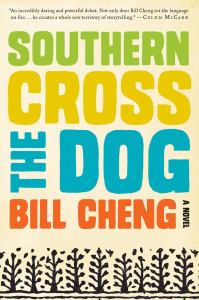
southerncrossAlso, note novelist Kaitlyn Greenridge’s response to the Shriver dustup, in which she considers whether Asian writer Bill Cheng had the right to write a lynching scene:

…I felt so strongly that Bill had a right to write that scene because he wrote it well. Because he was a good writer, a thoughtful writer, and that scene had a reason to exist besides morbid curiosity or a petulant delight in shrugging on and off another’s pain — the fact that a reader couldn’t see that shook my core about what fiction could and couldn’t do.

So, a few things to consider when writing about events, places, or people outside your immediate experience; or even well within it:

  • Be careful
  • Do the work
  • Do it well
  • Don’t be a jerk

Reader’s Corner: Eric Idle’s Rules

If you’re ever stuck for something to read, somebody else’s reading lists can be a help. Eric Idle posts a continually updated one that’s pretty smashing on his website here.

An inveterate bookworm of the highest caliber, Idle has also compiled a few rules for reading:

  • Rule 1:     Never be without a book.
  • Rule 2:     Skip all Prefaces, Forewords and Introductions.
  • Rule 3:     If you’re bored with a book, chuck it. There are millions of books you will never get to read, so if one doesn’t grab you, put it down.
  • Rule 4:     You don’t have to finish a book. You can always come back to it.
  • Rule 6:     You may read several books at once.
  • Rule 7:     You may skip and skim. This is not a class, this is life.
  • Rule 8:     Try and buy from your local bookshop while you still have one.
  • Rule 9:     There is no rule 9.
  • Rule 10:   Enjoy!

Reader’s Corner: The State of American Reading

The latest Pew Research Center poll on the state of American reading is out, and there are few surprises: Print is holding up strong against ebooks, and slightly fewer people are reading overall (yet again).

Some key findings:

  • The percentage of Americans who read any book in the past twelve months (73%) is down from 2011 (79%)
  • Women read more than men overall and were more likely to read for pleasure
  • City-dwellers read more than people in rural communities
  • Youngsters (aged 18–29) read more than oldsters (65+)
  • The median American reads 4 books a year

Reader’s Corner: Read Books, Live Longer

bookshop

There are many advantages to being a reader. Most importantly, it gives you something awesome to do on a rainy day, or pretty much any day, and doesn’t require electricity or feeding. Also, if you’re a child, being a reader doesn’t just build intelligence, it builds self-confidence.

Now, apparently, reading is positively associated with longer life. That’s the result of a study in Social Science & Medicine. According to the Times:

Compared with those who did not read books, those who read for up to three and a half hours a week were 17 percent less likely to die over 12 years of follow-up, and those who read more than that were 23 percent less likely to die. Book readers lived an average of almost two years longer than those who did not read at all.

As to what kind of books led to this kind of outcome, the study’s authors didn’t say.

Reader’s Corner: ‘You Will Know Me’

abbott-you-will-know-me-c350

One of the finest American crime and noir novelists working today, Megan Abbott specializes in tales of domestic unease that stick with you long after the book is done. She’s been getting plaudits from the likes of Paula Hawkins and James Ellroy. Her latest, You Will Know Me, a suburban murder melodrama, was just released and looks like it might be the biggest hit of Abbott’s career.

My review is at PopMatters:

You Will Know Me is an emotionally grisly mystery story where the crime was committed long before the dead body appeared. Set in one of those suburbs where certain kinds of parents seem to do nothing but act as a shuttle service for their off-spring (school, activities, repeat), Megan Abbott’s novel starts at a party where everything just seems wrong no matter how much effort is put into making it right. Parents and teenagers mingle. There’s too much sweet-tasting alcohol, too many songs remembered from younger and more daring times, and too many limits tested. It’s as though everybody were rewarding themselves for abstaining from their true, dark desires for so long…

Readers’ Corner: Books of the Convention

During Chelsea Clinton’s speech at the Democratic convention on Thursday night, she peppered her recollections of childhood in the Clinton family with a couple pointed references to books. In addition to the expected childhood classics (Goodnight, Moon) she singled out a certain novel by Madeline L’Engle:

Growing up, conversations around the dinner table always started with what I learned in school that day. I remember one week talking incessantly about a book that had captured my imagination, “A Wrinkle in Time.” Only after my parents had listened to me talk, would they then talk about what they were working on: education, health care consuming their days and keeping them up at night.

WrinkleInTimePBA1Spencer Kornhaber writes, this wasn’t just an invocation of a classic book beloved by many pre-adolescents, it was a clue as to the personalities of both Chelsea and Hillary:

The parallels between Meg Murry [the book’s protagonist] and adolescent Chelsea Clinton are obvious from that quote alone, right down to the description of braces and unruly hair … Meg is an introverted, brainy heroine rather than a spunky, hotheaded one, a distinction that likely appeals to both Clinton women. And Meg, like Chelsea, is the daughter of two very high-powered parents … There are extra-textual comparisons to be made, too: L’Engle once said that the novel was originally rejected by dozens of publishers, partly for the reason that it “had a female protagonist in a science-fiction book, and that wasn’t done”—a gender barrier of a different sort than the one broken last night…

Clinton’s reference to L’Engle’s novel was greeted by a distinct cheer from a certain segment of the audience. You can imagine for yourself whether a similar literary call-out at the previous week’s convention would have elicited anything but silence.

Weekend Reading: June 10, 2016

readingswing1

Reader’s Corner: Great Books of 2015

Looking for something to read? There’s plenty out there to choose from.

Check out “From Training Hawks to World War III: A Short List of Great 2015 Books” at Re:Print.

Here’s some other books from last year that really stood out:

After all, winter is (finally) here. Time to catch up on your reading.

Weekend Reading: January 22, 2016

readingroom1

Reader’s Corner: Bowie’s Books

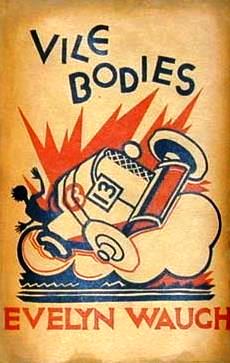
Viles_BodiesWhen you look at this list of David Bowie’s 100 favorite books, a few seem obvious, given his predilection (particularly in the Berlin phase) for bleak, chilly dystopias and tales of alienation and schizophrenic dislocation. So, of course he liked:

  • 1984 by George Orwell
  • A Clockwork Orange by Anthony Burgess
  • City Of Night by John Rechy
  • The Origin Of Consciousness In The Breakdown Of The Bicameral Mind by Julian Jaynes

But then there are some books, urbane novels of wit and glee, that don’t exactly fit with any of Bowie’s shape-shifting music moods:

  • Vile Bodies by Evelyn Waugh
  • Wonder Boys by Michael Chabon
  • Metropolitan Life by Fran Lebowitz

Maybe they were just fun reads…

Weekend Reading: Thanksgiving Edition

puck-thanksgiving1

Reader’s Corner: What Lemmy Reads on the Bus

jeevesSo what do you do, if you’re Motörhead’s Lemmy and you need to unwind? You’re 69 years old, an aging metal icon, with a string of furiously guitar-slashing albums behind you and the status of somebody whose like will never be seen again. As The Atlantic‘s James Parker puts it, what you do “cannot be counterfeited or repeated“:

Lemmy once roadie’d for Jimi Hendrix; these days, retiring postshow to his tour-bus bunk, he reads P. G. Wodehouse.

We should all be so smart. Jeeves will take care of all. Even after the evening’s encore…

Writer’s Desk: Writing as a Form of Reading

sontagreaderIt’s a truism that one of the best things new writers need to remember is to read. A lot. Not to imitate (though some of that is inevitable, especially at the start) but to understand just what writing is, and to see a book through two sets of eyes at once:

  • How is the writer able to make me respond this way?
  • How can I get the reader to respond, in any way?

In “Write, Read, Rewrite, Repeat Steps 2 and 3 as Needed,” Susan Sontag limns the linkage between the two:

First, because to write is to practice, with particular intensity and attentiveness, the art of reading. You write in order to read what you’ve written and see if it’s O.K. and, since of course it never is, to rewrite it — once, twice, as many times as it takes to get it to be something you can bear to reread. You are your own first, maybe severest, reader. “To write is to sit in judgment on oneself,” Ibsen inscribed on the flyleaf of one of his books. Hard to imagine writing without rereading…